Wednesday, March 31, 2010

News of the day! Prateik, Asha, SRK, Big B


Prateik gets rave reviews for Dhobi Ghat

And the boy seems to have shed his scruffy JTYJN image and looks GOOD!


SRK sets up webcam to talk to his kids

Always the family man!


Big B at Marathi Literary Awards in Pune

Gallery of pictures at link!


Asha Bhosle sings for Raavan

Now that is news to gladden a fan's heart! We will be waiting for the Raavan music.

News of the day! Prateik, Asha, SRK, Big B


Prateik gets rave reviews for Dhobi Ghat

And the boy seems to have shed his scruffy JTYJN image and looks GOOD!


SRK sets up webcam to talk to his kids

Always the family man!


Big B at Marathi Literary Awards in Pune

Gallery of pictures at link!


Asha Bhosle sings for Raavan

Now that is news to gladden a fan's heart! We will be waiting for the Raavan music.

Ranbir Kapoor unplugged!


Within two-and-a-half years of being in the industry, he has emerged on the top with the sheer strength of his performance, charisma and sex appeal.  To add to that, he’s also a hit with brands that are queuing up to sign him on as their ambassador. But recently, Ranbir Kapoor turned down two endorsements. While one is a denim company, the other is a big name in suiting and shirting. 
 
Apparently, the money for the suiting endorsement wasn’t good enough. And the other brand was a not-too-expensive low-end label in denim. “Akshay Kumar is the ambassador for the high-end range and his contract with the company is still going good. Not pleased with the deal, Ranbir preferred to walk out. Considering that he’s getting good positioning with other brands, why should he opt for less?” says a source in the advertising circuit.

The price ‘Game’It is believed that Kapoor charges six to eight crore, per brand, per year. The latest news is that Pepsi, the brand that he has signed on after it parted ways with Shah Rukh Khan, has spent an unprecedented Rs 35 crore on their newest campaign, The Game. At a conference to announce The Game, which goes on air today, Punita Lal, executive director, Marketing, PepsiCo India, admitted, “We’ve spent the highest amount of money on this campaign, something that we haven’t spent on any star’s campaign before.” 

Ask the Youngistan ambassador if he’s flattered to have replaced SRK who endorsed the brand for over a decade and he says, “Not at all. I don’t think I’ve replaced anyone. I grew up watching Shah Rukh Khan’s films and ads. That’s when I started loving the brand. He is a huge superstar. I’m just taking his legacy forward. Seeing all that he’s done for the brand and all that the brand has done for him, I’m just making whatever contribution I can.”

Prep talk
Though the the campaign’s budget could easily produce a film, Kapoor says that he doesn’t think the money is riding on him. “The Game is a concept that is entertaining and engaging. It involves gaming, something I haven’t seen in any ad. They are taking a risk and pushing boundaries,” he says, adding that he feels the responsibility of the campaign on his shoulders.

Known to prepare for every role, Kapoor reveals that he did his homework for this one too: “Apart from working on the look of the character, I also had to ensure that my movements were swift despite the harness. It’s also the first time that I’ve used it and it’s not easy making body movements smoothly. One shouldn’t say, ‘Oh, he’s taken the support of the harness.’ We did a lot of rehearsals and I’m glad we got the desired results.”

Action role play
Point out to him that he seems to be doing more action in the campaign than in his movies so far and he agrees. “Yes, I’ve only romanced heroines so far. This is the first time I’m doing some really slick action. I also see it as a preparation to do some good action films in the future. Since the commercials are about 20-odd seconds each, the action is not as extensive as it would be in a film. Nonetheless, it was a lot of fun,” he exults.

When asked whether we’ll hear of him being flooded with action roles after his thrill-a-minute campaign, Kapoor says he’s hopeful. “As an actor, I must dabble in every genre. Since I haven’t got an action film yet, I look forward to doing one. Hopefully, I’ll get some good action roles in the coming months,” he enthuses. 

I don’t want to get typecast: Ranbir KapoorYour trend of doing a mixed bag of films continues this year too...
Yes. My next release is Prakash Jha’s Rajneeti, a political thriller with an ensemble cast. Then, there’s Anjana Anjani, directed by Siddharth Raj Anand with Priyanka Chopra. I’ll soon be starting Imtiaz Ali’s film, tentatively titled, Rock Star. Then I have a movie with Anurag Basu, where I’m playing a deaf and mute character. 
 
You must have learnt a lot about the deaf and the mute while working as Sanjay Leela Bhansali’s assistant for Black...
Absolutely. We visited the Helen Keller institute in Vashi, got some exposure on how they live. The character is a normal guy with this disability. 

I’m putting the same amount of preparation and hard work for Imtiaz’s film, for which I’m getting the nuances right to play a Delhi ‘Jaath’ boy and also learning to play the guitar. I have to get the body language and the flavour of the character right as well. Every film requires a certain amount of prep work. That makes the character believable and relatable for the audience. They can connect with you because they have seen such characters in their lives, so they enjoy watching the story even more.

You’re also very selective and careful about the kind of movies you do...
That’s my right as an actor. I don’t think I can multi-task on many films at the same time. When I’m working on one film at a time, I can give it my all, which is needed since cinema is changing and progressing continuously. Besides, I can’t think two characters at a time. 

Talk was that your father, Rishi Kapoor, was planning to direct a movie with you under the family banner, RK Films.
That was just a rumour. Whenever my dad wants to direct, it will be under the RK banner, no doubt. And of course, I’d love to act in it.

Your romantic films have done better than others. Is that a coincidence since your father had a romantic hero’s image?
Frankly, I don’t want to get typecast. I’m 27. I want to do roles that I think I can carry off convincingly. Wake Up Sid was a coming-of-age film and I don’t think Rocket Singh was a romantic film either. Saawariya was, to a certain extent, while Ajab Prem Ki Ghajab Kahaani was more of a comedy. Yes, romance is something I’ve grown up watching and something I’m interested in doing. I guess every actor goes through a phase and right now, I’m going through one, where these kinds of subjects interest me. 

You started as an assistant director, so it’s understood that you will direct a movie too…
I do aspire to be a director some day. I’m very passionate about filmmaking. But first, I have to consolidate myself as an actor, before my family lets me step behind the camera. It’s very important for a director to have something to tell. If he doesn’t have a story to tell, I don’t think he should make a movie. 

Do you feel the pressure of being heralded as the superstar of your generation?
I don’t feel the pressure, because I don’t pay any attention to it. I wake up, go to work and come back home. I love the fact that I’ve been a part of good films, under great directors and wonderful co-actors. I feel humbled by the way people perceive me. 

On Deepika Padukone, Katrina Kaif and Priyanka Chopra...
That does bother me. I think it’s unfair to the girl, her family and also to me and my family…. That creates a perception in people’s minds: ‘Okay, so this person might be like this and that..’ But that’s not true. More than half the things you read and hear about yourself is fabricated. I’m not saying everything is, but yes, most of it is. 

I’m saying it’s reached the point where I label it terrorism, because it terrorises us.I feel scared to read the papers in the morning, worrying what’s written in them today. I truly feel that people should be talking more about our work than our personal lives.

On the Kishore Kumar biopic...
Honestly, I think I’ve been fortunate in that case. My dad never really had a particular style; he’s quite a natural actor. And you can’t compare spontaneity. 

When an actor has a particular style, and his son makes his debut, people say that the son has his father’s style.
My dad is a natural on screen, that’s something I learnt from him, yes, but I’ve never copied him per se.  There were lots of expectations during Saawariya; there was a lot of pressure. But I didn’t see it because I’m very passionate about being an actor, being in the movies. 

The fact that I can be a part of it, I can work in such interesting films that I’m working on, feels great.

On parental guidance and advice...
 Even though my parents have been in the industry, they don’t give me any direct advice. They do share their experiences, but have never forced any opinion on how to do this and how not to do that. They let me learn from my mistakes and grow as a person, they let me enjoy my success and also take the blame for my failure. If I’ve done something wrong, they tell me that it was wrong and point out he reasons. They also assert that I’ve grown up and I have the right to make my own decisions.

Although they don’t talk too much about the rumours they read or hear, I can sense that it does embarrass them. I share a very friendly rapport with them and like everyone else, my parents too understand everything, but don’t always show that they are embarrassed.

Ranbir Kapoor unplugged!


Within two-and-a-half years of being in the industry, he has emerged on the top with the sheer strength of his performance, charisma and sex appeal.  To add to that, he’s also a hit with brands that are queuing up to sign him on as their ambassador. But recently, Ranbir Kapoor turned down two endorsements. While one is a denim company, the other is a big name in suiting and shirting. 
 
Apparently, the money for the suiting endorsement wasn’t good enough. And the other brand was a not-too-expensive low-end label in denim. “Akshay Kumar is the ambassador for the high-end range and his contract with the company is still going good. Not pleased with the deal, Ranbir preferred to walk out. Considering that he’s getting good positioning with other brands, why should he opt for less?” says a source in the advertising circuit.

The price ‘Game’It is believed that Kapoor charges six to eight crore, per brand, per year. The latest news is that Pepsi, the brand that he has signed on after it parted ways with Shah Rukh Khan, has spent an unprecedented Rs 35 crore on their newest campaign, The Game. At a conference to announce The Game, which goes on air today, Punita Lal, executive director, Marketing, PepsiCo India, admitted, “We’ve spent the highest amount of money on this campaign, something that we haven’t spent on any star’s campaign before.” 

Ask the Youngistan ambassador if he’s flattered to have replaced SRK who endorsed the brand for over a decade and he says, “Not at all. I don’t think I’ve replaced anyone. I grew up watching Shah Rukh Khan’s films and ads. That’s when I started loving the brand. He is a huge superstar. I’m just taking his legacy forward. Seeing all that he’s done for the brand and all that the brand has done for him, I’m just making whatever contribution I can.”

Prep talk
Though the the campaign’s budget could easily produce a film, Kapoor says that he doesn’t think the money is riding on him. “The Game is a concept that is entertaining and engaging. It involves gaming, something I haven’t seen in any ad. They are taking a risk and pushing boundaries,” he says, adding that he feels the responsibility of the campaign on his shoulders.

Known to prepare for every role, Kapoor reveals that he did his homework for this one too: “Apart from working on the look of the character, I also had to ensure that my movements were swift despite the harness. It’s also the first time that I’ve used it and it’s not easy making body movements smoothly. One shouldn’t say, ‘Oh, he’s taken the support of the harness.’ We did a lot of rehearsals and I’m glad we got the desired results.”

Action role play
Point out to him that he seems to be doing more action in the campaign than in his movies so far and he agrees. “Yes, I’ve only romanced heroines so far. This is the first time I’m doing some really slick action. I also see it as a preparation to do some good action films in the future. Since the commercials are about 20-odd seconds each, the action is not as extensive as it would be in a film. Nonetheless, it was a lot of fun,” he exults.

When asked whether we’ll hear of him being flooded with action roles after his thrill-a-minute campaign, Kapoor says he’s hopeful. “As an actor, I must dabble in every genre. Since I haven’t got an action film yet, I look forward to doing one. Hopefully, I’ll get some good action roles in the coming months,” he enthuses. 

I don’t want to get typecast: Ranbir KapoorYour trend of doing a mixed bag of films continues this year too...
Yes. My next release is Prakash Jha’s Rajneeti, a political thriller with an ensemble cast. Then, there’s Anjana Anjani, directed by Siddharth Raj Anand with Priyanka Chopra. I’ll soon be starting Imtiaz Ali’s film, tentatively titled, Rock Star. Then I have a movie with Anurag Basu, where I’m playing a deaf and mute character. 
 
You must have learnt a lot about the deaf and the mute while working as Sanjay Leela Bhansali’s assistant for Black...
Absolutely. We visited the Helen Keller institute in Vashi, got some exposure on how they live. The character is a normal guy with this disability. 

I’m putting the same amount of preparation and hard work for Imtiaz’s film, for which I’m getting the nuances right to play a Delhi ‘Jaath’ boy and also learning to play the guitar. I have to get the body language and the flavour of the character right as well. Every film requires a certain amount of prep work. That makes the character believable and relatable for the audience. They can connect with you because they have seen such characters in their lives, so they enjoy watching the story even more.

You’re also very selective and careful about the kind of movies you do...
That’s my right as an actor. I don’t think I can multi-task on many films at the same time. When I’m working on one film at a time, I can give it my all, which is needed since cinema is changing and progressing continuously. Besides, I can’t think two characters at a time. 

Talk was that your father, Rishi Kapoor, was planning to direct a movie with you under the family banner, RK Films.
That was just a rumour. Whenever my dad wants to direct, it will be under the RK banner, no doubt. And of course, I’d love to act in it.

Your romantic films have done better than others. Is that a coincidence since your father had a romantic hero’s image?
Frankly, I don’t want to get typecast. I’m 27. I want to do roles that I think I can carry off convincingly. Wake Up Sid was a coming-of-age film and I don’t think Rocket Singh was a romantic film either. Saawariya was, to a certain extent, while Ajab Prem Ki Ghajab Kahaani was more of a comedy. Yes, romance is something I’ve grown up watching and something I’m interested in doing. I guess every actor goes through a phase and right now, I’m going through one, where these kinds of subjects interest me. 

You started as an assistant director, so it’s understood that you will direct a movie too…
I do aspire to be a director some day. I’m very passionate about filmmaking. But first, I have to consolidate myself as an actor, before my family lets me step behind the camera. It’s very important for a director to have something to tell. If he doesn’t have a story to tell, I don’t think he should make a movie. 

Do you feel the pressure of being heralded as the superstar of your generation?
I don’t feel the pressure, because I don’t pay any attention to it. I wake up, go to work and come back home. I love the fact that I’ve been a part of good films, under great directors and wonderful co-actors. I feel humbled by the way people perceive me. 

On Deepika Padukone, Katrina Kaif and Priyanka Chopra...
That does bother me. I think it’s unfair to the girl, her family and also to me and my family…. That creates a perception in people’s minds: ‘Okay, so this person might be like this and that..’ But that’s not true. More than half the things you read and hear about yourself is fabricated. I’m not saying everything is, but yes, most of it is. 

I’m saying it’s reached the point where I label it terrorism, because it terrorises us.I feel scared to read the papers in the morning, worrying what’s written in them today. I truly feel that people should be talking more about our work than our personal lives.

On the Kishore Kumar biopic...
Honestly, I think I’ve been fortunate in that case. My dad never really had a particular style; he’s quite a natural actor. And you can’t compare spontaneity. 

When an actor has a particular style, and his son makes his debut, people say that the son has his father’s style.
My dad is a natural on screen, that’s something I learnt from him, yes, but I’ve never copied him per se.  There were lots of expectations during Saawariya; there was a lot of pressure. But I didn’t see it because I’m very passionate about being an actor, being in the movies. 

The fact that I can be a part of it, I can work in such interesting films that I’m working on, feels great.

On parental guidance and advice...
 Even though my parents have been in the industry, they don’t give me any direct advice. They do share their experiences, but have never forced any opinion on how to do this and how not to do that. They let me learn from my mistakes and grow as a person, they let me enjoy my success and also take the blame for my failure. If I’ve done something wrong, they tell me that it was wrong and point out he reasons. They also assert that I’ve grown up and I have the right to make my own decisions.

Although they don’t talk too much about the rumours they read or hear, I can sense that it does embarrass them. I share a very friendly rapport with them and like everyone else, my parents too understand everything, but don’t always show that they are embarrassed.

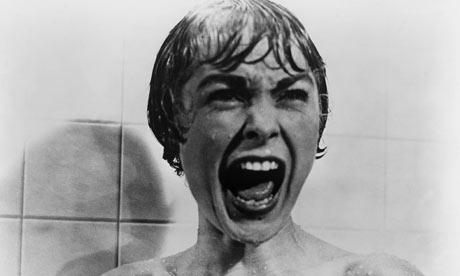
Secrets of the Psycho shower

It is one of the most notorious scenes ever filmed – yet Hitchcock and Janet Leigh didn't tell the truth about it. Will Hodgkinson on a real-life story of body doubles and murder


In the run-up to the release of Psycho in 1960, Alfred Hitchcock did everything he could to build up the suspense. "No one will be admitted to the theatre after the start of each performance," declared the poster, bearing a sulky-looking Hitchcock wagging a finger. The director bought up all copies of the original novel, which he had optioned for a paltry $9,000, so that hardly anyone would know how the story ended. He also filmed on a closed set and forced cast and crew to sign an agreement promising not to mention the ending to anyone. There were no advance screenings.

Psycho
Production year: 1960
Countries: UK, USA
Cert (UK): 15
Runtime: 109 mins
Directors: Alfred Hitchcock
Cast: Anthony Perkins, Janet Leigh, Vera Miles
More on this film
When the reviews for Psycho, which is rereleased this week, rolled in, they focused on one shocking moment: the shower sequence, in which Janet Leigh is slashed to death. Comprising over 70 shots, each lasting two or three seconds, it has become one of the most infamous moments in horror movie history. Mixing fast cutting and Bernard Herrmann's screeching music, Hitchcock created a brilliant illusion of gore, violence and nudity – while actually showing very little.

The greatest illusion, however, was to give a very clear suggestion that it was Leigh being hacked to death, by Anthony Perkins as a cross-dressing maniac. Leigh, in her first interview after the film's release, shared the audience's horror: "I believed that knife went into me. It was that real, that horrifying. I could feel it!" In later interviews, Hitchcock and Leigh categorically stated that it was her body in the shower scene – but it wasn't. The body belonged to a model called Marli Renfro. When you can't see Leigh's face in the shots, you're looking at her body double.

Read more from HERE

Secrets of the Psycho shower

It is one of the most notorious scenes ever filmed – yet Hitchcock and Janet Leigh didn't tell the truth about it. Will Hodgkinson on a real-life story of body doubles and murder


In the run-up to the release of Psycho in 1960, Alfred Hitchcock did everything he could to build up the suspense. "No one will be admitted to the theatre after the start of each performance," declared the poster, bearing a sulky-looking Hitchcock wagging a finger. The director bought up all copies of the original novel, which he had optioned for a paltry $9,000, so that hardly anyone would know how the story ended. He also filmed on a closed set and forced cast and crew to sign an agreement promising not to mention the ending to anyone. There were no advance screenings.

Psycho
Production year: 1960
Countries: UK, USA
Cert (UK): 15
Runtime: 109 mins
Directors: Alfred Hitchcock
Cast: Anthony Perkins, Janet Leigh, Vera Miles
More on this film
When the reviews for Psycho, which is rereleased this week, rolled in, they focused on one shocking moment: the shower sequence, in which Janet Leigh is slashed to death. Comprising over 70 shots, each lasting two or three seconds, it has become one of the most infamous moments in horror movie history. Mixing fast cutting and Bernard Herrmann's screeching music, Hitchcock created a brilliant illusion of gore, violence and nudity – while actually showing very little.

The greatest illusion, however, was to give a very clear suggestion that it was Leigh being hacked to death, by Anthony Perkins as a cross-dressing maniac. Leigh, in her first interview after the film's release, shared the audience's horror: "I believed that knife went into me. It was that real, that horrifying. I could feel it!" In later interviews, Hitchcock and Leigh categorically stated that it was her body in the shower scene – but it wasn't. The body belonged to a model called Marli Renfro. When you can't see Leigh's face in the shots, you're looking at her body double.

Read more from HERE

Vishal's Shutter Island Review!


It’s easy to write off a renowned ‘Serious’ filmmaker’s forays into genre work as pastiche, homage, or that wonderful term that can turn any genre work into critically acceptable Serious stuff — metafiction. Gangster movies are now bafflingly exempt from genrefication, however. What used to be a tried-and-tested pulp fiction dynamo has been seen, of late, as a staging ground for Serious — and only Serious — Cinema, to the extent that heavily stylised or lighthearted forays into movie gangsterdom are perceived as less than desirable — even insulting.

For this state of affairs, you can blame Francis Ford Coppola, and to a greater extent, Martin Scorsese. Or rather, you can blame the reaction to the cinema they created, the gangster films that mixed pulp with fine cinematic technique. Even a mediocre, gutted adaptation like The Departed got a free pass because it arrived under the banner of Serious Cinema (the original Infernal Affairs was not, and much the better for it).

So when Scorsese shows up along with long-time collaborator Leonardo DiCaprio in what is categorically neither a gangster movie nor Serious Cinema, the critics scramble to the safety of the cliffs of Pastiche. Let them gawk from their perches and try to ascribe greater meaning to the incoming genre storm that is Shutter Island, because the rest of us are going to be too busy enjoying the rain and thunder to care.

a sumptuous, surreal, oftentimes harrowing tale
Precarious cliffs, and confusion with how to deal with things as they are presented is also at the heart of Shutter Island. The titular rock sits in the fog off Boston Harbor, and to it in 1954 come U.S. Marshals Teddy Daniels (DiCaprio) and Chuck Aule (Mark Ruffalo). The Marshals are investigating the strange disappearance of an inmate at the Ashecliff Hospital for the criminally insane. Its head psychiatrist Dr. John Cawley (Ben Kingsley) is treating dangerous patients with the latest in medication and therapy, in the hope of curing them rather than locking them up and throwing away the key.

Suffice to say that all is not as it seems, from the disappearance of the inmate to the facility itself, and nearly every character has a hidden agenda.

Read the rest HERE

Vishal's Shutter Island Review!


It’s easy to write off a renowned ‘Serious’ filmmaker’s forays into genre work as pastiche, homage, or that wonderful term that can turn any genre work into critically acceptable Serious stuff — metafiction. Gangster movies are now bafflingly exempt from genrefication, however. What used to be a tried-and-tested pulp fiction dynamo has been seen, of late, as a staging ground for Serious — and only Serious — Cinema, to the extent that heavily stylised or lighthearted forays into movie gangsterdom are perceived as less than desirable — even insulting.

For this state of affairs, you can blame Francis Ford Coppola, and to a greater extent, Martin Scorsese. Or rather, you can blame the reaction to the cinema they created, the gangster films that mixed pulp with fine cinematic technique. Even a mediocre, gutted adaptation like The Departed got a free pass because it arrived under the banner of Serious Cinema (the original Infernal Affairs was not, and much the better for it).

So when Scorsese shows up along with long-time collaborator Leonardo DiCaprio in what is categorically neither a gangster movie nor Serious Cinema, the critics scramble to the safety of the cliffs of Pastiche. Let them gawk from their perches and try to ascribe greater meaning to the incoming genre storm that is Shutter Island, because the rest of us are going to be too busy enjoying the rain and thunder to care.

a sumptuous, surreal, oftentimes harrowing tale
Precarious cliffs, and confusion with how to deal with things as they are presented is also at the heart of Shutter Island. The titular rock sits in the fog off Boston Harbor, and to it in 1954 come U.S. Marshals Teddy Daniels (DiCaprio) and Chuck Aule (Mark Ruffalo). The Marshals are investigating the strange disappearance of an inmate at the Ashecliff Hospital for the criminally insane. Its head psychiatrist Dr. John Cawley (Ben Kingsley) is treating dangerous patients with the latest in medication and therapy, in the hope of curing them rather than locking them up and throwing away the key.

Suffice to say that all is not as it seems, from the disappearance of the inmate to the facility itself, and nearly every character has a hidden agenda.

Read the rest HERE

Tuesday, March 30, 2010

Rocket Singh Bloopers and Deleted Scenes


Rocket Singh Bloopers and Deleted Scenes


Deep Focus: Freedom of (eye-)movement in eight of the greatest long shots ever


By Jim Emerson
We tend to remember long takes that call attention to themselves as such: the opening shots of "Touch of Evil" or "The Player"; the entrance to the Copacabana in "GoodFellas"; all those shots in Romanian movies and pictures directed by Bela Tarr and Jia Zhangke... And then there are the ones you barely notice because your eyes have been guided so effortlessly around the frame, or you've been given the freedom to explore it on your own, or you've simply gotten so involved in the rhythms of the scene, the interplay between the characters, that you didn't notice how long the shot had been going on.


Deep Focus from Jim Emerson on Vimeo.


For this compilation, "Deep Focus," I've chosen eight shots I treasure (the last two I regard as among the finest in all of cinema). They're not all strictly "deep focus" shots, but they do emphasize three-dimensionality in their compositions. I've presented them with only minimal identifications so you can simply watch them and see what happens without distraction or interruption. Instead, I've decided to write about them below. Feel free to watch the clips and then re-watch (freeze-frame, rewind, replay) the clips to see what you can see. To say they repay re-viewing is an understatement.

Part I: Crowds

1. "New York, New York" (Martin Scorsese, 1977)

Robert De Niro's Jimmy Doyle -- the guy in the "Hawaiian" New York shirt -- disappears into the VJ Day crowd... but not for long. The mise-en-scene relocates him for us, via a red neon arrow. This is the last shot in a brief prologue that sets up Jimmy as a compulsive scene-stealer and scene-maker who must command the limelight in any situation. Notice all the little dramas and sight-gags in the teeming throng: the sailor lifting up and twirling the woman in the red dress; the Yellow Cab "Taxi Driver" reference; the folks holding up the "WAR OVER" tabloid headline; the way the two sides of the theater marquee repeat the movie's title: "New York, New York"...

2. "Playtime" (Jacques Tati, 1967)
Tati's masterpiece is what 70mm (and big-screen Blu-ray) were made for -- probably the favorite film of more film critics and academics than any other. This is the third shot of the movie, after an establishing shot of a steel-and-glass building cut off above the ground floor and a pan through the tinted windows that follows the nuns. The visual strategy of the entire movie is presented here (and it's followed by a reverse angle toward the other end of the concourse). The choreography is exquisitely timed, but you're free to follow whomever you like. My favorite moment is when the anonymous couple (foreground left) lock eyes with the blue-jumpsuited janitor (middle-distance, right).

3. "Caché" (Michael Haneke, 2005)
SPOILER WARNING. If you've seen the movie, you know that this is the final shot. (It's also the only one in this series that I've abbreviated; as far as the movie is concerned, it "ends" exactly when the credits begin to roll.) The shot is fascinating for several reasons. It repeats an image from earlier in the film, only this time two minor characters (or characters who have been considered relatively "minor") appear together for the first time. If you haven't seen the movie, you might not see them -- or, at least, won't grasp the significance of what you're seeing. (Indeed, many who watch the movie from the beginning don't notice them.) And even if you do follow recognize the characters, what does this encounter mean? What I love most about this shot is how many things are happening in it -- any one of which could be meaningful if you knew more about the individuals you were looking at. Watch it a second, third, fourth, fifth, sixth time and choose different characters to follow...

Part II: Two men and a bike... and a dog and a cat.

4. "Moonlighting" (Jerzy Skolimowski, 1982)

I couldn't think of how to categorize this shot, so it gets one of its own. The "plot" function comes from the internal monologue of Jeremy Irons' character, heard in voiceover as he rides his bike down the street. As he coasts away from the camera, a man on the sidewalk is walking toward us with his leashed dog. Then a cat appears from out of frame on the right. Irons remembers he's forgotten something. The cat proceeds across the frame, and just as he jumps up on a small retaining wall on the left, the shot ends. Magnificent. This is the kind of thing Skolimowski -- and Eastern European (but especially Polish) filmmakers in general, from Ivan Passer to Roman Polanski -- have a feel for: bringing images to life by choreographing even the most mundane details of daily existence into an absurdist ballet.

Part III: Two-shots

5. "The Miracle of Morgan's Creek" (Preston Sturges, 1944)

An entire date in one shot. It begins with Trudy (Betty Hutton) and Norval (Eddie Bracken), passing through the picket-fence gate of her house on their way to the movies, with strict orders from her stern father (William Demerest, of course) to come straight home afterwards. They're both a little nervous because they both have high hopes for the night ahead. Just different ones -- as is apparent from the way they initially talk right past each other. As the situation develops, we don't really notice that the conversation is transpiring in one unbroken shot. But we do feel the finely-tuned comic rhythms of the writing and performances, and sense the characters' passage through the neighborhood as they pass residential, industrial and retail/commercial real estate (single-family homes, boarding house, hospital/clinic, auto mechanic, lending library, office supply store, movie theater showing patriotic war pictures, featuring: "The Private and the Public"). Dramatically and comedically speaking, the scene turns just as they round the corner and Norval says: "Why Trudy, that's almost all I live for. Except for maybe getting into the army I can't think of anything that makes me more happy than helping you out. I almost wish you could be in a lot of trouble some time so I could prove it to you.." Be careful what you almost wish for. By the end of the shot, Trudy's agenda for the evening prevails, and Norval's hopes are dashed.

6. "Pauline at the Beach" (Eric Rohmer, 1983)
Here's an example of the kind of thing Rohmer does all the time. Very rarely do you see standard reverse-angle (over-the-shoulder) setups in a Rohmer movie (particularly early ones), unless there's a good reason -- like the excruciating confrontation between Sabine and Edmond in the latter's office in "Le beau marriage" (1982). Rohmer often prefers to a conversation in side-by-side two-shot, or by holding on just one of the participants -- even if it's not the one who's speaking at the time.

In this scene, Marion (Arielle Dombasle), who has just arrived for a late-summer stay at her family's beach place with her teenage niece Pauline (Amanda Langlet), stops in on Henri (Féodor Atkine), with whom she has just slept the night before, partially out of annoyance with Pierre (Pascal Gregory), a friend who wants their relationship to be something more. You can feel the heat and the air circulating through the open windows as the two conduct their maneuvers around the room, sitting, standing, circling each other. The camera hovers in the center and effortlessly takes in the surrounding action. "The logistics are too complicated," she says. But Rohmer sees them organically.

Watch the way Henri moves in on Marion as she sits on the red towel in the windowsill, and the cocky, off-hand gesture with which he brushes the beach sand (and room dirt) from his bare foot before suggesting that young Pauline needs to "lose her cherry." He then stashes one hand between his legs with and his other touches Marion's hair and moved down her back. She looks off distractedly, bringing her hand to her chest. The mutual seduction is sealed with a window exit, but not the one we expect. Marion returns to the window through which she entered, when she leaves the frame we see her reflection in the pane of the open window as she goes deeper inside the house... followed by Henri.

7. "Chinatown" (Roman Polanski, 1974)
If, on any given day, I was asked to choose the greatest single shot in American movies, it might well be this one -- in part because it's from the movie I often designate as my favorite, one I've seen countless times, and because I don't know when I first realized it was all in a single take. WARNING: If you haven't seen "Chinatown," you owe it to yourself to do so immediately, before watching this clip which is, in many ways, the climax of the picture.

All the movie's motifs and themes are brought together in this shot. I'm not talking about the story elements in the dialog, but the elements within the shot itself: frames (that focus vision, but mask what is beyond the edges), pairs of lenses (with one of them cracked or flawed), water (fresh for drinking and irrigation; saltwater from the sea, "where life begins"), wounds (Cross's deteriorated vision, Jake's wounded nose [blocked for most of the shot], Claude's bandaged head)... This is the climactic confrontation between private eye J.J. Gittes (Jack Nicholson) and Noah Cross (John Huston), patriarch of Los Angeles and co-founder of the Department of Water and Power. (And in L.A., water and power are synonymous.) It's also one of the many moments in the film in which the tables are turned on Jake, whose flawed vision never quite allows him to see enough of the picture to really know what's going in. There's no fancy camera movement here, just some subtle dolly work and a nearly 180-degree pan that reflects the reversal of power that occurs in the conversation itself.

We begin by looking into the past, from the patio on which Gittes and Cross's daughter, Mrs. Mulwray (Faye Dunaway) have had tea and pre-coital drinks, all the way through the archways of the house and out the front, through the big, black open door that has repeatedly kept Gittes out of the family's business. A car passes through the central frame within the frame within the frame... and back out again. Then a puff of smoke blows in from off-screen left, telling us where Jake is standing, and reminding us that John Alonzo's Panavision frame is still not wide enough to take in everything that's going on here. Cross enters and moves toward the camera, all the way through the house before the first words are spoken -- and, significantly, he spots Gittes before we do: "Oh, there you are!"

I won't get into the specifics of the conversation (it's the detective movie staple in which the private eye lays out the solution to the Mystery for the audience by telling the villain that he's figured it all out). Gittes begins with a trick, getting Cross to put on his bifocals ("Can you see all right in this light?") and then confronting him with the evidence of murder (which has something to do with the fine print in a newspaper obituary column). At that point, Cross knows what Gittes has got, and takes charge of the shot, drawing the camera to the right as he soliloquizes about water and power, bringing the Mulwrays' backyard ornamental pond into the frame. Behind him, the sun dies with faint streaks of red: "You see, most people never have to face the fact that at the right time and the right place they're capable of anything."

8. "Swing Time" (George Stevens, 1936)
Coincidentally, the Academy Award-winning song from the greatest of the Astaire-Rogers movies is also used in "Chinatown": Jerome Kern and Dorothy Fields' "The Way You Look Tonight." But that number (staged as a Hollywood glamour parody, with Fred singing to Ginger as she shampoos her hair), isn't the one we're dealing with here, perhaps the most thrilling number in the Astaire-Rogers canon because it's in one shot.

Read more HERE

Deep Focus: Freedom of (eye-)movement in eight of the greatest long shots ever


By Jim Emerson
We tend to remember long takes that call attention to themselves as such: the opening shots of "Touch of Evil" or "The Player"; the entrance to the Copacabana in "GoodFellas"; all those shots in Romanian movies and pictures directed by Bela Tarr and Jia Zhangke... And then there are the ones you barely notice because your eyes have been guided so effortlessly around the frame, or you've been given the freedom to explore it on your own, or you've simply gotten so involved in the rhythms of the scene, the interplay between the characters, that you didn't notice how long the shot had been going on.


Deep Focus from Jim Emerson on Vimeo.


For this compilation, "Deep Focus," I've chosen eight shots I treasure (the last two I regard as among the finest in all of cinema). They're not all strictly "deep focus" shots, but they do emphasize three-dimensionality in their compositions. I've presented them with only minimal identifications so you can simply watch them and see what happens without distraction or interruption. Instead, I've decided to write about them below. Feel free to watch the clips and then re-watch (freeze-frame, rewind, replay) the clips to see what you can see. To say they repay re-viewing is an understatement.

Part I: Crowds

1. "New York, New York" (Martin Scorsese, 1977)

Robert De Niro's Jimmy Doyle -- the guy in the "Hawaiian" New York shirt -- disappears into the VJ Day crowd... but not for long. The mise-en-scene relocates him for us, via a red neon arrow. This is the last shot in a brief prologue that sets up Jimmy as a compulsive scene-stealer and scene-maker who must command the limelight in any situation. Notice all the little dramas and sight-gags in the teeming throng: the sailor lifting up and twirling the woman in the red dress; the Yellow Cab "Taxi Driver" reference; the folks holding up the "WAR OVER" tabloid headline; the way the two sides of the theater marquee repeat the movie's title: "New York, New York"...

2. "Playtime" (Jacques Tati, 1967)
Tati's masterpiece is what 70mm (and big-screen Blu-ray) were made for -- probably the favorite film of more film critics and academics than any other. This is the third shot of the movie, after an establishing shot of a steel-and-glass building cut off above the ground floor and a pan through the tinted windows that follows the nuns. The visual strategy of the entire movie is presented here (and it's followed by a reverse angle toward the other end of the concourse). The choreography is exquisitely timed, but you're free to follow whomever you like. My favorite moment is when the anonymous couple (foreground left) lock eyes with the blue-jumpsuited janitor (middle-distance, right).

3. "Caché" (Michael Haneke, 2005)
SPOILER WARNING. If you've seen the movie, you know that this is the final shot. (It's also the only one in this series that I've abbreviated; as far as the movie is concerned, it "ends" exactly when the credits begin to roll.) The shot is fascinating for several reasons. It repeats an image from earlier in the film, only this time two minor characters (or characters who have been considered relatively "minor") appear together for the first time. If you haven't seen the movie, you might not see them -- or, at least, won't grasp the significance of what you're seeing. (Indeed, many who watch the movie from the beginning don't notice them.) And even if you do follow recognize the characters, what does this encounter mean? What I love most about this shot is how many things are happening in it -- any one of which could be meaningful if you knew more about the individuals you were looking at. Watch it a second, third, fourth, fifth, sixth time and choose different characters to follow...

Part II: Two men and a bike... and a dog and a cat.

4. "Moonlighting" (Jerzy Skolimowski, 1982)

I couldn't think of how to categorize this shot, so it gets one of its own. The "plot" function comes from the internal monologue of Jeremy Irons' character, heard in voiceover as he rides his bike down the street. As he coasts away from the camera, a man on the sidewalk is walking toward us with his leashed dog. Then a cat appears from out of frame on the right. Irons remembers he's forgotten something. The cat proceeds across the frame, and just as he jumps up on a small retaining wall on the left, the shot ends. Magnificent. This is the kind of thing Skolimowski -- and Eastern European (but especially Polish) filmmakers in general, from Ivan Passer to Roman Polanski -- have a feel for: bringing images to life by choreographing even the most mundane details of daily existence into an absurdist ballet.

Part III: Two-shots

5. "The Miracle of Morgan's Creek" (Preston Sturges, 1944)

An entire date in one shot. It begins with Trudy (Betty Hutton) and Norval (Eddie Bracken), passing through the picket-fence gate of her house on their way to the movies, with strict orders from her stern father (William Demerest, of course) to come straight home afterwards. They're both a little nervous because they both have high hopes for the night ahead. Just different ones -- as is apparent from the way they initially talk right past each other. As the situation develops, we don't really notice that the conversation is transpiring in one unbroken shot. But we do feel the finely-tuned comic rhythms of the writing and performances, and sense the characters' passage through the neighborhood as they pass residential, industrial and retail/commercial real estate (single-family homes, boarding house, hospital/clinic, auto mechanic, lending library, office supply store, movie theater showing patriotic war pictures, featuring: "The Private and the Public"). Dramatically and comedically speaking, the scene turns just as they round the corner and Norval says: "Why Trudy, that's almost all I live for. Except for maybe getting into the army I can't think of anything that makes me more happy than helping you out. I almost wish you could be in a lot of trouble some time so I could prove it to you.." Be careful what you almost wish for. By the end of the shot, Trudy's agenda for the evening prevails, and Norval's hopes are dashed.

6. "Pauline at the Beach" (Eric Rohmer, 1983)
Here's an example of the kind of thing Rohmer does all the time. Very rarely do you see standard reverse-angle (over-the-shoulder) setups in a Rohmer movie (particularly early ones), unless there's a good reason -- like the excruciating confrontation between Sabine and Edmond in the latter's office in "Le beau marriage" (1982). Rohmer often prefers to a conversation in side-by-side two-shot, or by holding on just one of the participants -- even if it's not the one who's speaking at the time.

In this scene, Marion (Arielle Dombasle), who has just arrived for a late-summer stay at her family's beach place with her teenage niece Pauline (Amanda Langlet), stops in on Henri (Féodor Atkine), with whom she has just slept the night before, partially out of annoyance with Pierre (Pascal Gregory), a friend who wants their relationship to be something more. You can feel the heat and the air circulating through the open windows as the two conduct their maneuvers around the room, sitting, standing, circling each other. The camera hovers in the center and effortlessly takes in the surrounding action. "The logistics are too complicated," she says. But Rohmer sees them organically.

Watch the way Henri moves in on Marion as she sits on the red towel in the windowsill, and the cocky, off-hand gesture with which he brushes the beach sand (and room dirt) from his bare foot before suggesting that young Pauline needs to "lose her cherry." He then stashes one hand between his legs with and his other touches Marion's hair and moved down her back. She looks off distractedly, bringing her hand to her chest. The mutual seduction is sealed with a window exit, but not the one we expect. Marion returns to the window through which she entered, when she leaves the frame we see her reflection in the pane of the open window as she goes deeper inside the house... followed by Henri.

7. "Chinatown" (Roman Polanski, 1974)
If, on any given day, I was asked to choose the greatest single shot in American movies, it might well be this one -- in part because it's from the movie I often designate as my favorite, one I've seen countless times, and because I don't know when I first realized it was all in a single take. WARNING: If you haven't seen "Chinatown," you owe it to yourself to do so immediately, before watching this clip which is, in many ways, the climax of the picture.

All the movie's motifs and themes are brought together in this shot. I'm not talking about the story elements in the dialog, but the elements within the shot itself: frames (that focus vision, but mask what is beyond the edges), pairs of lenses (with one of them cracked or flawed), water (fresh for drinking and irrigation; saltwater from the sea, "where life begins"), wounds (Cross's deteriorated vision, Jake's wounded nose [blocked for most of the shot], Claude's bandaged head)... This is the climactic confrontation between private eye J.J. Gittes (Jack Nicholson) and Noah Cross (John Huston), patriarch of Los Angeles and co-founder of the Department of Water and Power. (And in L.A., water and power are synonymous.) It's also one of the many moments in the film in which the tables are turned on Jake, whose flawed vision never quite allows him to see enough of the picture to really know what's going in. There's no fancy camera movement here, just some subtle dolly work and a nearly 180-degree pan that reflects the reversal of power that occurs in the conversation itself.

We begin by looking into the past, from the patio on which Gittes and Cross's daughter, Mrs. Mulwray (Faye Dunaway) have had tea and pre-coital drinks, all the way through the archways of the house and out the front, through the big, black open door that has repeatedly kept Gittes out of the family's business. A car passes through the central frame within the frame within the frame... and back out again. Then a puff of smoke blows in from off-screen left, telling us where Jake is standing, and reminding us that John Alonzo's Panavision frame is still not wide enough to take in everything that's going on here. Cross enters and moves toward the camera, all the way through the house before the first words are spoken -- and, significantly, he spots Gittes before we do: "Oh, there you are!"

I won't get into the specifics of the conversation (it's the detective movie staple in which the private eye lays out the solution to the Mystery for the audience by telling the villain that he's figured it all out). Gittes begins with a trick, getting Cross to put on his bifocals ("Can you see all right in this light?") and then confronting him with the evidence of murder (which has something to do with the fine print in a newspaper obituary column). At that point, Cross knows what Gittes has got, and takes charge of the shot, drawing the camera to the right as he soliloquizes about water and power, bringing the Mulwrays' backyard ornamental pond into the frame. Behind him, the sun dies with faint streaks of red: "You see, most people never have to face the fact that at the right time and the right place they're capable of anything."

8. "Swing Time" (George Stevens, 1936)
Coincidentally, the Academy Award-winning song from the greatest of the Astaire-Rogers movies is also used in "Chinatown": Jerome Kern and Dorothy Fields' "The Way You Look Tonight." But that number (staged as a Hollywood glamour parody, with Fred singing to Ginger as she shampoos her hair), isn't the one we're dealing with here, perhaps the most thrilling number in the Astaire-Rogers canon because it's in one shot.

Read more HERE

Monday, March 29, 2010

Sushmita Sen on being a Mom and Miss Universe mentor


As usual, Sushmita Sen’s visit to town was not long. But in the span of less than two days, she hosted the Calcutta leg of I Am She, the Miss Universe India pageant, spent time with daddy Shubeer Sen, had dinner at Hushh with family friend Rajat Dalmia on Friday and even squeezed in a visit to Kali Mandir with eight-month-old Alisah on Saturday morning! t2 talks to the lady about her many hats...

What is it about Calcutta that makes you keep coming back?
(Laughs) I feel very lucky. I am one of those privileged few who get to call a huge part of India — in terms of its states — her own. For example I was born in Hyderabad, raised in Delhi, at my core I’m a Bengali. So I’m from everywhere! Calcutta has a very special place in my heart — my Baba lives here. 

Who are you dating now?
I’m as single as they come and I’m not feeling bad at all about it. I have a romantic life, two daughters and my third child, which is I Am She. I just completed No Problem, my first film with Anees Bazmee and I’m excited about that. My world — oops! wrong word, my universe — has opened up! I couldn’t be in a happier state although I have really no time right now to be in a relationship. 

What’s the story behind I Am She?
The reason why I took up the franchise for this beauty pageant is because there’s an emotional connect… it’s all about the first 15 years of my life.

Models use beauty pageants as a gateway to the film industry. Are you trying to change that?
At the age of 18 I had no option because I won this and that and I went on to become an actress. I have no complaints but today another girl should be able to make her choice. It shouldn’t be a no-option situation. The good thing is that so many of the participants are academically driven. Some are working and studying, even supporting their families! Their ambition in life is to do something respectable. The easiest way is to go into Bollywood… easy money, don’t have to be too educated (I’m XII-pass), but if there is someone who says I want to study instead, then we have scholarships for her. The choice is hers.

Define the perfect ‘she’…
As generic as that. That’s why we called it She. We didn’t want to say tall, lovely skin, beautiful eyes, gorgeous hair. But when we say ‘she’, it’s a gender. Which means everything is beautiful about her. And let me tell you another naughty thing about ‘she’: it has the prominent alphabets of my name.

Is the ‘I Am’ tattoo on your wrist for real?
Of course! That’s permanent and so are these: Soli deo glory (shows off her left wrist) and Temptation (on her right arm).

You were going to walk the ramp for Ritu Beri on Day One of Wills Lifestyle Fashion Week (which was cancelled). Will we see you on Day 5?
Oh, I feel very bad about that, very bad. Unfortunately not, because I’ll be going from city to city for this project. But, next time.

How stylish is I Am She going to be?
We’re turning it into the biggest style event of the year. There are fantastic Indian and foreign designers who will be dressing these women. It’s going to be marvellous because they’re going to be walking the ramp in couture clothes and be speaking in Gujarati. There’s no language barrier in the pageant.
It’s the first time the girls will not be groomed in India — but in Italy (Rome)! Also, look out for who’s going to crown the finalists on May 29! That’s what legends are made of — and he’s not an Indian!

How busy are your daughters keeping you?
Very! These days the make-up hour is a funny sight in my life, with a little one in my lap who’s being fed. That’s what my life has become nowadays. I’m on the phone, baby’s (Alisah) having milk, the elder one (Renee) has come with her report card — by the way she’s done very well, moved into Class VI. It’s a good time for me as a mother.

Why haven’t you said yes to any Tollywood films?
Tollywood has to come up with something extraordinary. When I did a Tamil movie there was no problem. Every Tamilian in the country will know and say, ‘Poor thing she’s a Bengali, she’s doing a Tamil film’. But if I do a Bengali film and I behave like that, they’re gonna say, ‘Aamader barir meye thik korey Bangla boltey parey na!’

Read more HERE.

Sushmita Sen on being a Mom and Miss Universe mentor


As usual, Sushmita Sen’s visit to town was not long. But in the span of less than two days, she hosted the Calcutta leg of I Am She, the Miss Universe India pageant, spent time with daddy Shubeer Sen, had dinner at Hushh with family friend Rajat Dalmia on Friday and even squeezed in a visit to Kali Mandir with eight-month-old Alisah on Saturday morning! t2 talks to the lady about her many hats...

What is it about Calcutta that makes you keep coming back?
(Laughs) I feel very lucky. I am one of those privileged few who get to call a huge part of India — in terms of its states — her own. For example I was born in Hyderabad, raised in Delhi, at my core I’m a Bengali. So I’m from everywhere! Calcutta has a very special place in my heart — my Baba lives here. 

Who are you dating now?
I’m as single as they come and I’m not feeling bad at all about it. I have a romantic life, two daughters and my third child, which is I Am She. I just completed No Problem, my first film with Anees Bazmee and I’m excited about that. My world — oops! wrong word, my universe — has opened up! I couldn’t be in a happier state although I have really no time right now to be in a relationship. 

What’s the story behind I Am She?
The reason why I took up the franchise for this beauty pageant is because there’s an emotional connect… it’s all about the first 15 years of my life.

Models use beauty pageants as a gateway to the film industry. Are you trying to change that?
At the age of 18 I had no option because I won this and that and I went on to become an actress. I have no complaints but today another girl should be able to make her choice. It shouldn’t be a no-option situation. The good thing is that so many of the participants are academically driven. Some are working and studying, even supporting their families! Their ambition in life is to do something respectable. The easiest way is to go into Bollywood… easy money, don’t have to be too educated (I’m XII-pass), but if there is someone who says I want to study instead, then we have scholarships for her. The choice is hers.

Define the perfect ‘she’…
As generic as that. That’s why we called it She. We didn’t want to say tall, lovely skin, beautiful eyes, gorgeous hair. But when we say ‘she’, it’s a gender. Which means everything is beautiful about her. And let me tell you another naughty thing about ‘she’: it has the prominent alphabets of my name.

Is the ‘I Am’ tattoo on your wrist for real?
Of course! That’s permanent and so are these: Soli deo glory (shows off her left wrist) and Temptation (on her right arm).

You were going to walk the ramp for Ritu Beri on Day One of Wills Lifestyle Fashion Week (which was cancelled). Will we see you on Day 5?
Oh, I feel very bad about that, very bad. Unfortunately not, because I’ll be going from city to city for this project. But, next time.

How stylish is I Am She going to be?
We’re turning it into the biggest style event of the year. There are fantastic Indian and foreign designers who will be dressing these women. It’s going to be marvellous because they’re going to be walking the ramp in couture clothes and be speaking in Gujarati. There’s no language barrier in the pageant.
It’s the first time the girls will not be groomed in India — but in Italy (Rome)! Also, look out for who’s going to crown the finalists on May 29! That’s what legends are made of — and he’s not an Indian!

How busy are your daughters keeping you?
Very! These days the make-up hour is a funny sight in my life, with a little one in my lap who’s being fed. That’s what my life has become nowadays. I’m on the phone, baby’s (Alisah) having milk, the elder one (Renee) has come with her report card — by the way she’s done very well, moved into Class VI. It’s a good time for me as a mother.

Why haven’t you said yes to any Tollywood films?
Tollywood has to come up with something extraordinary. When I did a Tamil movie there was no problem. Every Tamilian in the country will know and say, ‘Poor thing she’s a Bengali, she’s doing a Tamil film’. But if I do a Bengali film and I behave like that, they’re gonna say, ‘Aamader barir meye thik korey Bangla boltey parey na!’

Read more HERE.

Karnataka and Kerala actors are sidelined in Bollywood: Sudeep

He may have rubbed shoulders with the likes of megastar Amitabh Bachchan in only his second Hindi film “Rann”, but Kannada star Sudeep is a little disillusioned with Bollywood. Actors from Karnataka and Kerala, he says, are “totally sidelined by Hindi filmgoers”.

“I didn’t come to Mumbai looking for a career. I adore this personality called Ram Gopal Varma. I think it was basically Ramu’s trust in my abilities that prompted me to get on that flight from Bangalore to Mumbai,” Sudeep told IANS in an interview.

The actor, who made his Hindi film debut with “Phoonk” and followed it with “Rann”, said: “Somehow I feel South Indian actors are not that well known in the Hindi belt. Tamil and Telugu actors have an upper hand. But Kannada and Kerala are totally sidelined by Hindi filmgoers.”

“I don’t want to blame anyone for this state of affairs. It’s just that Kannada cinema hasn’t grown. But let’s be fair. There are filmmakers like Ramu to give us a chance. I’m sure there will be other chances given to South Indian actors.”

His next Hindi film is “Rakta Charitra”.

Excerpts:
Tell me about yourself?
A: My father is a hotelier in Karnataka. There’re no actors in my family. I used to play a lot of cricket at the junior level. Then I did my engineering and got interested in singing and playing the guitar. Yes, I’m a musician. From music it was a step away from cinema. For six years, I struggled in the Kannada cinema industry. I lived on Rs.500 per month.

No sustenance from the family business?
A: No I never took money from the family after standard 10. I used to work in a clothes store, played cricket for money, did photo shoots. It was that period of struggle which gave me the experience to be an actor. The emotions have to come from the raw material of life.

Married?
A: Yes, married with a five-year-old daughter Saanvi. My wife Priya used to work for an airline, then in a bank. I got married very early, in fact right after my first successful film “Huccha” in 2001 which was remade in Hindi (with Salman Khan) as “Tere Naam”. They changed the Hindi version drastically.

Do you get linked to your leading ladies?
A: A couple of times, yes, and it was ugly. But it was ok. It fizzled out in a few weeks. My wife knows either I am working or I am at home. I’ve also directed “An Autograph” and three other films.
While I like to experiment in Kannada, in Hindi there aren’t too many directors doing “Chak De!” or “Taare Zameen Par”. Ramesh Taurani has shown interest in remaking my latest directorial effort “Just Math Mathalli” in Hindi. I’d like to direct the Hindi version as well.

What prompted you to come to Mumbai to do “Phoonk” and “Rann“?
A: I didn’t come to Mumbai looking for a career. I adore this personality called Ram Gopal Varma. He travelled from the South and became a brand in Mumbai. I never question what he casts me in. I think it was basically Ramu’s trust in my abilities that prompted me to get on that flight from Bangalore to Mumbai. I’ve never hired a PRO to promote my career in Hindi cinema.

You started your Hindi career with the horror film “Phoonk“?
A: I had never done a horror film before. I don’t even like horror films. So the challenge was to do a new genre in a new language, culture and actors I didn’t know.

As a Kannada actor did you feel disadvantaged in Mumbai?
A: Somehow I feel South Indian actors are not that well-known in the Hindi belt. Tamil and Telugu actors have an upper hand. But Kannada and Kerala are totally sidelined by Hindi filmgoers. I don’t want to blame anyone for this state of affairs. It’s just that Kannada cinema hasn’t grown.
But let’s be fair. There’re filmmakers like Ram Gopal Varma to give us a chance. I’m sure there will be other chances given to South Indian actors.

What will you be seen in Hindi in next?
A: My character in Ramu’s “Rakta Charitra” is tougher than “Rann”. My character is not the main character. Not too many scenes are written for my character. I’ve actually done very silent work here. This was far more challenging than “Rann”.