Showing posts with label RGV. Show all posts

Tuesday, June 15, 2010

Anurag Kashyap to direct The Godfather Remake


Ek aur Godfather...

Anurag Kashyap's adaptation, Gangs of Wasseypur, based on the coal mine mafia, starts shooting next month

Every B-Town filmmaker has cherished a dream to make his own film adaptation of Mario Puzo's The Godfather.
Feroz Khan did it with Dharmatma, Ram Gopal Varma with Sarkar and Prakash Jha with Raajneeti. And now, it's Anurag Kashyap's turn. His film, titled Gangs Of Wasseypur (named after the Dhanbad area in Jharkhand) where the coalmine mafia exercises a stronghold.

Location change
While Ram Gopal Varma and Prakash Jha chose to set their adaptations in the political domain, Kashyap will shift Michael Corleone's parivaar to the coalmines of Dhanbad. Manoj Bajpayee will play a coalmine owner modelled on Marlon Brando's Don Corleone. The film will also star Nawazuddin Siddiqui, Piyush Mishra and a newbie, Raj Yadav. Shabana Azmi is being considered for a major role.
Produced by UTV, the film begins shooting in July.

Shooting elsewhere
Kashyap has been denied permission to shoot in Dhanbad and will shoot in Singhaul, Bihar instead. Gangs Of Wasseypur will be made in two parts as two separate feature films shot concurrently, just like Ram Gopal Varma's Rakta Charitra.

Nawazuddin Siddiqui, who plays a role inspired by Al Pacino's Michael Corleone in The Godfather, will pay Dhanbad a secret visit to research on Kashyap's most ambitious project to date. Says the excited actor, "It has been my secret desire to play Al Pacino's role someday. We start shooting July-end. It's a fantasy come true."

Anurag Kashyap to direct The Godfather Remake


Ek aur Godfather...

Anurag Kashyap's adaptation, Gangs of Wasseypur, based on the coal mine mafia, starts shooting next month

Every B-Town filmmaker has cherished a dream to make his own film adaptation of Mario Puzo's The Godfather.
Feroz Khan did it with Dharmatma, Ram Gopal Varma with Sarkar and Prakash Jha with Raajneeti. And now, it's Anurag Kashyap's turn. His film, titled Gangs Of Wasseypur (named after the Dhanbad area in Jharkhand) where the coalmine mafia exercises a stronghold.

Location change
While Ram Gopal Varma and Prakash Jha chose to set their adaptations in the political domain, Kashyap will shift Michael Corleone's parivaar to the coalmines of Dhanbad. Manoj Bajpayee will play a coalmine owner modelled on Marlon Brando's Don Corleone. The film will also star Nawazuddin Siddiqui, Piyush Mishra and a newbie, Raj Yadav. Shabana Azmi is being considered for a major role.
Produced by UTV, the film begins shooting in July.

Shooting elsewhere
Kashyap has been denied permission to shoot in Dhanbad and will shoot in Singhaul, Bihar instead. Gangs Of Wasseypur will be made in two parts as two separate feature films shot concurrently, just like Ram Gopal Varma's Rakta Charitra.

Nawazuddin Siddiqui, who plays a role inspired by Al Pacino's Michael Corleone in The Godfather, will pay Dhanbad a secret visit to research on Kashyap's most ambitious project to date. Says the excited actor, "It has been my secret desire to play Al Pacino's role someday. We start shooting July-end. It's a fantasy come true."

Saturday, February 20, 2010

Ram Gopal Varma and his Al Qaeda


The most influential Hindi filmmaker of the 90s, Ram Gopal Varma isn’t what he used to be — or so say we, embittered critics unimpressed by pandering, and disgruntled audiences unimpressed by wafer thin storylines and disastrous remakes. You can’t blame us, to be fair. Just a few years ago, Ramu lied about me on his blog, claiming that I rubbished Sarkar Raj because I was a wannabe director being dissed by producers.
He has since apologized for what he calls a clerical oversight — I have never, ever wanted to direct a movie — but the question is often brought to my notice by sensation-seeking readers. One asked me a week back what I thought of Mr Varma’s blog. “I love it, and I love the fact that Ramu doesn’t let accuracy stand in the way of a good soundbyte.”
It is a line that has positively regaled Varma, the director wishing he had included it in his latest film, Rann, calling it symptomatic of his entire career, so to speak. And while he might celebrate his own alacrity for untruth, it is a charge often leveled against his increasingly surfacial seeming cinema. The gimmicks, the background score, the calculated moments of shock and awe… emptier and emptier.


Yet it wasn’t always this way. Six years ago, when I first met Varma inside his intensely funky Factory office, his production house was churning out more films, at faster clip, than anyone else. Abject newcomers were handed debut projects, and a proud Varma called the movement his Al-Qaeda, something to tackle mainstream Bollywood and force their way in.
“It was obviously said in a certain context,” Ramu now laughs. “It was the so-called realistic films, like Satya, Ab Tak Chhappan, versus all the Switzerland-New Zealand kind of films, with good clothes and good-looking faces. So it was like we were creating a small group of films, as a resistance to the big commercial films.”
“But I’m not very sure I’ve been very faithful to that idea. Because by default, not knowingly — or sometimes knowingly — inspite of the concept or the idea being new, I don’t know if the attempt was completely serious, in a way.”
He also admits he perhaps started too many films without really thinking them through, but he did give directors a chance. “I think I’ve learnt a lot from the mistakes I’ve made, and hopefully I’ll correct them and make new mistakes now.”
Mistakes or not, his crack squad of cinematic terrorists include major names. A look at the posterboys of modern independent cinema shows RGV scowling from a lot of their resumes. Anurag Kashyap, Shimit Amin, Sriram Raghavan, Chandan Arora, E Niwas — a handful of highly-regarded, potentially industry-defining directors, each of whom started their careers with Varma. Dozens others have showed flashes of brilliance but aren’t quite top-rung just yet.
Ramu himself isn’t entirely impressed. He feels the boys have made a mark, but haven’t quite reached the lofty expectations in place when he kickstarted his movement. “I would say [the resistance's] success would be when it can be at par,” he grumbles. “When you look at Western cinema, European cinema, in terms of realism or interesting subject matter, we should be at par. I don’t think the cinema’s still reached there.”
He also feels, despite giving these people their first breaks, he couldn’t do enough for them. Considering Amin’s Ab Tak Chhappan the only complete triumph from his roster, he says he might have inadvertently shortchanged other directors by not giving them as good a subject and script. “I feel a director is as good as the subject matter,” he clarifies. “I mean I’m the same guy who directed Satya, and I’m the same guy who directed Daud. Who the hell am I?”
He admits the current new wave is making strides, but seems to credit the multiplex revolution — “which allows every kind of cinema to reach its audience” — more than the makers. “Some of them are making effective films, but they don’t startle me. In the way world cinema does, or some regional cinema, when I just get zapped. When I can’t believe a scene can be shot like that. I don’t see that here.”
Ramu singles out Tamil cinema for praise, gushing about how 2007 hit Paruthiveeran zapped him totally. He also applauds Vishal Bhardwaj, saying he scores very highly in terms of craft and originality, and, perhaps most importantly, “there is a point of view, there is a very definite personality [to his cinema].”
It seems inappropriate to label the men birthed in The Factory as Varma’s protégés, most of them leaving right after their first breaks, and can often be found armed with bitter stories about RGV. Yet the fact remains that he gave unlikely filmmakers life-changing opportunities, on a whim.
Vishram Sawant, for example, had designed the interiors of the Factory. And Varma gave him a gangster movie, D, to direct. “The more independent a person is in his way of thinking, I feel that much more difference can come in the way of his storytelling,” explains Varma. “Now, Vishram Sawant is a guy who thinks very, very wild. Like the decor of The Factory, I’ve never seen any decor like that, as an interior work. So if he wants to make a film, I would like to believe that it’d be so bizarre.. it’s like art, whether you like it or not, nobody’s seen it before.”
For all his take on the inadequacies of the new wave, Varma hasn’t watched any of his boys do their own thing, really. He insists this is because of an inherent lack of interest in the subject matter — “I don’t want to watch Chak De because I don’t like sports” — and not one born out of resentment. “Anurag keeps saying to the press that he’s stopped watching my films, but that’s okay, I’m still very fond of him.”
As always, Ram Gopal Varma is a ticking timebombful of contradictions. What cannot be questioned, however, is that if these men, or the filmmakers and genres they spawn, ever defiantly smash the twin towers of kitschy mainstream Bollywood masala, that man who made Shiva was the one who lit the fuse.
RGV on his protégés:
Sriram Raghavan
Ek Hasina Thi, Johnny Gaddaar. Our only bonafide thriller maker.
I saw a film he had made on this guy, Raman Raghav, the serial killer. I was pretty impressed with some portions of the film — if not the overall film, but I could make out budget constraints, etc. And I could see the brilliance. He surprised me quite a few times with the way he shot a few shots, and the mood he created with Raghubir Yadav and all that.
I’m also very fond of him on a personal level, person to person, you know? He’s a very patient guy, keeps on working all the time. So it’s a combination of the brilliance I saw and the personality I saw.
We kept discussing ideas. I had this story idea loosely based on this film called Concrete Jungle, about this woman — actually, it’s exactly the same story. So it was a combination of that and something I heard from the police forces, an incident like that, so it sparked off from there and we worked on it and that’s how Ek Hasina Thi happened.
E Niwas
Directorial debut Shool won the National Award for Best Hindi Film
See, E Niwas was basically my office boy. The point is, after a person works enough number of years… once he understands the basics of how a film gets made and if he can control the crew, tell them what he wants and doesn’t want, then he’s ripe for directing. He might be called technically the director, but Shool happened under the heavy supervision of Anurag Kashyap and Manoj [Bajpai], they used to discuss everything. So he might be the director, but I was depending quite a lot on the others around him to guide him.
His qualification is not because he was my office boy, it was because I saw his dedication and his sincerity to work over a period of time.
I think directorially he was perfect in Shool. If he failed anywhere, it was in the script, the story.
Shimit Amin
Ab Tak Chhappan. Chak De India. Rocket Singh: Salesman Of The Year. ‘Nuff said?
Shimit came to me because he wanted to work with me because he was very impressed with Company, and I was just starting Bhoot at that time. He came because Sameer Sharma, who was working with me on the script of Bhoot, along with Lalit Marathe, recommended Shimit as an editor. So I said fine and he came from the US to edit Bhoot.
In the course of interactions with him, more than anything else I wanted Shimit to direct. In fact, that was also Sameer’s suggestion.
I just felt that a guy who is not so much into the underworld here — he’s not a Bombay guy, he doesn’t move around with those people — and his basic exposure is towards cinema from there. He’s not into Mumbaiyya language and all that. So I thought it might be an interesting experiment to put a guy like that into a subject matter like this. So that’s how Ab Tak Chhappan happened.

Read more HERE. 


Ram Gopal Varma and his Al Qaeda


The most influential Hindi filmmaker of the 90s, Ram Gopal Varma isn’t what he used to be — or so say we, embittered critics unimpressed by pandering, and disgruntled audiences unimpressed by wafer thin storylines and disastrous remakes. You can’t blame us, to be fair. Just a few years ago, Ramu lied about me on his blog, claiming that I rubbished Sarkar Raj because I was a wannabe director being dissed by producers.
He has since apologized for what he calls a clerical oversight — I have never, ever wanted to direct a movie — but the question is often brought to my notice by sensation-seeking readers. One asked me a week back what I thought of Mr Varma’s blog. “I love it, and I love the fact that Ramu doesn’t let accuracy stand in the way of a good soundbyte.”
It is a line that has positively regaled Varma, the director wishing he had included it in his latest film, Rann, calling it symptomatic of his entire career, so to speak. And while he might celebrate his own alacrity for untruth, it is a charge often leveled against his increasingly surfacial seeming cinema. The gimmicks, the background score, the calculated moments of shock and awe… emptier and emptier.


Yet it wasn’t always this way. Six years ago, when I first met Varma inside his intensely funky Factory office, his production house was churning out more films, at faster clip, than anyone else. Abject newcomers were handed debut projects, and a proud Varma called the movement his Al-Qaeda, something to tackle mainstream Bollywood and force their way in.
“It was obviously said in a certain context,” Ramu now laughs. “It was the so-called realistic films, like Satya, Ab Tak Chhappan, versus all the Switzerland-New Zealand kind of films, with good clothes and good-looking faces. So it was like we were creating a small group of films, as a resistance to the big commercial films.”
“But I’m not very sure I’ve been very faithful to that idea. Because by default, not knowingly — or sometimes knowingly — inspite of the concept or the idea being new, I don’t know if the attempt was completely serious, in a way.”
He also admits he perhaps started too many films without really thinking them through, but he did give directors a chance. “I think I’ve learnt a lot from the mistakes I’ve made, and hopefully I’ll correct them and make new mistakes now.”
Mistakes or not, his crack squad of cinematic terrorists include major names. A look at the posterboys of modern independent cinema shows RGV scowling from a lot of their resumes. Anurag Kashyap, Shimit Amin, Sriram Raghavan, Chandan Arora, E Niwas — a handful of highly-regarded, potentially industry-defining directors, each of whom started their careers with Varma. Dozens others have showed flashes of brilliance but aren’t quite top-rung just yet.
Ramu himself isn’t entirely impressed. He feels the boys have made a mark, but haven’t quite reached the lofty expectations in place when he kickstarted his movement. “I would say [the resistance's] success would be when it can be at par,” he grumbles. “When you look at Western cinema, European cinema, in terms of realism or interesting subject matter, we should be at par. I don’t think the cinema’s still reached there.”
He also feels, despite giving these people their first breaks, he couldn’t do enough for them. Considering Amin’s Ab Tak Chhappan the only complete triumph from his roster, he says he might have inadvertently shortchanged other directors by not giving them as good a subject and script. “I feel a director is as good as the subject matter,” he clarifies. “I mean I’m the same guy who directed Satya, and I’m the same guy who directed Daud. Who the hell am I?”
He admits the current new wave is making strides, but seems to credit the multiplex revolution — “which allows every kind of cinema to reach its audience” — more than the makers. “Some of them are making effective films, but they don’t startle me. In the way world cinema does, or some regional cinema, when I just get zapped. When I can’t believe a scene can be shot like that. I don’t see that here.”
Ramu singles out Tamil cinema for praise, gushing about how 2007 hit Paruthiveeran zapped him totally. He also applauds Vishal Bhardwaj, saying he scores very highly in terms of craft and originality, and, perhaps most importantly, “there is a point of view, there is a very definite personality [to his cinema].”
It seems inappropriate to label the men birthed in The Factory as Varma’s protégés, most of them leaving right after their first breaks, and can often be found armed with bitter stories about RGV. Yet the fact remains that he gave unlikely filmmakers life-changing opportunities, on a whim.
Vishram Sawant, for example, had designed the interiors of the Factory. And Varma gave him a gangster movie, D, to direct. “The more independent a person is in his way of thinking, I feel that much more difference can come in the way of his storytelling,” explains Varma. “Now, Vishram Sawant is a guy who thinks very, very wild. Like the decor of The Factory, I’ve never seen any decor like that, as an interior work. So if he wants to make a film, I would like to believe that it’d be so bizarre.. it’s like art, whether you like it or not, nobody’s seen it before.”
For all his take on the inadequacies of the new wave, Varma hasn’t watched any of his boys do their own thing, really. He insists this is because of an inherent lack of interest in the subject matter — “I don’t want to watch Chak De because I don’t like sports” — and not one born out of resentment. “Anurag keeps saying to the press that he’s stopped watching my films, but that’s okay, I’m still very fond of him.”
As always, Ram Gopal Varma is a ticking timebombful of contradictions. What cannot be questioned, however, is that if these men, or the filmmakers and genres they spawn, ever defiantly smash the twin towers of kitschy mainstream Bollywood masala, that man who made Shiva was the one who lit the fuse.
RGV on his protégés:
Sriram Raghavan
Ek Hasina Thi, Johnny Gaddaar. Our only bonafide thriller maker.
I saw a film he had made on this guy, Raman Raghav, the serial killer. I was pretty impressed with some portions of the film — if not the overall film, but I could make out budget constraints, etc. And I could see the brilliance. He surprised me quite a few times with the way he shot a few shots, and the mood he created with Raghubir Yadav and all that.
I’m also very fond of him on a personal level, person to person, you know? He’s a very patient guy, keeps on working all the time. So it’s a combination of the brilliance I saw and the personality I saw.
We kept discussing ideas. I had this story idea loosely based on this film called Concrete Jungle, about this woman — actually, it’s exactly the same story. So it was a combination of that and something I heard from the police forces, an incident like that, so it sparked off from there and we worked on it and that’s how Ek Hasina Thi happened.
E Niwas
Directorial debut Shool won the National Award for Best Hindi Film
See, E Niwas was basically my office boy. The point is, after a person works enough number of years… once he understands the basics of how a film gets made and if he can control the crew, tell them what he wants and doesn’t want, then he’s ripe for directing. He might be called technically the director, but Shool happened under the heavy supervision of Anurag Kashyap and Manoj [Bajpai], they used to discuss everything. So he might be the director, but I was depending quite a lot on the others around him to guide him.
His qualification is not because he was my office boy, it was because I saw his dedication and his sincerity to work over a period of time.
I think directorially he was perfect in Shool. If he failed anywhere, it was in the script, the story.
Shimit Amin
Ab Tak Chhappan. Chak De India. Rocket Singh: Salesman Of The Year. ‘Nuff said?
Shimit came to me because he wanted to work with me because he was very impressed with Company, and I was just starting Bhoot at that time. He came because Sameer Sharma, who was working with me on the script of Bhoot, along with Lalit Marathe, recommended Shimit as an editor. So I said fine and he came from the US to edit Bhoot.
In the course of interactions with him, more than anything else I wanted Shimit to direct. In fact, that was also Sameer’s suggestion.
I just felt that a guy who is not so much into the underworld here — he’s not a Bombay guy, he doesn’t move around with those people — and his basic exposure is towards cinema from there. He’s not into Mumbaiyya language and all that. So I thought it might be an interesting experiment to put a guy like that into a subject matter like this. So that’s how Ab Tak Chhappan happened.

Read more HERE. 


Wednesday, January 27, 2010

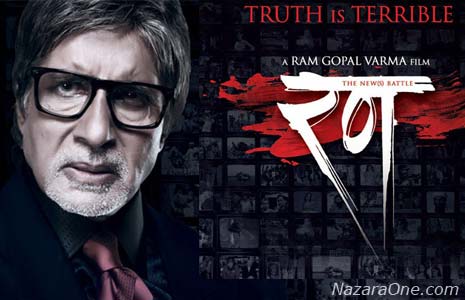
Rann movie review (Taran Adarsh) 3.5/5


Ramgopal Varma is itching to tell a new story in his movies. You may garland him for his efforts or loathe him if you feel letdown, but you need to hand it to him for picking up stories that defy stereotype.

This time, in RANN, the maverick film-maker does an expose on the games the heavyweights in the media play to further their interests. RGV goes into the newsrooms and also behind it and throws light on the politician-industrialist-media nexus. Also, it's an insider's account of how news channels that are greedy for ratings sensationalize stories to grab eyeballs.

On surface, you don't want to know what goes behind the scenes and how, at times, news are 'created' by vested interests. But RANN scratches the surface and opens a can of worms. RANN also mirrors the fact that just like there are good and bad people in every field, there're some rotten ones in the media too who succumb to temptations and create news to climb the ladder of success.

RANN is a serious film and RGV knows what he's talking this time. It wouldn't be erroneous to state that you recall RGV's SARKAR while watching RANN, even though the two films are as diverse as chalk and cheese. You recall SARKAR because RANN is an equally powerful film that shows a world we've only seen from the exterior.

RANN is for those who enjoy serious cinema. It's more for the intelligentsia, for the thinking viewer. Definitely not for those who seek refuge in frivolous masala capers.

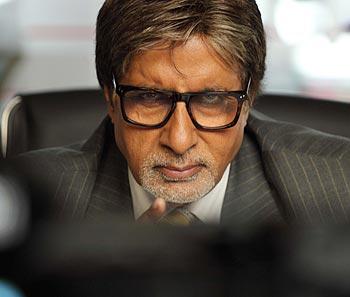
Vijay Harshvardhan Malik [Amitabh Bachchan] is the founder of a private news channel, India 24/7. A hardcore upholder of journalistic ethics, his channel is battling for survival. Jay [Sudeep], his son, looks at his father's news channel purely as a business enterprise that must make profits to justify its existence. He hates that his competition [Mohnish Bahl] is doing better than him.

The story takes a turn when a corrupt politician, Mohan Pandey [Paresh Rawal], decides to use the channel to his advantage by using Vijay's son-in-law Navin [Rajat Kapoor]. Pandey aspires to be the Prime Minister and indulges in a vicious campaign against his political opponent.

Navin is the most insecure man on earth and won't rest till he becomes the number one industrialist in the country. He, in turn, involves his brother-in-law Jay in Pandey's game plan.

Read the entire review HERE

Rann movie review (Taran Adarsh) 3.5/5


Ramgopal Varma is itching to tell a new story in his movies. You may garland him for his efforts or loathe him if you feel letdown, but you need to hand it to him for picking up stories that defy stereotype.

This time, in RANN, the maverick film-maker does an expose on the games the heavyweights in the media play to further their interests. RGV goes into the newsrooms and also behind it and throws light on the politician-industrialist-media nexus. Also, it's an insider's account of how news channels that are greedy for ratings sensationalize stories to grab eyeballs.

On surface, you don't want to know what goes behind the scenes and how, at times, news are 'created' by vested interests. But RANN scratches the surface and opens a can of worms. RANN also mirrors the fact that just like there are good and bad people in every field, there're some rotten ones in the media too who succumb to temptations and create news to climb the ladder of success.

RANN is a serious film and RGV knows what he's talking this time. It wouldn't be erroneous to state that you recall RGV's SARKAR while watching RANN, even though the two films are as diverse as chalk and cheese. You recall SARKAR because RANN is an equally powerful film that shows a world we've only seen from the exterior.

RANN is for those who enjoy serious cinema. It's more for the intelligentsia, for the thinking viewer. Definitely not for those who seek refuge in frivolous masala capers.

Vijay Harshvardhan Malik [Amitabh Bachchan] is the founder of a private news channel, India 24/7. A hardcore upholder of journalistic ethics, his channel is battling for survival. Jay [Sudeep], his son, looks at his father's news channel purely as a business enterprise that must make profits to justify its existence. He hates that his competition [Mohnish Bahl] is doing better than him.

The story takes a turn when a corrupt politician, Mohan Pandey [Paresh Rawal], decides to use the channel to his advantage by using Vijay's son-in-law Navin [Rajat Kapoor]. Pandey aspires to be the Prime Minister and indulges in a vicious campaign against his political opponent.

Navin is the most insecure man on earth and won't rest till he becomes the number one industrialist in the country. He, in turn, involves his brother-in-law Jay in Pandey's game plan.

Read the entire review HERE

Friday, January 22, 2010

'Phoonk 2 will scare you' - RGV


Ram Gopal Varma believes "Phoonk 2" is scarier than "Phoonk" and debutant director Milind Gadagkar is thrilled with the compliment.

Not only does he promise a spine-chilling fare, he also wouldn't mind doing a third instalment of the spooky flick.

"Yes, I have left the ending of 'Phoonk 2' open for another in the series. I am not ruling out the possibility and it would be interesting to see how audiences react to 'Phoonk 2'. There were some positive reactions after people saw 'Phoonk'."

Milind was the writer of "Phoonk" but he had a different vision about the horror thriller tale he wanted to tell as compared to the way Varma had translated it on screen.

And so he came up with the idea of a sequel. Ever ready to encourage new filmmakers to test their vision, Varma asked Milind to helm the project himself and direct "Phoonk 2".

"Phoonk 2", which is complete and ready for release, takes off from exactly the same point where "Phoonk" left.

"It's not just the characters but even the actors playing their roles are the same in 'Phoonk 2'," said Milind.

"We enter the lives of a couple (played by Sudeep and Amruta Khanvilkar) and their kids (Ahsaas Channa, Shrey Bawa) who continue to be haunted by the evil force (Ashwini Kalsekar) which is back from the dead. However, situations this time around are entirely new," he said.

After watching "Phoonk 2", Varma believes that the film is not just scarier than the first in the series but has also surpassed his horror movie "Bhoot". Describing the film as chilling, Varma has hailed "Phoonk 2" as the scariest film that Bollywood has ever made.

"Well, that's quite some declaration made by Ramu and I take it as a compliment", said Milind. "But, yes, I'm not holding back on my statement that I wish to scare audiences in a big way with 'Phoonk 2'...it's better to prepare them and state facts in advance. 'Phoonk 2' is indeed scary so why not declare so?" he added. 

Read the rest HERE.
 

'Phoonk 2 will scare you' - RGV


Ram Gopal Varma believes "Phoonk 2" is scarier than "Phoonk" and debutant director Milind Gadagkar is thrilled with the compliment.

Not only does he promise a spine-chilling fare, he also wouldn't mind doing a third instalment of the spooky flick.

"Yes, I have left the ending of 'Phoonk 2' open for another in the series. I am not ruling out the possibility and it would be interesting to see how audiences react to 'Phoonk 2'. There were some positive reactions after people saw 'Phoonk'."

Milind was the writer of "Phoonk" but he had a different vision about the horror thriller tale he wanted to tell as compared to the way Varma had translated it on screen.

And so he came up with the idea of a sequel. Ever ready to encourage new filmmakers to test their vision, Varma asked Milind to helm the project himself and direct "Phoonk 2".

"Phoonk 2", which is complete and ready for release, takes off from exactly the same point where "Phoonk" left.

"It's not just the characters but even the actors playing their roles are the same in 'Phoonk 2'," said Milind.

"We enter the lives of a couple (played by Sudeep and Amruta Khanvilkar) and their kids (Ahsaas Channa, Shrey Bawa) who continue to be haunted by the evil force (Ashwini Kalsekar) which is back from the dead. However, situations this time around are entirely new," he said.

After watching "Phoonk 2", Varma believes that the film is not just scarier than the first in the series but has also surpassed his horror movie "Bhoot". Describing the film as chilling, Varma has hailed "Phoonk 2" as the scariest film that Bollywood has ever made.

"Well, that's quite some declaration made by Ramu and I take it as a compliment", said Milind. "But, yes, I'm not holding back on my statement that I wish to scare audiences in a big way with 'Phoonk 2'...it's better to prepare them and state facts in advance. 'Phoonk 2' is indeed scary so why not declare so?" he added. 

Read the rest HERE.
 

Tuesday, January 19, 2010

Amitabh Bachchan speaks about Rann and Teen Patti


Amitabh Bachchan seems all set to enthrall audiences with his quirky hand-picked roles. We saw a hint of his brilliance in last year's Paa. This year, we might see it in two films -- Ram Gopal Varma's Rann and Leena Yadav's Teen Patti.

The actor tells us what to expect.

Your blog has shown your displeasure with the media quite a few times, and now you're doing a film, Rann, which takes on the media. Don't you think you make use of the same media to promote your films?

I have always maintained that if any news is wrong, then it is. It has never been an effort to show the media in a bad light. Nor am I trying to teach them their responsibilities.

I believe that we get poetic justice in three hours in our Hindi films. In the movies, we make sure we show both the sides and let people decide what they want to take from it.

There is a dialogue in Rann: 'The media is only a business and not the conscience of the society.' Do you believe in this?

Media is the conscience of the society. It is a mirror of the people. It takes a lot of courage to bring out the truth. But does the media compromise on its business? That is what we need to know. And that is what we have shown in this film.

The characters in Rann are fictional. How people react in a given situation is what you will see in the film.

Read more from HERE

Amitabh Bachchan speaks about Rann and Teen Patti


Amitabh Bachchan seems all set to enthrall audiences with his quirky hand-picked roles. We saw a hint of his brilliance in last year's Paa. This year, we might see it in two films -- Ram Gopal Varma's Rann and Leena Yadav's Teen Patti.

The actor tells us what to expect.

Your blog has shown your displeasure with the media quite a few times, and now you're doing a film, Rann, which takes on the media. Don't you think you make use of the same media to promote your films?

I have always maintained that if any news is wrong, then it is. It has never been an effort to show the media in a bad light. Nor am I trying to teach them their responsibilities.

I believe that we get poetic justice in three hours in our Hindi films. In the movies, we make sure we show both the sides and let people decide what they want to take from it.

There is a dialogue in Rann: 'The media is only a business and not the conscience of the society.' Do you believe in this?

Media is the conscience of the society. It is a mirror of the people. It takes a lot of courage to bring out the truth. But does the media compromise on its business? That is what we need to know. And that is what we have shown in this film.

The characters in Rann are fictional. How people react in a given situation is what you will see in the film.

Read more from HERE

Monday, January 18, 2010

'Rann' does not attempt to deliver a social message: RGV


Filmmaker Ramgopal Varma's latest outing 'Rann' is an attempt to expose the true colours of the media, but the maverick director says he did not make the film to deliver any message to the society.

"Through the characters and drama quotients, I am telling a story. And there could be a message underlined in the context of that story. But the primary intention of making this film is to tell a story and not to deliver any message," Varma said in an interview.

Giving the example of his other films, he said even the 1998 hit 'Satya', portrayed crime and violence. "But that does not mean that the intention of the film was to give that message of violence," he said.

According to him, the Amitabh Bachchan starrer, which takes a hard look at the highly competitive world of television news reporting in India, is not preachy either.

"To tell people what they already know is preachy, but 'Rann' tells something which they don't know so it won't be coming in that category," Varma said.

Set against the political backdrop of Delhi, 'Rann' releasing January 29, has an ensemble cast of Amitabh Bachchan along with Riteish Deshmukh, Gul Panag, Suchitra Krishnamoorthy and Neetu Chandra.

Describing the theme of the film in one-line, RGV, as he is known as in the industry, said: "If the media exposes everything, 'Rann' exposes the media".

When asked what made him take a break from horror and underworld films and chose a theme that is rarely projected on the celluloid, he said he wanted to expose the inside story of the media, which has a huge influence on our lives.

"Media is such an integral part of our life. From the moment you wake up in the morning, it keeps telling you what's happening around the world and how you should think about it. I thought a story on what goes on behind the scenes would be an interesting one to make," the producer-director said.

'Rann' is probably the first of its kind where it takes a hard look at the inner workings of the objectives of the people who run the media channels, he added.

Read more from HERE

'Rann' does not attempt to deliver a social message: RGV


Filmmaker Ramgopal Varma's latest outing 'Rann' is an attempt to expose the true colours of the media, but the maverick director says he did not make the film to deliver any message to the society.

"Through the characters and drama quotients, I am telling a story. And there could be a message underlined in the context of that story. But the primary intention of making this film is to tell a story and not to deliver any message," Varma said in an interview.

Giving the example of his other films, he said even the 1998 hit 'Satya', portrayed crime and violence. "But that does not mean that the intention of the film was to give that message of violence," he said.

According to him, the Amitabh Bachchan starrer, which takes a hard look at the highly competitive world of television news reporting in India, is not preachy either.

"To tell people what they already know is preachy, but 'Rann' tells something which they don't know so it won't be coming in that category," Varma said.

Set against the political backdrop of Delhi, 'Rann' releasing January 29, has an ensemble cast of Amitabh Bachchan along with Riteish Deshmukh, Gul Panag, Suchitra Krishnamoorthy and Neetu Chandra.

Describing the theme of the film in one-line, RGV, as he is known as in the industry, said: "If the media exposes everything, 'Rann' exposes the media".

When asked what made him take a break from horror and underworld films and chose a theme that is rarely projected on the celluloid, he said he wanted to expose the inside story of the media, which has a huge influence on our lives.

"Media is such an integral part of our life. From the moment you wake up in the morning, it keeps telling you what's happening around the world and how you should think about it. I thought a story on what goes on behind the scenes would be an interesting one to make," the producer-director said.

'Rann' is probably the first of its kind where it takes a hard look at the inner workings of the objectives of the people who run the media channels, he added.

Read more from HERE

Friday, January 15, 2010

News of the day - Ranbir deaf and mute?


Ranbir Kapoor exercised his vocal chords for Anjaana Anjaani. Music directors Vishal-Shekhar have been deliriously happy with Ranbir's singing abilities and plan to rope in Priyanka Chopra to playback in the film as well. Meanwhile, we have heard that Ranbir is playing a deaf and mute character in the yet untitled project helmed by Anurag Basu.

http://www.filmfare.com/articles/ranbir-goes-deaf-and-dumb-for-anurag-basu-369.html
OUR TAKE - why Ranbir? Why the DVD xeroxing Anurag Basu?

Akshay-Suniel-Paresh out of Hera Pheri 4
This may come as a shocker but sources reveal that director Anees Bazmee has decided to do away with the original cast of Hera Pheri. Instead of Akshay Kumar, Suniel Shetty and Paresh Rawal of the original Priyadarshan venture, the film will now have Sanjay Dutt, Anil Kapoor and Nana Patekar anchoring the roles.

http://www.filmfare.com/articles/akshaysunielparesh-out-of-hera-pheri-4-370.html
OUR TAKE - maybe it will not be so stale anymore?


Rahman and I share a silence, an ehsaas
So Sonu deliberately ‘hiked’ his price to distance himself. “Instead of doing 50 songs a month I decided to do just two songs. The rest of the time I wanted to spend in silence and in seeking who I am,” he says adding, “Music composers today have understood that money lies in events. So they have either started singing songs themselves or giving songs to
those who will perform in their shows. The entire game has changed. Composers come to me only for special songs, barring a few like Sajid-Wajid, Shantanu Moitra and A R Rahman with whom I have worked consistently.” Interestingly, Sonu and Rahman, both dubbed as soul-searchers, are not really comrades in conversation. “We share a silence of sorts. He knows that I know what he knows. He is quite like me — detached from things. We meet each other cordially, we do the song and I leave. We don’t connect via emails or talk on the phone. I think it’s good this way. Rahman and I just share an ehsaas (feeling),” Sonu decodes the equation.

http://www.filmfare.com/articles/sonu-niigam-rahman-and-i-share-an-ehsaas-371.html
OUR TAKE - stop trying to be a rock star Sonu, and just sing!!


http://www.filmfare.com/articles/sneak-peek-rann-374.html
MOST INTERESTING PICTURES! Can Ramu prevent it from spinning out of control?

News of the day - Ranbir deaf and mute?


Ranbir Kapoor exercised his vocal chords for Anjaana Anjaani. Music directors Vishal-Shekhar have been deliriously happy with Ranbir's singing abilities and plan to rope in Priyanka Chopra to playback in the film as well. Meanwhile, we have heard that Ranbir is playing a deaf and mute character in the yet untitled project helmed by Anurag Basu.

http://www.filmfare.com/articles/ranbir-goes-deaf-and-dumb-for-anurag-basu-369.html
OUR TAKE - why Ranbir? Why the DVD xeroxing Anurag Basu?

Akshay-Suniel-Paresh out of Hera Pheri 4
This may come as a shocker but sources reveal that director Anees Bazmee has decided to do away with the original cast of Hera Pheri. Instead of Akshay Kumar, Suniel Shetty and Paresh Rawal of the original Priyadarshan venture, the film will now have Sanjay Dutt, Anil Kapoor and Nana Patekar anchoring the roles.

http://www.filmfare.com/articles/akshaysunielparesh-out-of-hera-pheri-4-370.html
OUR TAKE - maybe it will not be so stale anymore?


Rahman and I share a silence, an ehsaas
So Sonu deliberately ‘hiked’ his price to distance himself. “Instead of doing 50 songs a month I decided to do just two songs. The rest of the time I wanted to spend in silence and in seeking who I am,” he says adding, “Music composers today have understood that money lies in events. So they have either started singing songs themselves or giving songs to
those who will perform in their shows. The entire game has changed. Composers come to me only for special songs, barring a few like Sajid-Wajid, Shantanu Moitra and A R Rahman with whom I have worked consistently.” Interestingly, Sonu and Rahman, both dubbed as soul-searchers, are not really comrades in conversation. “We share a silence of sorts. He knows that I know what he knows. He is quite like me — detached from things. We meet each other cordially, we do the song and I leave. We don’t connect via emails or talk on the phone. I think it’s good this way. Rahman and I just share an ehsaas (feeling),” Sonu decodes the equation.

http://www.filmfare.com/articles/sonu-niigam-rahman-and-i-share-an-ehsaas-371.html
OUR TAKE - stop trying to be a rock star Sonu, and just sing!!


http://www.filmfare.com/articles/sneak-peek-rann-374.html
MOST INTERESTING PICTURES! Can Ramu prevent it from spinning out of control?