Showing posts with label music review. Show all posts
Tuesday, April 27, 2010
Rahman rhapsody - Raavan music review
The score of the much-awaited “Raavan” is proof that A.R. Rahman saves his best for old friend Mani Ratnam
Here's a Dare. Try keeping yourself away from not tuning in to this album. The songs will find you no matter where you go for the next three months — as ringtones, caller tunes, friend's car stereos, before it finally takes over your iTunes playlist.
“Raavan” is further proof that A.R. Rahman always saves some of his best stuff for old friend Mani Ratnam. That appetising teaser playing on TV with chants of Beera is guaranteed to make even the cynics take that dive straight into the album.
The magic of sounds
“Raavan” begins with a paean to Beera (Vijay Prakash, Mustafa Kutuane and Keerthi Sagathia) with an African tribal vibe, a little “Lion King”-ish, thanks to its jungle rhythms and the percussion pepping up the ode to the riotous Raavan.
The song establishes the character of the protagonist, and we see him as a grown-up Mowgli, bursting with energy, cruising through the jungle, and gearing up for a ride into the wild, warned not to mess with Beera — because he's all about Abhimaan (pride or ego as we've heard from the myth).
Gulzar has a lot more to do in the melancholic second track ‘Behene De' that begins with a pall of gloom (faint drum beats and ambient sounds) — sort of an aftermath song.
Despite the hurting, we see that Raavan hasn't lost his sense of pride. Beautiful similes of fire and water punctuate this mood song that packs in the pain and angst of Raavan. Soulfully rendered by Karthik (and additional vocals by Mohammed Irfan).
The energetic ‘Thok De Khilli' (Sukhwinder Singh, Am'nico) comes up next as an anthem for revolution. The situation seems to be inter-cut with a wedding sequence as the shehnai smoothly blends into the revolt song, and we can be assured of some intense drama in the choreography, what with lyrics such as ‘Kisme Dum Hai Ki Suraj Bhujaiye?' (Who has the guts to extinguish the sun?) and a crescendo. Rahman sets it up for a volatile encounter. The song suggests that Mani Ratnam's “Raavan” is tired of decades of the differences between the haves and the have-nots.
‘Ranjha Ranjha' (Rekha Bharadwaj, Javed Ali and additional vocals by Anuradha Sriram) seems to be the outlet for Raavan's angst of his unrequited love, and Rahman packs in some more soul. Again, a great opportunity for Gulzar to delve into the pangs of love and longing..
Love ballad
We suspect this happens after the abduction when Raavan finds himself crazy in love with his captive. This could also be the only opportunity for the item number, with Rahman infusing slow dance beats into this pathos-filled love ballad — maybe a couple of street performers echoing his sentiments.
There's a certain vulnerability about Rekha Bhardwaj's voice that helps Rahman churn out the album's only slow song — a beautiful melody, done Hindustani style, with Naveen's flute and tabla giving ample scope for Aishwarya to showcase her dancing skills. This song is bound to sound way better at the end of a long day, a soothing song about a girl's love for her piya (husband). Probably, the only song Ram gets in “Raavan”'s album?
There are going to be numerous comparisons between ‘Kata Kata' (Ila Arun, Sapna Awasthi, Kunal Ganjawalla) and ‘Rukmani Rukmani', both being wedding songs involving a group of singers, but if ‘Rukmani…' was a mischievous set-up for the nuptial night, this one's sung like a warning (‘Kata Kata Bechara Bakra'), but with equal amount of revelry and fanfare. ‘One more bites the dust' is the sentiment, but the shehnai and the dhol, coupled with Kerala-flavoured percussion building up to a riotous climax, may make it a favourite at weddings.
There's no escaping “Raavan”. Or Rahman. They will get you.
Rahman rhapsody - Raavan music review
The score of the much-awaited “Raavan” is proof that A.R. Rahman saves his best for old friend Mani Ratnam
Here's a Dare. Try keeping yourself away from not tuning in to this album. The songs will find you no matter where you go for the next three months — as ringtones, caller tunes, friend's car stereos, before it finally takes over your iTunes playlist.
“Raavan” is further proof that A.R. Rahman always saves some of his best stuff for old friend Mani Ratnam. That appetising teaser playing on TV with chants of Beera is guaranteed to make even the cynics take that dive straight into the album.
The magic of sounds
“Raavan” begins with a paean to Beera (Vijay Prakash, Mustafa Kutuane and Keerthi Sagathia) with an African tribal vibe, a little “Lion King”-ish, thanks to its jungle rhythms and the percussion pepping up the ode to the riotous Raavan.
The song establishes the character of the protagonist, and we see him as a grown-up Mowgli, bursting with energy, cruising through the jungle, and gearing up for a ride into the wild, warned not to mess with Beera — because he's all about Abhimaan (pride or ego as we've heard from the myth).
Gulzar has a lot more to do in the melancholic second track ‘Behene De' that begins with a pall of gloom (faint drum beats and ambient sounds) — sort of an aftermath song.
Despite the hurting, we see that Raavan hasn't lost his sense of pride. Beautiful similes of fire and water punctuate this mood song that packs in the pain and angst of Raavan. Soulfully rendered by Karthik (and additional vocals by Mohammed Irfan).
The energetic ‘Thok De Khilli' (Sukhwinder Singh, Am'nico) comes up next as an anthem for revolution. The situation seems to be inter-cut with a wedding sequence as the shehnai smoothly blends into the revolt song, and we can be assured of some intense drama in the choreography, what with lyrics such as ‘Kisme Dum Hai Ki Suraj Bhujaiye?' (Who has the guts to extinguish the sun?) and a crescendo. Rahman sets it up for a volatile encounter. The song suggests that Mani Ratnam's “Raavan” is tired of decades of the differences between the haves and the have-nots.
‘Ranjha Ranjha' (Rekha Bharadwaj, Javed Ali and additional vocals by Anuradha Sriram) seems to be the outlet for Raavan's angst of his unrequited love, and Rahman packs in some more soul. Again, a great opportunity for Gulzar to delve into the pangs of love and longing..
Love ballad
We suspect this happens after the abduction when Raavan finds himself crazy in love with his captive. This could also be the only opportunity for the item number, with Rahman infusing slow dance beats into this pathos-filled love ballad — maybe a couple of street performers echoing his sentiments.
There's a certain vulnerability about Rekha Bhardwaj's voice that helps Rahman churn out the album's only slow song — a beautiful melody, done Hindustani style, with Naveen's flute and tabla giving ample scope for Aishwarya to showcase her dancing skills. This song is bound to sound way better at the end of a long day, a soothing song about a girl's love for her piya (husband). Probably, the only song Ram gets in “Raavan”'s album?
There are going to be numerous comparisons between ‘Kata Kata' (Ila Arun, Sapna Awasthi, Kunal Ganjawalla) and ‘Rukmani Rukmani', both being wedding songs involving a group of singers, but if ‘Rukmani…' was a mischievous set-up for the nuptial night, this one's sung like a warning (‘Kata Kata Bechara Bakra'), but with equal amount of revelry and fanfare. ‘One more bites the dust' is the sentiment, but the shehnai and the dhol, coupled with Kerala-flavoured percussion building up to a riotous climax, may make it a favourite at weddings.
There's no escaping “Raavan”. Or Rahman. They will get you.
Friday, April 9, 2010
Milliblog review of Badmaash Company music - Pritam gets it massy and right, after a long time!
LINK
Ayaashi is racy and definitely catchy; if only it did not spell it out in the name of a chorus…! The title song has Benny Dayal crooning a flat tune embellished occasionally with intriguing reggaeton-style backgrounds, while Krishna gets a neat, foot-tapping package in Chaska – rhythmic and addictive! Pritam reserves the best for Rahat Fateh Ali Khan, in Fakeera – instantly pleasing power-melody, brilliantly arranged in typical Pritam style with a 80s pop style! Mohit Chauhan’s strangely titled Jingle Jingle doesn’t disappoint either, despite the standard Punju chorus infusion. Pritam gets it massy and right, after a long time!
Listen to the music HERE
Milliblog review of Badmaash Company music - Pritam gets it massy and right, after a long time!
LINK
Ayaashi is racy and definitely catchy; if only it did not spell it out in the name of a chorus…! The title song has Benny Dayal crooning a flat tune embellished occasionally with intriguing reggaeton-style backgrounds, while Krishna gets a neat, foot-tapping package in Chaska – rhythmic and addictive! Pritam reserves the best for Rahat Fateh Ali Khan, in Fakeera – instantly pleasing power-melody, brilliantly arranged in typical Pritam style with a 80s pop style! Mohit Chauhan’s strangely titled Jingle Jingle doesn’t disappoint either, despite the standard Punju chorus infusion. Pritam gets it massy and right, after a long time!
Listen to the music HERE
Thursday, January 14, 2010
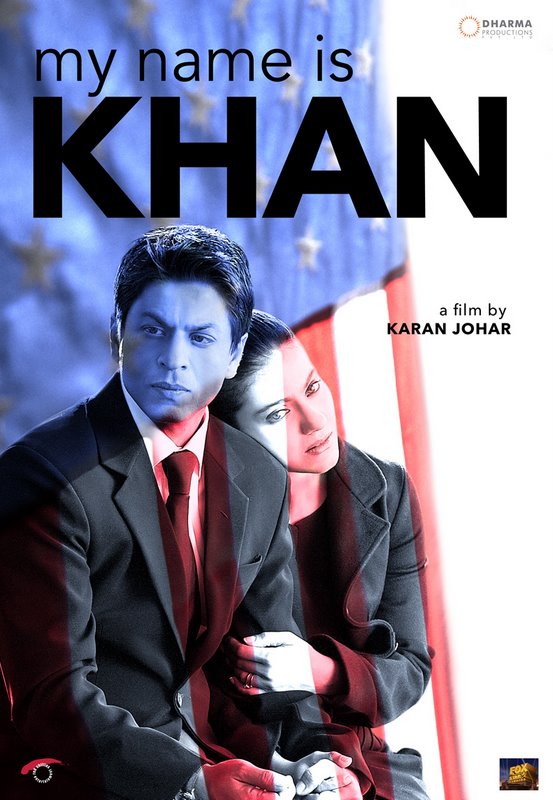
The music of My Name is Khan - the eyes have it!!
After a gap of 3 years Karan Johar is in the director's chair again and directing his favorite jodi of Shahrukh Khan and Kajol. The claim is that this is not his usual drama, set in the lifestyle of the rich and famous. Though they do exist, as we were told by Ram Gopal Varama when he went to the AbhiAish wedding - he came back saying he now understood Karan's cinema!! But Karan moves out of his comfort zone, where he had last played out his version of 'The Dangerous Liaisons' set in New York City, and now he promises a film that deals with a "challenged" man, Shahrukh with autism of the Asperger's variety, and his quest to win back the love of his live and in the process show a nation that religion does not determine who the fanatic is. The film is said to have no large song and dance spectacle, and in fact no lip-sync singing at all. A Karan film without the Shava Shava, Mahi Ve, Where's the Party Tointe numbers would make one wonder what kind of music is in store for us.
The composers are the Dharma Productions faithful Shankar Ehsaan Loy, and the lyrics are by Niranjan Iyengar. Niranjan Iyengar had written some excellent dialogs for KANK (Hum zameen par to chal hi nahin rahe thay, wahan to kabke fisal chuke thay!) and that had my hopes high for the lyrics of MNIK. The music of Wake Up Sid and Kurbaan by SEL had been quite promising this past year. So without further ado let me tell you which my favorite track of MNIK is:
Song Title: Sajda
Singers: Rahat Fateh Ali Khan, Shankar Mahadevan, Richa Sharma
Richa Sharma has the range and power in her voice to make your hair stand on end - and that is exactly what happens as she starts out with:
Rom rom tera naam pukaare
Ek hue din reain hamare
Hum se hum hi chiin gaye hai
Jab se dekhe hai nainn deewane
And almost before this ends we hear the voice of Rahat Fateh Ali Khan and Shankar Mahadevan with the refrain
Sajda ..
Teri kaali ankhiyon se jind meri jaage
Dhadkan se tej daudoon, sapno se aage
Ab jaan lutt jaaye, ye jahaan chhut jaaye
Sang pyaar rahe, main rahun na rahun
Sajda tera sajda!
Richa comes back towards the end and lifts the song up again so it soars!!
Next up is Noor-e-Khuda:
Singers: Shankar Mahadevan, Adnan Sami and Shreya Ghoshal.
This is in exactly the opposite mood to that portrayed in Sajda. Here the mood is somber and almost despairing!
Ajnabi mod hai,
Khauf har aur hai,
Saans ruk si gayi
Jism chhil sa gaya
Toote khwabon ke manzar pe
Tera jahan chal diya
Noor E Khuda Noor E Khuda
tu kahan chhupa hai humein yeh bata
Noor E Khuda Noor E Khuda
yun naa humse nazarein phira.
Noor E Khuda ..
The trials of a tortured soul as he asks the divine powers that be, to show him the light again, and the song carries on in this vein in the voices of Shankar and Adnan Sami until Shreya enters the number with her mellifluous voice:
Ujhde se lamhon ko aas teri,
Zakhmi dilon ko hai pyaas teri
Har dhadkan ko talaash teri,
Tera milta nahi hai pata,
And this changes the tone of the song and somehow makes it more a song of hope than despair. Noor-e-Khuda is a haunting number, full of soul.
Then we have Tere Naina
Singer: Shafqat Amanat Ali
The voice here is soft, the tune is mellow, and the mood is one of love!
Tere naina tere naina tere naina re
Naino ki chaal hai, makhmali haal hai
Neechi palkon se badle samaa
The singing is accomplished though the song generally lacks any major punch. It only picks up a bit at this juncture:
Zakham pe marham, tere naina
Dhool pe shabnam, tere naina
Jag bhoole bhoole, tere naina
Dil chu le chu le, tere naina
Tere nainon ke aagey jo taare bhi sharamaye ..
Pa ni sa ni sa ni dha pa ni dha pa ma ga re sa
I would not fault the singing but the lyrics - they are just short of being pure poetry.
This one is followed by the qawwali number Allah-hi-Raham
Singer: Rashid Khan
The song starts in a serious tone with the chorus kicking in almost immediately with:
Allah hi raham, maula hi raham
And then the solo voice of Rashid Khan sings:
Kaise ishq se sajh gayi raahein
Jab se dekhi yeh teri nigaahein
Ya khuda, main to tera ho gaya
'This song again picks up on the eyes motif! And the chorus immediately turns it from a love song into a sufi paean to Allah. Unlike most qawwalis that have a very uplifting tone and energy, this one is almost "dull" in the way it is presented. I wonder if this will be seen only minimally in the film, as it does not seem to have the qawwali energy that seems to be required.
The next song is Rang de:
Singers: Shankar Mahadevan, Suraj Jagan
This song is a full on rock and sufi fusion and supposed to have an uplifting message about peace and goodwill. It also has the feel of a journey song. I would guess that this is the hero's journey to his quest. The mood is upbeat, almost like a marching beat because of the rock fusion. The singing is competent and the song does the job.
More on the final track at PakhiPakhi
Posted by
Pardesi
at
1:47 PM
10
comments
Labels:
featured,
Kajol,
Karan Johar,
MNIK,
music,
music review,
Shahrukh Khan,
SRK
The music of My Name is Khan - the eyes have it!!
After a gap of 3 years Karan Johar is in the director's chair again and directing his favorite jodi of Shahrukh Khan and Kajol. The claim is that this is not his usual drama, set in the lifestyle of the rich and famous. Though they do exist, as we were told by Ram Gopal Varama when he went to the AbhiAish wedding - he came back saying he now understood Karan's cinema!! But Karan moves out of his comfort zone, where he had last played out his version of 'The Dangerous Liaisons' set in New York City, and now he promises a film that deals with a "challenged" man, Shahrukh with autism of the Asperger's variety, and his quest to win back the love of his live and in the process show a nation that religion does not determine who the fanatic is. The film is said to have no large song and dance spectacle, and in fact no lip-sync singing at all. A Karan film without the Shava Shava, Mahi Ve, Where's the Party Tointe numbers would make one wonder what kind of music is in store for us.
The composers are the Dharma Productions faithful Shankar Ehsaan Loy, and the lyrics are by Niranjan Iyengar. Niranjan Iyengar had written some excellent dialogs for KANK (Hum zameen par to chal hi nahin rahe thay, wahan to kabke fisal chuke thay!) and that had my hopes high for the lyrics of MNIK. The music of Wake Up Sid and Kurbaan by SEL had been quite promising this past year. So without further ado let me tell you which my favorite track of MNIK is:
Song Title: Sajda
Singers: Rahat Fateh Ali Khan, Shankar Mahadevan, Richa Sharma
Richa Sharma has the range and power in her voice to make your hair stand on end - and that is exactly what happens as she starts out with:
Rom rom tera naam pukaare
Ek hue din reain hamare
Hum se hum hi chiin gaye hai
Jab se dekhe hai nainn deewane
And almost before this ends we hear the voice of Rahat Fateh Ali Khan and Shankar Mahadevan with the refrain
Sajda ..
Teri kaali ankhiyon se jind meri jaage
Dhadkan se tej daudoon, sapno se aage
Ab jaan lutt jaaye, ye jahaan chhut jaaye
Sang pyaar rahe, main rahun na rahun
Sajda tera sajda!
Richa comes back towards the end and lifts the song up again so it soars!!
Next up is Noor-e-Khuda:
Singers: Shankar Mahadevan, Adnan Sami and Shreya Ghoshal.
This is in exactly the opposite mood to that portrayed in Sajda. Here the mood is somber and almost despairing!
Ajnabi mod hai,
Khauf har aur hai,
Saans ruk si gayi
Jism chhil sa gaya
Toote khwabon ke manzar pe
Tera jahan chal diya
Noor E Khuda Noor E Khuda
tu kahan chhupa hai humein yeh bata
Noor E Khuda Noor E Khuda
yun naa humse nazarein phira.
Noor E Khuda ..
The trials of a tortured soul as he asks the divine powers that be, to show him the light again, and the song carries on in this vein in the voices of Shankar and Adnan Sami until Shreya enters the number with her mellifluous voice:
Ujhde se lamhon ko aas teri,
Zakhmi dilon ko hai pyaas teri
Har dhadkan ko talaash teri,
Tera milta nahi hai pata,
And this changes the tone of the song and somehow makes it more a song of hope than despair. Noor-e-Khuda is a haunting number, full of soul.
Then we have Tere Naina
Singer: Shafqat Amanat Ali
The voice here is soft, the tune is mellow, and the mood is one of love!
Tere naina tere naina tere naina re
Naino ki chaal hai, makhmali haal hai
Neechi palkon se badle samaa
The singing is accomplished though the song generally lacks any major punch. It only picks up a bit at this juncture:
Zakham pe marham, tere naina
Dhool pe shabnam, tere naina
Jag bhoole bhoole, tere naina
Dil chu le chu le, tere naina
Tere nainon ke aagey jo taare bhi sharamaye ..
Pa ni sa ni sa ni dha pa ni dha pa ma ga re sa
I would not fault the singing but the lyrics - they are just short of being pure poetry.
This one is followed by the qawwali number Allah-hi-Raham
Singer: Rashid Khan
The song starts in a serious tone with the chorus kicking in almost immediately with:
Allah hi raham, maula hi raham
And then the solo voice of Rashid Khan sings:
Kaise ishq se sajh gayi raahein
Jab se dekhi yeh teri nigaahein
Ya khuda, main to tera ho gaya
'This song again picks up on the eyes motif! And the chorus immediately turns it from a love song into a sufi paean to Allah. Unlike most qawwalis that have a very uplifting tone and energy, this one is almost "dull" in the way it is presented. I wonder if this will be seen only minimally in the film, as it does not seem to have the qawwali energy that seems to be required.
The next song is Rang de:
Singers: Shankar Mahadevan, Suraj Jagan
This song is a full on rock and sufi fusion and supposed to have an uplifting message about peace and goodwill. It also has the feel of a journey song. I would guess that this is the hero's journey to his quest. The mood is upbeat, almost like a marching beat because of the rock fusion. The singing is competent and the song does the job.
More on the final track at PakhiPakhi
Posted by
Pardesi
at
1:47 PM
10
comments
Labels:
featured,
Kajol,
Karan Johar,
MNIK,
music,
music review,
Shahrukh Khan,
SRK
Thursday, January 7, 2010
My Name Is Khan: Music Review
| ||
My Name Is Khan: Music Review
| ||
Subscribe to:
Posts (Atom)