Showing posts with label Gulzar. Show all posts

Sunday, February 20, 2011

Vishal's World


Grounded: Bhardwaj says he wanted to become a director after watching Quentin Tarantino’s Pulp Fiction. Abhijit Bhatlekar/Mint
Grounded: Bhardwaj says he wanted to become a director after watching Quentin Tarantino’s Pulp Fiction. 
Abhijit Bhatlekar/Mint

When 19-year-old Vishal Bhardwaj returned from cricket practice that morning, his home had been emptied out on the street. Chairs, tables, utensils, clothes, photo frames—everything lay strewn on the road outside his home in Meerut, Uttar Pradesh. In the midst of it, right there on the street, his poet father—for long his best friend—lay sprawled. And lifeless.

Saturday, June 19, 2010

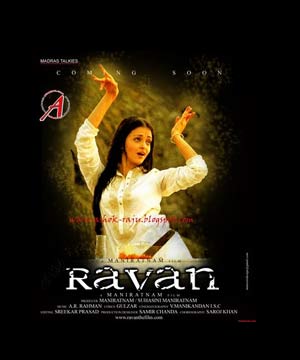
Raavan - My Review


In a religious country like India, where people have ended up fighting over Rama and Allah, it needs some courage to take up one of the two greatest epics written and show our worshipped Lord Rama having a grey side to him. It takes even more courage to start telling the story from the villain Raavan’s point of view and justify his actions. Mani Ratnam is his latest film does exactly that when he gives the mythological story a realistic setting in today’s world and twists the story a bit to make people sympathize for the villain of the epic.

Abhishek Bachchan plays an outlaw called Beera(Raavan) in the film. Though he goes against the law, the villagers believe in him, his actions, and his ideology which makes him a character like Don Vito Corleone or the Sarkar. The only difference is he is wilder than those. The wildness, ofcourse is to draw parallelism to Raavan’s character in Ramayana. He kidnaps Raagini(Sita) played by Aishwarya Rai Bachchan to kill her for reasons told later in the film. But instead of killing her, he starts falling for her beauty, her bravery. This is where we see the film getting similar to RGV’s Jungle where the lead bandit started falling for Urmilla Matondkar and starts taking wrong decisions.

Mani Ratnam goes back to what he is most known for and does the best, depicting violence and terrorism on screen. Though Raavan isn’t exactly a film about terrorism, its style is very similar to those. He might not have come back to his real best, but it seems like he is on his right way now after Guru where I thought he completely lost his way and like other directors got pulled and attracted by commercial brand of cinema. With Raavan, he seems to be coming back to his own.

The most pleasing thing in this film is the visuals, the cinematography. Santosh Sivan is really a master of camerawork. He has never disappointed me with his camera work. While Terrorist is his best piece of work for me, Raavan isn’t very far behind. Though shooting infront of the waterfalls, and naturally beautiful scenes makes it easier for him to make the picture look beautiful, he is equally good in indoor scenes and close-up shots. He and Manikandan make the film a visual treat and worth watching just for the visuals alone.

Read more from HERE

Raavan - My Review


In a religious country like India, where people have ended up fighting over Rama and Allah, it needs some courage to take up one of the two greatest epics written and show our worshipped Lord Rama having a grey side to him. It takes even more courage to start telling the story from the villain Raavan’s point of view and justify his actions. Mani Ratnam is his latest film does exactly that when he gives the mythological story a realistic setting in today’s world and twists the story a bit to make people sympathize for the villain of the epic.

Abhishek Bachchan plays an outlaw called Beera(Raavan) in the film. Though he goes against the law, the villagers believe in him, his actions, and his ideology which makes him a character like Don Vito Corleone or the Sarkar. The only difference is he is wilder than those. The wildness, ofcourse is to draw parallelism to Raavan’s character in Ramayana. He kidnaps Raagini(Sita) played by Aishwarya Rai Bachchan to kill her for reasons told later in the film. But instead of killing her, he starts falling for her beauty, her bravery. This is where we see the film getting similar to RGV’s Jungle where the lead bandit started falling for Urmilla Matondkar and starts taking wrong decisions.

Mani Ratnam goes back to what he is most known for and does the best, depicting violence and terrorism on screen. Though Raavan isn’t exactly a film about terrorism, its style is very similar to those. He might not have come back to his real best, but it seems like he is on his right way now after Guru where I thought he completely lost his way and like other directors got pulled and attracted by commercial brand of cinema. With Raavan, he seems to be coming back to his own.

The most pleasing thing in this film is the visuals, the cinematography. Santosh Sivan is really a master of camerawork. He has never disappointed me with his camera work. While Terrorist is his best piece of work for me, Raavan isn’t very far behind. Though shooting infront of the waterfalls, and naturally beautiful scenes makes it easier for him to make the picture look beautiful, he is equally good in indoor scenes and close-up shots. He and Manikandan make the film a visual treat and worth watching just for the visuals alone.

Read more from HERE

Wednesday, June 2, 2010

Happy Birthday Mani Sir


On the occasion of the birthday of one of our finest directors in Indian Cinema, I am posting some of the brilliant scenes, songs and trailers from different movies directed by him.

First few are from my favorite movie directed by him - Kannathil Muthamittal


GURU - A film that promised a lot, but sadly turned out to be a revised version of Ratnam's earlier work, Nayagan with a different setting.


NAYAGAN - A film based on a true story of a Bombay based Don, Varadarajan Mudaliar. Though based on a true story, it has many similarities to Coppola's The Godfather Trilogy.


DIL SE - One of the best films in Indian Cinema. Terrific performances by the lead actors. SRK, Manisha Koirala, Santosh Sivan, Mani Ratnam, AR Rahman, Gulzar were in TOP FORM in this film. A film that gets better with every viewing. Soem of my favorite scenes from the film -


ROJA


BOMBAY/BUMBAI


BOW to the LEGEND.

Happy Birthday Mani Sir


On the occasion of the birthday of one of our finest directors in Indian Cinema, I am posting some of the brilliant scenes, songs and trailers from different movies directed by him.

First few are from my favorite movie directed by him - Kannathil Muthamittal


GURU - A film that promised a lot, but sadly turned out to be a revised version of Ratnam's earlier work, Nayagan with a different setting.


NAYAGAN - A film based on a true story of a Bombay based Don, Varadarajan Mudaliar. Though based on a true story, it has many similarities to Coppola's The Godfather Trilogy.


DIL SE - One of the best films in Indian Cinema. Terrific performances by the lead actors. SRK, Manisha Koirala, Santosh Sivan, Mani Ratnam, AR Rahman, Gulzar were in TOP FORM in this film. A film that gets better with every viewing. Soem of my favorite scenes from the film -


ROJA


BOMBAY/BUMBAI


BOW to the LEGEND.

Thursday, May 27, 2010

The Making of Raavan Music


Some lovely video footage here! Film is looking more and more interesting.

The Making of Raavan Music


Some lovely video footage here! Film is looking more and more interesting.

Friday, May 21, 2010

Lyrics from the heart - Dil Se!!!


As Gulzar, A R Rahman and Mani Ratnam come together again for Raavan, I thought it was time to revisit one of my favorite albums from the trio, and to focus on the sublime lyrics by Gulzar Saab. So here for you is my translation of the lyrics of Dil se!

CHAIYYA CHAIYYA (the train song - Sukhwinder Singh and Sapna Awasthi)
Amar meets a girl at the train station and is instantly attracted to her but she leaves on another train….


Chorus:
jinke sar ho ishq kii chhaon
He whose head is in the shadow of love

paon ke niiche jannat hogi
will have heaven beneath his feet.

jinke sar ho ishq ki chhaon
Whose head is in the shadow of love...

chal chhaiyya
Walk in the shadow.

paon jannat chale chal chhaiyya
Heaven beneath your feet, walk in the shadow.

vo yaar hai jo khushbuu kii tarah
There's a girl(?) who is like a sweet fragrance,

Vo jiskii zabaan Urdu kii tarah
whose words are like poetry (lit. Urdu, the language of poetry),

merii shaam raat merii qainaat
who is my evening, my night, my existence.

vo yaar mera sainyya sainyya
She is my beloved!

Chorus

gulposh kabhii itarae kahin
Bedecked in flowers she flits around,

mahake to nazar aa jaaye kahin
Catch her fragrance and you may see her

taawiiz banake pahanun use
I will make her into a charm and wear it.

aayat kii tarah mil jaaye kahin
Like a miracle I will find her someday.

mera nagma vahi mera qalma vahi
She is my song, my declaration of faith

(kalama: the Muslim confession of faith, as in vo yaar hai jo imaam ki tarah - She is like a priest to me.)

mera nagma nagma mera qalma qalma
My song... my declaration of faith...

yaar misale os chale
She moves like the dew.

paon ke tale firdaus chale
She walks with the garden of heaven beneath her feet,

kabhii daal daal kabhii paat paat
sometimes through the branches, sometimes amidst the leaves.

main hawa pe dhoodhoonn us ke nishan
I search the wind for her trail!

Chorus

main uske ruup ka sedaaii
I am on a quest for her beauty.

vo dhuup chhaanhon sa harjaaii
She is as changeable as sun and shade.

vo shokh hai rang badalta hai
She mischievously changes colors;

main rang ruup ka saudaaii
Little knowing that I trade in colors and beauty.

Chorus

Translation of the other songs can be found HERE

Lyrics from the heart - Dil Se!!!


As Gulzar, A R Rahman and Mani Ratnam come together again for Raavan, I thought it was time to revisit one of my favorite albums from the trio, and to focus on the sublime lyrics by Gulzar Saab. So here for you is my translation of the lyrics of Dil se!

CHAIYYA CHAIYYA (the train song - Sukhwinder Singh and Sapna Awasthi)
Amar meets a girl at the train station and is instantly attracted to her but she leaves on another train….


Chorus:
jinke sar ho ishq kii chhaon
He whose head is in the shadow of love

paon ke niiche jannat hogi
will have heaven beneath his feet.

jinke sar ho ishq ki chhaon
Whose head is in the shadow of love...

chal chhaiyya
Walk in the shadow.

paon jannat chale chal chhaiyya
Heaven beneath your feet, walk in the shadow.

vo yaar hai jo khushbuu kii tarah
There's a girl(?) who is like a sweet fragrance,

Vo jiskii zabaan Urdu kii tarah
whose words are like poetry (lit. Urdu, the language of poetry),

merii shaam raat merii qainaat
who is my evening, my night, my existence.

vo yaar mera sainyya sainyya
She is my beloved!

Chorus

gulposh kabhii itarae kahin
Bedecked in flowers she flits around,

mahake to nazar aa jaaye kahin
Catch her fragrance and you may see her

taawiiz banake pahanun use
I will make her into a charm and wear it.

aayat kii tarah mil jaaye kahin
Like a miracle I will find her someday.

mera nagma vahi mera qalma vahi
She is my song, my declaration of faith

(kalama: the Muslim confession of faith, as in vo yaar hai jo imaam ki tarah - She is like a priest to me.)

mera nagma nagma mera qalma qalma
My song... my declaration of faith...

yaar misale os chale
She moves like the dew.

paon ke tale firdaus chale
She walks with the garden of heaven beneath her feet,

kabhii daal daal kabhii paat paat
sometimes through the branches, sometimes amidst the leaves.

main hawa pe dhoodhoonn us ke nishan
I search the wind for her trail!

Chorus

main uske ruup ka sedaaii
I am on a quest for her beauty.

vo dhuup chhaanhon sa harjaaii
She is as changeable as sun and shade.

vo shokh hai rang badalta hai
She mischievously changes colors;

main rang ruup ka saudaaii
Little knowing that I trade in colors and beauty.

Chorus

Translation of the other songs can be found HERE

Monday, May 3, 2010

Rangan's thoughts on Raavan Music


HEAD GAMES

AR Rahman packs a lot of his heady signatures into the soundtrack for Mani Ratnam’s new film, but where’s the appeal to the heart?

MAY 2, 2010 – THERE’S MUSIC OF THE HEAD and there’s music of the heart, and our older composers were nimble acrobats who tiptoed blithely along the tightrope-median, secure in the wisdom that their purpose was threefold: to serve the situation on screen, to showcase their own compositional talents, and to give the man-on-the-street something to take home with a whistle on his lips (or a shimmy-shake in his shoes). You heard their songs, and your heart responded instantly, and then – only after you knew the tune-outline like the back of your hand – did you take them apart in your head (perhaps all ten of them). It was a happy situation for everyone. The casual listener walked away with melodies to hum and memories to bequeath to succeeding generations, bolstered by lyrics that could be discerned at first listen. And the music enthusiast (or maniac, if you will), like a geek-mechanic handed a gleaming Rolls, could marvel at how everything fit, how this raga was soldered to that jazz influence, or how that percussion instrument pressed a foot to the pedal just as this string section began to purr. And then our film songs were beset by the same upheavals as Western Classical Music.

As we’re discussing the music of the “Mozart of Madras,” let’s take the instance of real article, the real Mozart. Whether minimal (the twinkle-toed Eine kleine Nachtmusik, say) or monumental (the operatic overture to Don Giovanni), there’s always a melodic hook (or a leitmotif, as the case may be), a comforting tour guide that holds our hands through the more intimidatingly free-flowing aspects of the composition. (Also, these were almost always set to a simple time signature, like the four-four, even if there were complexities within that beat count.) No one will deny that Mozart had a masterful musical imagination or that he bent the scales to his idiosyncratic will, and yet, his music is easy even for a first-time listener. You take away something, something pleasant, even if you cannot tell major from minor, tone from semitone. But later, when the avant-garde came in, brandishing heresies like atonality and serialism, it was as if these formidably intellectual composers decided that all existing melodic possibilities had been explored and exhausted, and the only way forward was uncharted territory – all hyper-intellectualised head-music, with very little patience or indulgence for heart-music lovers, those poor, sentimental fools.

That’s the schism in our film music today, and my first thoughts, after four or five listens to AR Rahman’s soundtrack for Raavan, were about how much head-music there was, and how much he’s completely abandoned the notion of catering to us heart-music lovers, we poor, sentimental fools. Even the token melodic numbers – Behne de (beautifully sung by Karthik), and Khili re (with a light and lovely raga stretch in Kalavati) – are frustratingly evanescent, drifting from the mindscape barely seconds after they’ve alighted. They’re very pretty, and the filigree-work from Rahman’s factory is, needless to say, dependably ornate (though the album, in general, feels a little too fussed-over) – but just try holding on and singing along. There is, of course, one school of thought that says not all music needs to be easy, but then – as Rahman himself has proved so many times earlier – even heavily layered music, that’s borderline-impossible to fully take apart in the head, can effortlessly worm its way into the heart, like the irreproachable Ae hairat-e-aashiqui and Tere bina from Guru, or the entire soundtracks for Delhi-6 and Rang De Basanti. (The Mani Ratnam-Rahman combination may command more might at the box office, but it’s Rakeysh Mehra who seems to inspire Rahman to deliver the best of both head-music and heart-music.) With Raavan, I couldn’t shake off the disappointment that, despite all the evident effort, there is no solitary dazzler, no Aaromale, no Rehna tu, no Rehnuma (and that was un film de Anthony D’Souza, for crying out loud).

There is, also, a lot of déjà vu. If Behne de comes off like a cross between Mera yaar mila de and Satrangi re, the prelude portions of Khili re bring to mind Kehne ko jashn-e-bahara hai, Kata kata (with its frenzied chorus and pounding percussion) is a reworking of the Azeem-o-shaan shahenshah template, and Beera is flavoured like the incantatory title track of Omkara. (There’s a strong Vishal Bhardwaj presence in this music, or perhaps it was just me imagining how these desi-heartland songs would sound had they been shaped by Vishal Bhardwaj.) With so little to appeal to the heart, one is forced to dive headfirst – and there, finally, Rahman gives us glimpses of his greatness. One moment that caught my eye (rather, ear) was the opening stretch of Ranjha Ranjha. A string instrument snakes across eight beat-counts, and then, for twelve counts, there’s a near-pause, a sibilant susurration, like wind on willows. Our mind, therefore, settles into even-numbered ease – twelve more counts of strings, four more of the susurration. And then, after an asymmetric delay, a guitar unspools for eight counts, and we expect the song to get going at the beginning of the next cycle – but Rekha Bhardwaj’s titular cry erupts someplace between seventh and eight count, almost like a syncopation. You feel you’ve suddenly lost your balance. This is pure Rahman, the insolent avant-gardist who won’t rest till he yanks his listeners out of their predetermined comfort zones (which is why it’s bewildering that he’s called the Mozart of Madras).

Another Rahmanesque signature is manifest in the antara of Behne de, when the tranquilising melody begins to acquire thrust, ever so slowly, before exploding into rock-guitar psycho-delirium, and subsequently, descends back to serenity, as if the exertions weren’t worth it. Raavan isn’t a bad album or even a lazy one, and I’m certain the songs will acquire a third-dimensional sheen on screen, when varnished with Santosh Sivan’s palette. It’s just that it never crosses the “hmmm… interesting” threshold. I can’t say, for now, how much I’ll be returning to these numbers a month, a year from now. READ MORE AT LINK

Rangan's thoughts on Raavan Music


HEAD GAMES

AR Rahman packs a lot of his heady signatures into the soundtrack for Mani Ratnam’s new film, but where’s the appeal to the heart?

MAY 2, 2010 – THERE’S MUSIC OF THE HEAD and there’s music of the heart, and our older composers were nimble acrobats who tiptoed blithely along the tightrope-median, secure in the wisdom that their purpose was threefold: to serve the situation on screen, to showcase their own compositional talents, and to give the man-on-the-street something to take home with a whistle on his lips (or a shimmy-shake in his shoes). You heard their songs, and your heart responded instantly, and then – only after you knew the tune-outline like the back of your hand – did you take them apart in your head (perhaps all ten of them). It was a happy situation for everyone. The casual listener walked away with melodies to hum and memories to bequeath to succeeding generations, bolstered by lyrics that could be discerned at first listen. And the music enthusiast (or maniac, if you will), like a geek-mechanic handed a gleaming Rolls, could marvel at how everything fit, how this raga was soldered to that jazz influence, or how that percussion instrument pressed a foot to the pedal just as this string section began to purr. And then our film songs were beset by the same upheavals as Western Classical Music.

As we’re discussing the music of the “Mozart of Madras,” let’s take the instance of real article, the real Mozart. Whether minimal (the twinkle-toed Eine kleine Nachtmusik, say) or monumental (the operatic overture to Don Giovanni), there’s always a melodic hook (or a leitmotif, as the case may be), a comforting tour guide that holds our hands through the more intimidatingly free-flowing aspects of the composition. (Also, these were almost always set to a simple time signature, like the four-four, even if there were complexities within that beat count.) No one will deny that Mozart had a masterful musical imagination or that he bent the scales to his idiosyncratic will, and yet, his music is easy even for a first-time listener. You take away something, something pleasant, even if you cannot tell major from minor, tone from semitone. But later, when the avant-garde came in, brandishing heresies like atonality and serialism, it was as if these formidably intellectual composers decided that all existing melodic possibilities had been explored and exhausted, and the only way forward was uncharted territory – all hyper-intellectualised head-music, with very little patience or indulgence for heart-music lovers, those poor, sentimental fools.

That’s the schism in our film music today, and my first thoughts, after four or five listens to AR Rahman’s soundtrack for Raavan, were about how much head-music there was, and how much he’s completely abandoned the notion of catering to us heart-music lovers, we poor, sentimental fools. Even the token melodic numbers – Behne de (beautifully sung by Karthik), and Khili re (with a light and lovely raga stretch in Kalavati) – are frustratingly evanescent, drifting from the mindscape barely seconds after they’ve alighted. They’re very pretty, and the filigree-work from Rahman’s factory is, needless to say, dependably ornate (though the album, in general, feels a little too fussed-over) – but just try holding on and singing along. There is, of course, one school of thought that says not all music needs to be easy, but then – as Rahman himself has proved so many times earlier – even heavily layered music, that’s borderline-impossible to fully take apart in the head, can effortlessly worm its way into the heart, like the irreproachable Ae hairat-e-aashiqui and Tere bina from Guru, or the entire soundtracks for Delhi-6 and Rang De Basanti. (The Mani Ratnam-Rahman combination may command more might at the box office, but it’s Rakeysh Mehra who seems to inspire Rahman to deliver the best of both head-music and heart-music.) With Raavan, I couldn’t shake off the disappointment that, despite all the evident effort, there is no solitary dazzler, no Aaromale, no Rehna tu, no Rehnuma (and that was un film de Anthony D’Souza, for crying out loud).

There is, also, a lot of déjà vu. If Behne de comes off like a cross between Mera yaar mila de and Satrangi re, the prelude portions of Khili re bring to mind Kehne ko jashn-e-bahara hai, Kata kata (with its frenzied chorus and pounding percussion) is a reworking of the Azeem-o-shaan shahenshah template, and Beera is flavoured like the incantatory title track of Omkara. (There’s a strong Vishal Bhardwaj presence in this music, or perhaps it was just me imagining how these desi-heartland songs would sound had they been shaped by Vishal Bhardwaj.) With so little to appeal to the heart, one is forced to dive headfirst – and there, finally, Rahman gives us glimpses of his greatness. One moment that caught my eye (rather, ear) was the opening stretch of Ranjha Ranjha. A string instrument snakes across eight beat-counts, and then, for twelve counts, there’s a near-pause, a sibilant susurration, like wind on willows. Our mind, therefore, settles into even-numbered ease – twelve more counts of strings, four more of the susurration. And then, after an asymmetric delay, a guitar unspools for eight counts, and we expect the song to get going at the beginning of the next cycle – but Rekha Bhardwaj’s titular cry erupts someplace between seventh and eight count, almost like a syncopation. You feel you’ve suddenly lost your balance. This is pure Rahman, the insolent avant-gardist who won’t rest till he yanks his listeners out of their predetermined comfort zones (which is why it’s bewildering that he’s called the Mozart of Madras).

Another Rahmanesque signature is manifest in the antara of Behne de, when the tranquilising melody begins to acquire thrust, ever so slowly, before exploding into rock-guitar psycho-delirium, and subsequently, descends back to serenity, as if the exertions weren’t worth it. Raavan isn’t a bad album or even a lazy one, and I’m certain the songs will acquire a third-dimensional sheen on screen, when varnished with Santosh Sivan’s palette. It’s just that it never crosses the “hmmm… interesting” threshold. I can’t say, for now, how much I’ll be returning to these numbers a month, a year from now. READ MORE AT LINK

Tuesday, February 16, 2010

Reel-life partners


In an industry where friendships are fickle and partnerships fragile, a clutch of professionals continue to stick together to repeat their success stories.

Why do you like working with Vidhu Vinod Chopra?” Musician Shantanu Moitra paused briefly before proceeding to answer the question. We had been chatting for over 30 minutes already, on a rainy evening in Bikaner, against the backdrop of a light drizzle. It was 2005 and Moitra, along with Chopra and the cast and crew of Eklavya: The Royal Guard, had come for the location shoot of the film. “Vidhu actually likes it if I can be on the sets and since I work on the background music of films, being on location shoots helps me understand the filming process better,” he had said. “A creative partnership is hard to break,” Moitra added.

Moitra was talking about how he and Chopra shared a common passion (“Vidhu knows his music well”) in wanting to collaborate on projects that would get their creative juices flowing. So, a couple of months ago, when Moitra created the hit musical score for the mega blockbuster 3 Idiots, one knew that the duo had another winner on their hands. And the comfort level continues to grow, what with Moitra also doubling up as the location consultant for the shoot of 3 Idiots (he had advised Chopra to shoot in Pangong Lake).

In an industry where friendships snap, partnerships are enormously fragile, and egos invariably need constant massage, a clutch of professionals manage to not only stick together but also repeat their success stories time and again. There have been some notable alliances in the past too, including those of music director RD Burman and lyricist Gulzar who created haunting music together. Director/producer Manmohan Desai and actor Amitabh Bachchan gave India some of its best commercial films ever. Down south, it’s hard to imagine Mani Ratnam’s film without A R Rahman’s music. Of course, Bollywood has continued to remain dominated by the Prithviraj Kapoor khaandan, where one Kapoor after the other has, over the years, continued to make films with/for their sons and brothers. Why, there are talks of first cousins Ranbir Kapoor and Kareena Kapoor reviving the RK banner.

Bollywood is also the place where famous and prolific pairings have broken up. Salim-Javed, Lata Mangeshkar-Mohammad Rafi, (they refused to sing duets for nearly three years), Lata-SD Burman (she didn’t sing for him for 14 years), Karan Johar and Jatin-Lalit (the break-up happened at the time of Kabhi Khushi, Kabhi Gham, when Johar roped in Sandesh Shandilya for a couple of songs in the film), are some of the better-known alliances that failed for one reason or the other.

Which is why, the story of break-ups in Bollywood is far more common than enduring partnerships. And that’s a reason why ongoing collaborations, year-after-year, continue to attract our attention. “I think it’s a lot to do with the sort of vibe you share with people in the industry,” feels music director Ehsaan Noorani, who, along with his partners Shankar Mahadevan and Loy Mendonsa has been making music for Karan Johar’s films since 2003. “It’s important to have similar sense of aesthetics but what’s most important is that we get along well as people. As individuals, we relate to one another and that always helps in creativity and successful projects,” adds Noorani. Over the years, the trio has built so much goodwill in the business, that many producers and directors have rarely thought of replacing them. Take director/producer/actor Farhan Akhtar. Way back in the late 90s, he, along with his sister Zoya, had directed the music video of Shankar Mahadevan’s non-film music album Breathless. Later, he signed them up for his debut film Dil Chahta Hai (2001). Shankar-Ehsaan-Loy worked with Akhtar on his subsequent projects, including Lakshya (2003), Don: The Chase Begins Again (2006), Rock On(2008), Karthik Calling Karthik (to be released this year). ”Our partnership has grown over the years.Since I am into music myself, I always thought that I could relate with their sound,” says Akhtar. Interestingly, Zoya had them as music directors for her debut film Luck By Chance (2009) and, not surprisingly, the trio is creating music for her second film too.

But what makes these partnerships so critical? “You have to be ready to adopt and adapt to the other person’s quirks and once that is done, and you’re comfortable, there’s no reason why such alliances shouldn’t continue,” feels Abhay Deol who worked on the storyboard of Anurag Kashyap’s film, Black Friday and was roped in for his film Dev.D. Take the relatively new collaboration of director Anurag Kashyap with music director Amit Trivedi, for instance. Trivedi was recommended by singer Shilpa Rao to Kashyap who was looking for a new music director for his film Dev.D. Today, Trivedi and Kashyap have struck a chord and are working on projects like Chillar Party, Udaan and Bombay Velvet.

Director and actor Rajat Kapoor, who along with actors Vinay Pathak and Ranvir Shorey has routinely given us enjoyable films (Bheja Fry, Mixed Doubles, Mithya), says, “I make low-budget films and for that I need like-minded people to help me in executing my vision. That’s the reason we've stuck together. They also understand me at a personal level and that helps.”

Read more HERE.


Reel-life partners


In an industry where friendships are fickle and partnerships fragile, a clutch of professionals continue to stick together to repeat their success stories.

Why do you like working with Vidhu Vinod Chopra?” Musician Shantanu Moitra paused briefly before proceeding to answer the question. We had been chatting for over 30 minutes already, on a rainy evening in Bikaner, against the backdrop of a light drizzle. It was 2005 and Moitra, along with Chopra and the cast and crew of Eklavya: The Royal Guard, had come for the location shoot of the film. “Vidhu actually likes it if I can be on the sets and since I work on the background music of films, being on location shoots helps me understand the filming process better,” he had said. “A creative partnership is hard to break,” Moitra added.

Moitra was talking about how he and Chopra shared a common passion (“Vidhu knows his music well”) in wanting to collaborate on projects that would get their creative juices flowing. So, a couple of months ago, when Moitra created the hit musical score for the mega blockbuster 3 Idiots, one knew that the duo had another winner on their hands. And the comfort level continues to grow, what with Moitra also doubling up as the location consultant for the shoot of 3 Idiots (he had advised Chopra to shoot in Pangong Lake).

In an industry where friendships snap, partnerships are enormously fragile, and egos invariably need constant massage, a clutch of professionals manage to not only stick together but also repeat their success stories time and again. There have been some notable alliances in the past too, including those of music director RD Burman and lyricist Gulzar who created haunting music together. Director/producer Manmohan Desai and actor Amitabh Bachchan gave India some of its best commercial films ever. Down south, it’s hard to imagine Mani Ratnam’s film without A R Rahman’s music. Of course, Bollywood has continued to remain dominated by the Prithviraj Kapoor khaandan, where one Kapoor after the other has, over the years, continued to make films with/for their sons and brothers. Why, there are talks of first cousins Ranbir Kapoor and Kareena Kapoor reviving the RK banner.

Bollywood is also the place where famous and prolific pairings have broken up. Salim-Javed, Lata Mangeshkar-Mohammad Rafi, (they refused to sing duets for nearly three years), Lata-SD Burman (she didn’t sing for him for 14 years), Karan Johar and Jatin-Lalit (the break-up happened at the time of Kabhi Khushi, Kabhi Gham, when Johar roped in Sandesh Shandilya for a couple of songs in the film), are some of the better-known alliances that failed for one reason or the other.

Which is why, the story of break-ups in Bollywood is far more common than enduring partnerships. And that’s a reason why ongoing collaborations, year-after-year, continue to attract our attention. “I think it’s a lot to do with the sort of vibe you share with people in the industry,” feels music director Ehsaan Noorani, who, along with his partners Shankar Mahadevan and Loy Mendonsa has been making music for Karan Johar’s films since 2003. “It’s important to have similar sense of aesthetics but what’s most important is that we get along well as people. As individuals, we relate to one another and that always helps in creativity and successful projects,” adds Noorani. Over the years, the trio has built so much goodwill in the business, that many producers and directors have rarely thought of replacing them. Take director/producer/actor Farhan Akhtar. Way back in the late 90s, he, along with his sister Zoya, had directed the music video of Shankar Mahadevan’s non-film music album Breathless. Later, he signed them up for his debut film Dil Chahta Hai (2001). Shankar-Ehsaan-Loy worked with Akhtar on his subsequent projects, including Lakshya (2003), Don: The Chase Begins Again (2006), Rock On(2008), Karthik Calling Karthik (to be released this year). ”Our partnership has grown over the years.Since I am into music myself, I always thought that I could relate with their sound,” says Akhtar. Interestingly, Zoya had them as music directors for her debut film Luck By Chance (2009) and, not surprisingly, the trio is creating music for her second film too.

But what makes these partnerships so critical? “You have to be ready to adopt and adapt to the other person’s quirks and once that is done, and you’re comfortable, there’s no reason why such alliances shouldn’t continue,” feels Abhay Deol who worked on the storyboard of Anurag Kashyap’s film, Black Friday and was roped in for his film Dev.D. Take the relatively new collaboration of director Anurag Kashyap with music director Amit Trivedi, for instance. Trivedi was recommended by singer Shilpa Rao to Kashyap who was looking for a new music director for his film Dev.D. Today, Trivedi and Kashyap have struck a chord and are working on projects like Chillar Party, Udaan and Bombay Velvet.

Director and actor Rajat Kapoor, who along with actors Vinay Pathak and Ranvir Shorey has routinely given us enjoyable films (Bheja Fry, Mixed Doubles, Mithya), says, “I make low-budget films and for that I need like-minded people to help me in executing my vision. That’s the reason we've stuck together. They also understand me at a personal level and that helps.”

Read more HERE.


Friday, January 15, 2010

Six Composers for Striker Album including Amit Trivedi, Vishal Bharadwaj.


Song - Aim Lagaa
Singers: Blaaze
Lyricist: Nitin Raikwar, Blaaze
Music Director: Blaaze

Song - Bombay Bombay
Singers: Siddharth
Lyricist: Prashant Ingole
Music Director: Amit Trivedi

Song - Cham Cham
Singers: Sonu Nigam
Lyricist: Jeetendra Joshi
Music Director: Shailendra Barve

Song - Haq Se
Singers: Siddharth, Yuvan Shankar Raja
Lyricist: Nitin Raikwar
Music Director: Yuvan Shankar Raja

Song - Maula
Singers: Swanand Kirkire
Lyricist: Swanand Kirkire
Music Director: Swanand Kirkire

Song - Pia Saanvara
Singers: Sunidhi Chauhan
Lyricist: Jeetendra Joshi
Music Director: Shailendra Barve

Song - Yun Hua
Singers: Vishal Bhardwaj
Lyricist: Gulzar
Music Director: Vishal Bhardwaj

Song - Aim Lagaa - Ricksha Mix
Singers: Blaaze
Lyricist: Nitin Raikwar, Blaaze
Music Director: Blaaze

LINK


Six Composers for Striker Album including Amit Trivedi, Vishal Bharadwaj.


Song - Aim Lagaa
Singers: Blaaze
Lyricist: Nitin Raikwar, Blaaze
Music Director: Blaaze

Song - Bombay Bombay
Singers: Siddharth
Lyricist: Prashant Ingole
Music Director: Amit Trivedi

Song - Cham Cham
Singers: Sonu Nigam
Lyricist: Jeetendra Joshi
Music Director: Shailendra Barve

Song - Haq Se
Singers: Siddharth, Yuvan Shankar Raja
Lyricist: Nitin Raikwar
Music Director: Yuvan Shankar Raja

Song - Maula
Singers: Swanand Kirkire
Lyricist: Swanand Kirkire
Music Director: Swanand Kirkire

Song - Pia Saanvara
Singers: Sunidhi Chauhan
Lyricist: Jeetendra Joshi
Music Director: Shailendra Barve

Song - Yun Hua
Singers: Vishal Bhardwaj
Lyricist: Gulzar
Music Director: Vishal Bhardwaj

Song - Aim Lagaa - Ricksha Mix
Singers: Blaaze
Lyricist: Nitin Raikwar, Blaaze
Music Director: Blaaze

LINK


Friday, January 8, 2010

Gulzar set to direct a film in 2010


Noted lyricist-filmmaker Gulzar’s last offering as a director was Hu Tu Tu (1999), starring Tabu and Sunil Shetty. Since then, friends and family, especially his daughter Meghna have been urging him to return to direction. However, no idea seemed to inspire him enough to make that effort. That is until now. Gulzar is set to direct a film in 2010. The film’s subject will be women-centric like his earlier films and will star Vidya Balan.
Without divulging details, Gulzar says, “My next film will star Vidya for sure. I saw portions of Ishqiya and she is truly an outstanding actress.

The fact that Gulzar’s daughter Meghna and Vidya are close friends only enhances the director’s fondness for the actress. “I have known Vidya from the time she used to drop in with Pradeep Sarkar during Parineeta. She is a lovely girl. Do you know, when an Oscar was announced for Jai Ho, Vidya came home and gave me a trophy? Yes, an actual trophy! I am happy to see her friendship with my daughter. In Vidya, my daughter has found a soul mate. It’s very rare to see two people in the film industry reaching out to one another without ulterior motives. Vidya visits Meghna more than me. In fact, my daughter’s next also stars her. So both father and daughter are working with her,” adds the filmmaker. Apparently, Meghna’s next is a hard-hitting, marital drama.

Read more from HERE

Gulzar set to direct a film in 2010


Noted lyricist-filmmaker Gulzar’s last offering as a director was Hu Tu Tu (1999), starring Tabu and Sunil Shetty. Since then, friends and family, especially his daughter Meghna have been urging him to return to direction. However, no idea seemed to inspire him enough to make that effort. That is until now. Gulzar is set to direct a film in 2010. The film’s subject will be women-centric like his earlier films and will star Vidya Balan.
Without divulging details, Gulzar says, “My next film will star Vidya for sure. I saw portions of Ishqiya and she is truly an outstanding actress.

The fact that Gulzar’s daughter Meghna and Vidya are close friends only enhances the director’s fondness for the actress. “I have known Vidya from the time she used to drop in with Pradeep Sarkar during Parineeta. She is a lovely girl. Do you know, when an Oscar was announced for Jai Ho, Vidya came home and gave me a trophy? Yes, an actual trophy! I am happy to see her friendship with my daughter. In Vidya, my daughter has found a soul mate. It’s very rare to see two people in the film industry reaching out to one another without ulterior motives. Vidya visits Meghna more than me. In fact, my daughter’s next also stars her. So both father and daughter are working with her,” adds the filmmaker. Apparently, Meghna’s next is a hard-hitting, marital drama.

Read more from HERE