Showing posts with label My name is khan. Show all posts

Saturday, September 11, 2010

Star Vs Genre


A comment From KB made me think about this question, how important is star and how important is the genre of the movie? In times where uto 50 of the earnings of a movie are made in its opening week, ex:

Movie--------Opening---Final-----Opening %
MNIK--------29.5-------73-------42
MP-----------10.5-------28-------35
Wanted-------17.0-------61-------28
Love Aaj Kal-28---------67-------42
Raajneeti-----34---------93-------36
Ghajini-------30--------115-------26

Wednesday, July 28, 2010

SRK wishes Thackrey on his birthday

July 27, 2010


Shahrukh Khan, the Bollywood’s supertstar and the owner of Red Chillies Entertainment has wished Uddhay Thackrey on his 50th Birthday today.

Red Chillies Entertainment, wished the Executive President of Shiv Sena, Uddhay Thackrey, compliments on his birthday through a half page advertisement in Saamna, a newspaper owned by Shiv Sena.

This act by Shahrukh Khan is considered to be a move to pacify the angry Sena.

The relation between Shiv Sena and Shahrukh Khan went sour, when Shahrukh Khan showed his support for the Pakistani cricketers during the bidding of IPL 3.

Friday, June 25, 2010

Looking for that elusive crossover film

cthd
Of late every Bollywood producer wants to make the ultimate film, one that will crossover and become our own Crouching Tiger Hidden Dragon or Slumdog Millionaire. Both Slumdog and Crouching Tiger not only won critical acclaim but also became big money spinners in the West. So is it a quest for glory per se in the form of recognition in the West, or is it sheer size of the market for movies in the rest of the world that is driving these endeavors? The attempts so far have seen marginal to no success. Which brings to mind the questions - what is a crossover film and what content would make a successful crossover film?

Let me put forth my definition of a crossover film. Such films go beyond the traditional markets in the home country, or already exploited by films from the country, and usually end up making a lot of money. This is why no big studio film from HW is ever thought of as a crossover film - they have already expanded to the far reaches of the world, and depending on content, enjoy varying success in these regions. So why do we think of Slumdog Millionaire as a crossover film? Is it the fact that it is based on an Indian novel? Or the fact that it has a completely Indian cast? Can we think of Mel Gibson's Apocalypto as a crossover film? I would propose that Slumdog Millionaire was never intended to be, nor was it ever supposed to be a film that needed to crossover. It could be thought of as an Indie film that made it big, sort of like a mammoth Little Miss Sunshine.
cthd
What about Crouching Tiger Hidden Dragon? Ang Lee was coming off two successful Chinese films Wedding Banquet and Eat Drink Man Woman (both quite popular in the West) when he directed Sense and Sensibility. This one got him nominations and awards galore. As someone who went to film school in the US and trained under Spike Lee, it is not surprising that the man is in touch with Western audiences. So when he decided to make Crouching Tiger Hidden Dragon in the Wuxia genre with three strong female warriors, and a master who connected them together, he did not pick a traditional Chinese tale set way back in the past, but a rather contemporary tale set in the past, and used two actors who were not Chinese and already somewhat known in the west. Chow Yun-Fat was well known from the John Woo actions thrillers and has been seen in a few HW productions already, so this was favored over his inability to speak fluent Mandarin. Similarly Malaysian born Michelle Yeoh had already gained popularity as a Bond girl a few years before, and was picked despite her lack of Mandarin. So the film was made mainly for crossover audiences. It ended up being just that and not doing well at all in the home market in China. Similarly, the "Indian" (though never Bollywood) film Monsoon Wedding was a quintessential crossover film, that did poorly in the domestic market in India. Subjects that are acceptable to the Western audiences (like incest and pedophilia) will never be palatable to general Indian audiences outside a small niche of multiplex viewers.
mw
Recent efforts in Bollywood to crossover also seem studied ones. The makers picked a demographic, and it had to be one that was fairly large, and then tried to fuse elements into their films that would entice that demographic. Thus Chandni Chowk to China filmed in China and used Chinese actors, had a martial arts focus, and even a leading lady who was supposed to be half-Chinese. The film fared poorly in the domestic market and created no blip in the Box office that caters to a billion Chinese speakers. Another similar example is that of Kites. In this film a Hispanic leading lady, a lot of Spanish dialogs, and a New Mexico and Mexico setting were used as hooks to lure in some fraction of the 400 million Spanish speakers worldwide. The film sank in the Indian market and left no mark anywhere else in the world. The third film had an Islamic focus, hoped to capture the fancy of some of over 1.5 billion Muslims population worldwide, and used an autistic man to showcase religious profiling in the US. The film was a decent success in the domestic market (though much less than one would expect for the scale at which it was mounted), and a bumper success in the Middle East, Malaysia, Singapore, all non-traditional markets with a substantial Muslim population. It fared well in the usual overseas markets and ended up as the highest overseas grossing BW film.
cctc
Before thinking of content that would work in crossover films, there are two points to consider. The first relates to the capacity in India itself. A film like 3 Idiots showed that with a crowd pleasing content it is possible to collect 2 times the money (in India) collected by any other Indian film. And when a film like this one does a decent job overseas (though in the traditional markets), one wonders why there is this fuss about crossing over. Second thing to keep in mind is that no film that was made with a deliberate aim to crossover ever succeeded on the home-ground. So success overseas, if seen at all, is usually at the expense of domestic success. While this has happened for some crossover films, with Crouching Tiger and Bend It Like Beckham as prime examples, when Indian film-makers stop making films for Indian audiences and chase after fame or money overseas they end up with NOTHING in their hands.
saawariya
There is also the issue of Hollywood Studios trying to gain a foothold in the Indian market. Their investment aims to capitalize on the 1 billion plus Indian population, and is not focused on making a crossover film. They already have most of the Western market, and want to expand to non-traditional markets. Have they invested wisely so far? The investment of Sony Pictures in Saawariya was probably most suited to the goal the outfit was after, Saawariya was not supposed to be a crossover film. However, it turned into a debacle because no one ever saw what Mr. Bhansali was cooking until the dish was served up! And an adaptation of The White Nights, set in a fantasy land was not a film rooted in any tradition the Indian audiences could relate to. Warner Brothers invested in Roadside Romeo without realizing that a pricey children's film is a non-starter in India. We will go with our kids to see Harry Potter, but not some Indian made film that seems half baked. Now they are investing in more low key films, like Atithi Tum Kab Jaaoge, and meeting with good success. Fox invested in My Name is Khan and did not see much success in India, though the film saw excellent success in the Islamic world and in the traditional Hindi film markets overseas.

So what kind of films can crossover? Make films that tell stories that appeal to people world-over. Do not ape the West in narrative, or style. Be true to your roots and traditions.
Read more HERE

Looking for that elusive crossover film

cthd
Of late every Bollywood producer wants to make the ultimate film, one that will crossover and become our own Crouching Tiger Hidden Dragon or Slumdog Millionaire. Both Slumdog and Crouching Tiger not only won critical acclaim but also became big money spinners in the West. So is it a quest for glory per se in the form of recognition in the West, or is it sheer size of the market for movies in the rest of the world that is driving these endeavors? The attempts so far have seen marginal to no success. Which brings to mind the questions - what is a crossover film and what content would make a successful crossover film?

Let me put forth my definition of a crossover film. Such films go beyond the traditional markets in the home country, or already exploited by films from the country, and usually end up making a lot of money. This is why no big studio film from HW is ever thought of as a crossover film - they have already expanded to the far reaches of the world, and depending on content, enjoy varying success in these regions. So why do we think of Slumdog Millionaire as a crossover film? Is it the fact that it is based on an Indian novel? Or the fact that it has a completely Indian cast? Can we think of Mel Gibson's Apocalypto as a crossover film? I would propose that Slumdog Millionaire was never intended to be, nor was it ever supposed to be a film that needed to crossover. It could be thought of as an Indie film that made it big, sort of like a mammoth Little Miss Sunshine.
cthd
What about Crouching Tiger Hidden Dragon? Ang Lee was coming off two successful Chinese films Wedding Banquet and Eat Drink Man Woman (both quite popular in the West) when he directed Sense and Sensibility. This one got him nominations and awards galore. As someone who went to film school in the US and trained under Spike Lee, it is not surprising that the man is in touch with Western audiences. So when he decided to make Crouching Tiger Hidden Dragon in the Wuxia genre with three strong female warriors, and a master who connected them together, he did not pick a traditional Chinese tale set way back in the past, but a rather contemporary tale set in the past, and used two actors who were not Chinese and already somewhat known in the west. Chow Yun-Fat was well known from the John Woo actions thrillers and has been seen in a few HW productions already, so this was favored over his inability to speak fluent Mandarin. Similarly Malaysian born Michelle Yeoh had already gained popularity as a Bond girl a few years before, and was picked despite her lack of Mandarin. So the film was made mainly for crossover audiences. It ended up being just that and not doing well at all in the home market in China. Similarly, the "Indian" (though never Bollywood) film Monsoon Wedding was a quintessential crossover film, that did poorly in the domestic market in India. Subjects that are acceptable to the Western audiences (like incest and pedophilia) will never be palatable to general Indian audiences outside a small niche of multiplex viewers.
mw
Recent efforts in Bollywood to crossover also seem studied ones. The makers picked a demographic, and it had to be one that was fairly large, and then tried to fuse elements into their films that would entice that demographic. Thus Chandni Chowk to China filmed in China and used Chinese actors, had a martial arts focus, and even a leading lady who was supposed to be half-Chinese. The film fared poorly in the domestic market and created no blip in the Box office that caters to a billion Chinese speakers. Another similar example is that of Kites. In this film a Hispanic leading lady, a lot of Spanish dialogs, and a New Mexico and Mexico setting were used as hooks to lure in some fraction of the 400 million Spanish speakers worldwide. The film sank in the Indian market and left no mark anywhere else in the world. The third film had an Islamic focus, hoped to capture the fancy of some of over 1.5 billion Muslims population worldwide, and used an autistic man to showcase religious profiling in the US. The film was a decent success in the domestic market (though much less than one would expect for the scale at which it was mounted), and a bumper success in the Middle East, Malaysia, Singapore, all non-traditional markets with a substantial Muslim population. It fared well in the usual overseas markets and ended up as the highest overseas grossing BW film.
cctc
Before thinking of content that would work in crossover films, there are two points to consider. The first relates to the capacity in India itself. A film like 3 Idiots showed that with a crowd pleasing content it is possible to collect 2 times the money (in India) collected by any other Indian film. And when a film like this one does a decent job overseas (though in the traditional markets), one wonders why there is this fuss about crossing over. Second thing to keep in mind is that no film that was made with a deliberate aim to crossover ever succeeded on the home-ground. So success overseas, if seen at all, is usually at the expense of domestic success. While this has happened for some crossover films, with Crouching Tiger and Bend It Like Beckham as prime examples, when Indian film-makers stop making films for Indian audiences and chase after fame or money overseas they end up with NOTHING in their hands.
saawariya
There is also the issue of Hollywood Studios trying to gain a foothold in the Indian market. Their investment aims to capitalize on the 1 billion plus Indian population, and is not focused on making a crossover film. They already have most of the Western market, and want to expand to non-traditional markets. Have they invested wisely so far? The investment of Sony Pictures in Saawariya was probably most suited to the goal the outfit was after, Saawariya was not supposed to be a crossover film. However, it turned into a debacle because no one ever saw what Mr. Bhansali was cooking until the dish was served up! And an adaptation of The White Nights, set in a fantasy land was not a film rooted in any tradition the Indian audiences could relate to. Warner Brothers invested in Roadside Romeo without realizing that a pricey children's film is a non-starter in India. We will go with our kids to see Harry Potter, but not some Indian made film that seems half baked. Now they are investing in more low key films, like Atithi Tum Kab Jaaoge, and meeting with good success. Fox invested in My Name is Khan and did not see much success in India, though the film saw excellent success in the Islamic world and in the traditional Hindi film markets overseas.

So what kind of films can crossover? Make films that tell stories that appeal to people world-over. Do not ape the West in narrative, or style. Be true to your roots and traditions.
Read more HERE

Sunday, May 16, 2010

My Name is Khan- International Reviews from Second Phase Release


Bollywood Does America
My Name is Khan ... and I am Not a Terrorist!
By CHARLES R. LARSON

I missed this important Bollywood movie when it was released commercially in the United States in a PG-13 version in February. Unfortunately, it didn’t stay around long enough for many people to see it. Fox Searchlight, the American distributor, must have believed they had another Slumdog Millionaire, but the movie failed with American viewers no doubt because of its depiction of racism in the United States in the aftermath of 9/11—especially, the violent acts against Muslims or perceived Muslims by mainstream Americans. Too bad, because My Name Is Khan is every bit as uplifting as Slumdog, but Americans have never been good at trying to understand their racism.

The film is flawed, yes, because it attempts to do too much, but its strengths far outweigh its weaknesses—notably its unflinching look at America through non-Western eyes and the quite dazzling acting by Shah Rukh Khan, a huge Bollywood attraction, who many people have thought is not much of an actor. In My Name Is Khan, he plays a man with Aspergers Syndrome, and the result is more than convincing, major acting by any standards. If this were an American film, he’d be up for an Academy Award next year, but that’s not likely to happen because, well, again our ethnocentrism.

My knowledge of Aspergers Syndrome is too limited to know if all of Khan’s mannerisms (never looking anyone in the face, difficulty controlling his extremities, repeating phrases ad nauseum, avoiding physical contact with others) are authentic, but Khan, the actor, is so convincing that my wife assumed that the film was not fiction but the documentary account of a real person suffering from Aspergers’. Shah Rukh Khan has two or three incredible scenes in the film when you’ll find it difficult not to be all choked up. And the rest of the time he is so believable that he clearly steals the entire movie, becoming in the process a soul brother of Tom Hanks in Forrest Gump (there are other similarities between the movies also—especially their scope.)

Putting events in chronological order, there’s a scene when Rizvan Khan (six or seven years old), his mother, and his older brother witness an attack on Muslims, in a retaliation riot by Hindus. Rizvan’s mother tells him that there are only two kinds of people in the world—not Hindus and Muslims—but good and bad. Some years later, the young boy’s older brother leaves for America, and after the passage of additional years when Rizvan is an adult, he too goes to the United States because his mother has died. Rizvan begins selling beauty products for his brother, who has become a successful entrepreneur.

One day, Rizvan meets a young Indian woman, a Hindu named Mandira, who is divorced and has an eight-year-old son named Sam. Their courtship is complicated but eventually they marry (to the consternation of Rizvan’s older brother who henceforth has nothing to do with him because he’s married a Hindu). Eventually, Rizvan closely bonds to Mandira’s son. Then 9/11. In the ugly aftermath, Sam is killed by young schoolboys because of his last name: Khan. The marriage abruptly ends because of the boy’s death, but Rizvan leaves on a quest because in her anger Mandira screams at him to tell the President of the United States that just because someone has the name Khan, that person is not a terrorist.

Thus begins Khan’s quest to meet with President Bush, a search somewhat like Forrest Gump’s trek across the United States. Khan knows that he can’t simply show up at the White House and expect to be admitted for a meeting with George Bush so, instead, he tracks the President’s speaking engagements throughout the country and prays that he’ll gain admission to one of them and deliver the message—not only that he himself is not a terrorist but that his son was murdered because of the name “Khan.” There are a number of ugly incidents that follow because of the search but, also, a final love affair with America.

What is so memorable about My Name Is Khan is not simply director Karan Johar and his co-author Shibani Bathija’s decision to make a Bollywood movie set mostly in the United States but the choices of the settings. There’s a tense scene after Khan first arrives in the United States, in San Francisco, when he’s paralyzed by an approaching trolley because the grids on the pedestrian crossing are painted with yellow stripes and the trolley is also yellow, a color we have learned earlier that terrifies Khan. There he is trapped between yellow stripes as the trolley heads directly towards him. The scene is one of many tense, but humorous scenes in a movie that veers seamlessly back and forth from the tragic to the comic.

Another powerful incident comes at the end of Khan’s bonding with another boy, after Sam’s death. He carries a black boy home to his family after the child is injured and subsequently stays with the family in Georgia for some time as a sense of mutual respect develops between the two. At the end of this interlude, Khan stands up in the boy’s church and narrates the story of his life, including the loss of Sam and his wife, Mandira. It is one of several powerful moments when Khan—often inarticulate—discovers his voice.

How can you see My Name Is Khan? A week ago, the film was re-released in New York City in an unrated version called “The International Director’s Cut.” You might also go to an Indian grocery store and purchase or rent the film. The only trouble with the imported DVD is that not all of the dialogue has been translated into subtitles. Or you can wait a little longer until the American DVD is released, presumably with all the spoken lines in the subtitles. But don’t miss this Bollywood take on America—with a fabulous soundtrack--or you’ll miss one of the great roles of recent cinema: Shah Rukh Khan as Rizvan Khan.

My Name Is Khan
Fox Searchlight: Directed by Karan Johar
With Shah Rukh Khan and Kajol Devgan

Charles R. Larson is Professor of Literature at American University, in Washington, D.C.

LINK

My Name is Khan too, say Syrians
By Sami Moubayed

My Name is Khan too, say Syrians
By Sami Moubayed

DAMASCUS - In a bygone era, cinema-going in Syria was a popular event, shared by young and old. Men would dress in full attire, women in evening gowns, and children with bow ties, to attend blockbuster films in Damascus.

That came to an abrupt end in the 1960s when the importation of foreign films fell under the strict monopoly of the government, which then practiced a radical brand of socialism. All films from the United States were banned and replaced with those cranked out by the Soviet Union.

The only American films in the country were those smuggled in on VCRs. By the 1990s, satellite television had arrived, then came today's plush cinema complexes with state-of-the-art technology. These made use of a law passed by President Bashar al-Assad that broke the state's monopoly over the importation of foreign films and Damascus now boils with international blockbusters.

During the early years of cinema in Syria movies were still silent, much to the pleasure of ordinary people who spoke only Ottoman Turkish and understood neither English nor French. That, along with cheaper rents for American films, explains why Syrians went for American movies containing plenty of action and little talk.

Westerns and the slapstick comedy of Charlie Chaplin were particularly favored. The Little Tramp was so popular in Damascene society that in 1929 Chaplin made a publicity stop in Syria before heading to Egypt. This was right after Chaplin's classic The Circus had topped box-office sales throughout the country, drowning all French productions. Ticket prices in Syria were not cheap, however, costing 10 US cents - a day's wages - towards the 1940s, meaning that only a certain class could go to the cinemas, while most ordinary Syrians relied for entertainment on the majestic voice of Egyptian diva Um Kalthoum, who could be heard on the radio every Thursday.

By the early 1940s, most major newspapers had a cinema column and there were 40 cinemas in Syria and Lebanon, holding approximately 22,000 seats and selling 2.3 million tickets a year. Topping the charts was the remarkable novelty - motion picture cartoons, which first came to Syria via Walt Disney's 1928 black-and-white, Steamboat Willie. Charlie Chaplin, Mickey Mouse and Tarzan did more for bilateral relations between Washington and Damascus in the 1920s and 1930s than US presidents Warren Harding, Calvin Coolidge and Herbert Hoover combined.

Now, films like 2012, which walk that extra mile to promote the US, depicting a heroic African-American president who wishes to die with his people on the streets of Washington, are being freely shown in Damascus. The fact that ticket prices are at an affordable US$6.5 should help US films drum up pro-American sentiment in the Arab world, as was the case in the 1950s and 1960s during the Cold War.

Unexpectedly, the blockbuster hit this year is a Bollywood film, My Name is Khan, starring seasoned Indian actor Shahrukh Khan and the immensely capable and beautiful actress Kajol Devgan, two of the top figures in the Indian motion picture industry.

At first glance this may seem strange - an Indian film doing well in Syria and the Arab world - but a closer look reveals that one of the most successful films of all time in Syria was 1961's Jungleestaring Shammi Kappour with the hit song Suku, Suku.

Khan's film, however, is different from what most Arab audiences have experienced; it does justice to Islam and with award-winning Indian music it portrays events that are still strong in the memory, especially the younger generation. It talks about September 11, 2001, America and the aftershocks of the terrorist attacks on the Muslim community at large, both within the US and abroad.

The film starts in India where Rizwan Khan, a Muslim, lives with his mother and brother in Mumbai during Hindu-Muslim riots in the early 1980s. He suffers from Asperger's syndrome, a form of high-functioning autism, and is gifted with the ability to repair anything that is broken. The elder brother heads off to the US and then takes Rizwan there after their mother dies.

The young man works for his already established brother at a cosmetics company, peddling products while continuing to suffer from particular disorders, due to his autism, like breaking into a fit of nerves when he hears a loud noise, or sees the color yellow. He takes everything that is said to him at face value, and does not know how to tell a lie.

During his work he meets Mandira, a beautiful Hindu Indian hairdresser who lives with her son Samer, who is from a previous marriage. Rizwan falls in love with her and tries to impress her by cranking out the entire history of San Francisco - somewhat imitating Dustin Hoffman in 1988's classic film, Rain Man. They fall in love and because he is so good to Samer, Mandira gives her son her new husband's family name - he becomes Samer Khan.

Their fairytale life comes to an abrupt end when planes crash into the World Trade Center on 9/11. Suddenly, America - the land of opportunity for Khan and so many Muslims - is not so safe for Muslims, or those married to Muslims.

The family neighbor, Mark, a TV producer, travels to cover the war in Afghanistan and is killed during his work, explaining why his son, Samer Khan's best friend, suddenly stops talking to him, blaming Islam for the death of his father.

Samer is harassed day and night by friends at school, due to his color and name, and at one point finds his locker stuffed with Osama bin Laden photos. The young boy is killed in a prejudice-driven racial attack on the school football field - beaten until curtain fall by older boys - breaking the heart of both Mandira and Rizwan, who, on hearing the news, solemnly repeat verses from the Koran, "Inn Ila Allah wa Inna Ilayhi Rajioun" (We were made by God and to him we return).

In a hysteric fit, Mandira tells Rizwan to get out of her life, claiming that because of their marriage - because he is a Muslim - her son died. Innocently and due to his autism, Rizwan nods accordingly, but before leaving asks her, "When should I return Mandira?" She frantically replies, "When you tell every person in this country that you are not a terrorist. Go up to the president of the United States and tell him, 'Mr president, my name is Khan, and I am not a terrorist!'"

Taking her words at face value, the heartbroken Rizwan sets off to meet George W Bush to tell him just that, and en route gets picked up by the Federal Bureau of Investigation (FBI) for his funny looks, accent and for blurting the words "not a terrorist" at one presidential event attended by Bush.

Like many Arabs and Muslims who were put in similar situations, Khan is interrogated and tortured by the FBI. He is eventually released, reunited with Mandira and granted an audience with "the savior of Muslims in America", Barack Hussein Obama. Fortunes are reversed and Khan is approached by a security officer who says, "Mr Khan, the president wants to meet you!"

At every screening in Damascus, the full-house audience walks out of the Cham Cinema City complex in tears. Many weep for the lead actresses' loss of her son in the film, but at a deeper level the film touches on something inside every Arab and Muslim: a raw nerve of how unjust the world was to them after 9/11.

My Name is Khan has created a certain pride in being a devoted Muslim, as the lead character is shown in the film. He prays five times a day, as most Syrians do, uses phrases from the Koran in his daily conversation and believes that justice will prevail both in this world and the afterlife for those who uphold the Prophet Mohammad and Islam.

Many Syrians and Arabs see a mirror reflection of themselves on the screen through the life of Rizwan Khan, a simple man who leads a simple life, is devoted to his family and religion and who yet is accused of being a terrorist by the US. The fact that Rizwan Khan was actually Indian and not Arab did not really matter to Syrian viewers.

Khan literarily looked like thousands of Arabs and Muslims who were forced to dress in a funny way, speak with a different accent, change their names or take off their headscarves because of the difficult political conditions enforced upon them after 9/11. This is why My Name is Khan - rather than Louis Leterrier's epic action adventure Clash of the Titans or Martin Campbell's crime thriller Edge of Darkness- is taking over cinemas in the Arab and Muslim world.

Since the film opened worldwide this April it has grossed over US$36 million - with $300,000 in the Middle East on day one alone. By the end of the first week, the film had earned an impressive $1.75 million.

Sami Moubayed is editor-in-chief of Forward Magazine in Syria.

LINK


Riveting tale of a simple man in a complex world

2010/05/08

by Johan Jaaffar

LIFE imitates fiction. In the movie My Name Is Khan, Rizwan Khan, who suffers from Asperger's Syndrome, is pulled aside by United States Immigration officers upon arrival in San Francisco. Shah Rukh Khan, the actor who plays Khan, was subjected to an equally humiliating security check when he arrived at Newark Airport in New Jersey to promote the movie.

Shah Rukh was luckier, the global icon got away with just a bruised ego. Later, California Governor Arnold Schwarzenegger invited him for dinner "in a bid to defuse what has become a slight diplomatic row".

I salute the filmmakers for addressing the prejudices post-9/11 head on. It has no patriotic strings attached, no jingoism to appease anyone. It is about the lives of people devastated by what happened to the New York Twin Towers.

True, the victims portrayed were mostly Muslims, but the lives of others were also very much affected. American paranoia has reached an absurd level. Suspicion is the rule of the day. America and the world will never be the same again since that fateful day on Sept 11, 2001.

Shah Rukh is one of the greatest actors India has ever produced. He has acted in simply too many movies -- 73 in all. Many are fondly remembered, others are box- office hits. He is the most bankable in the constellation of stars today. Some say he is a one-man film industry. If at all the Hindi film industry revolves around one man, then he is the one. Shah Rukh made his name playing heroes, saviours and villains, and has sung and danced with the prettiest, the best and the most famous actresses of the Hindi film industry.

He never seems to age. He has played heartthrobs more times than Errol Flynn, James Dean, Robert Redford, Brad Pitt and Leonardo DiCaprio combined. He has tried every character there is -- even a flawed lover in Devdas. He has played "special people" before in Koyla. He has thrilled millions with Dil To Pagal Hai, Kuch Kuch Hota Hai, Mohabattein and Kabhi Khushi Kabhie Gham. He experimented with characters from the seedier side in Karan Arjun and Don. He made audacious moves working in controversial movies like Hey! Ram and Dil Se. He played a comic in Badshah and a mythological figure in Asoka.

But the character Khan is different. It takes someone as confident as Shah Rukh to pull it off. It was a big gamble, too, for the director, Karan Johar, better known as the one who "redesigned" Hindi films with his flamboyant, technicoloured and fashionable Kuch Kuch Hota Hai, the opulent Mohabattein and the luxuriously textured Kabhi Khushi Kabhie Gham. While the other three films harped on incredibly well-choreographed song and dance sequences, there is none in My Name Is Khan.

You won't find total strangers dancing with perfect unison at the slightest provocation. What you hear is the Sufi-like rendering of music by the maestro, Shankar-Ehsaan-Loy.

Reality as we know it, in most Hindi fare, leaves much to be desired. It is always the make-believe world Bollywood-style. The Hindi dream factory seldom reinvents itself.

Most of the time it churns out the tired old formula. Since Raja Harischandra, said to be the first, produced in 1913, some 19,000 Hindi movies have been made. Bollywood produces at least 900 movies a year, watched by an average 11 million people a day in India alone. It is the biggest film industry in the world. A staggering 3.6 billion tickets are sold worldwide compared with 2.6 billion tickets a year for Hollywood.

My Name Is Khan is not the first "realistic" offering from Bollywood. But it takes Karan and Shah Rukh to make it big and impactful.

Not that My Name Is Khan detached itself entirely from the Bollywood formula, but its attempt to take the route of artistic believability as is required by most standard movies is commendable. This was a difficult movie to make and even tougher one to sell.

Not even the pairing of the most ideal couple in Hindi cinema could guarantee success.

The last time Shah Rukh and the evergreen Kajol were together was Kabhi Khushi Kabhie Gham nine years ago. Not surprisingly, My Name Is Khan did remarkably well in India and in most countries it was shown. In fact, it is becoming one of the most successful Hindi films on record.

The character Khan, a Muslim child, is brought up by his mother with the belief that there are only good people and bad people, and they are not defined by race or religion. When his mother dies, he goes to America to live with his brother Zakir (Jimmy Shergill) and his wife Haseena (Sonya Jehan). Khan meets Mandira, a widowed Hindu woman who lives with her son Sameer (Yuvaan Makaar). They get married.

Then 9/11 comes and their lives take a different turn. When Sameer dies in an attack, Mandira blames Khan for it: had Sameer's name not been Khan, he would not have been killed.

It is a journey unlike any other for Khan traverses the US in search of the president of the United States, to tell him that "I am Khan and I am not a terrorist". It is a riveting tale of a simple man trying to change the complex and jaundiced world. It is heart-wrenching to watch an autistic trying to make sense of what happens to him against the backdrop of a world that has gone berserk with prejudice.

His journey takes him to Wilhemia, Georgia, where he befriends Mama Jenny and her son Joel. Black America has something in common with the Muslims. Khan finds peace as the people of Wilhemia accept him as one of their own. Khan repays their kindness when his obsession to help them during a hurricane melts the hearts of millions.

We can find fault with My Name Is Khan. After all, it is still Bollywood looking at the world through its lens. I agree it is not about terrorism redefined; it is about the heart of darkness in humans. Even the US president in the movie acknowledges that in the post-9/11 world, it takes someone like Khan to make a difference and bring us back to sanity.

That is the message of the best Hollywood movie I have seen in years.

LINK


COLUMN - My name is not Khan and I'm not your audience

By Anuvab Pal

Recently in New York city, I sat behind a motley group of New Yorkers as they settled in to watch Karan Johar's "My Name is Khan", an epic film that's been declared a global hit with a message of peace that as some press nugget said "has spread across the world".

Maybe they were confusing it with volcanic ash, as this message clearly got lost in travelling from Washington D.C., where the film's lead (Mr. Khan, played by, yes, in a clever twist of words, Shah Rukh Khan, who, that's correct, is also named Khan), shakes hands with President Barack Obama (the actor playing him looked like Anupam Kher) to New York's Times Square where ten days ago, a young Pakistani man tried to blow up an SUV. His name was Shahzad and he was a terrorist.

In this geopolitical mess, a film that supposedly deals with it head on, opened in the U.S. across many art house theatres now, some months after the money machine that it became in India (revealing clearly that at the core of it a lightly handicapped megastar walking across Colorado and Alabama to get to DC is what Indian audiences identify with).

It has arrived here, shorter by 45 minutes, edited by the team that did the romantic comedy "500 Days Of Summer" (no, they didn't change the title to "132 Minutes of Khan"). One Chicago newspaper described it as '"Monsoon Wedding" meets "Hurt Locker'".

The day I saw it, the motley crowd in front of me had a professorial looking Jewish man, with the unkempt look that only the extremely wealthy business owner can afford, one African-American corporate sort (blackberry being the clue) and his African-American actress girlfriend (the iPhone and red shoes being the clue) and a frail Japanese lady who brought some sort of milk drink and that deceptive shyness hiding perhaps a world famous fashion designer or cellist, or both.

This was not a special screening for a multicultural melting pot, this was the average audience of downtown Manhattan, a cluster of globetrotting over-achievers, with backgrounds from Manila to Memphis.

This was also, arguably, the exact demographic the new Bollywood wants to go after.

When Karan Johar went one-up on Yash Raj studios relocating our Bollywood romance from Swiss valleys to Manhattan in the mid 90s, first the immigrant cab drivers and shopkeepers were mesmerised, then together with Shah Rukh Khan, they entered the middle-class homes of professional NRIs, New Jersey doctors, London barristers, and took the second generation from being ashamed of Bollywood to making nightclubs have Bollywood nights worldwide.

The final blow for NRIs came when they saw their white friends dancing to "You are my Sonia" better than them from some lesson at a Delhi winter wedding. The conquest was complete.

So now that the global Indian is done and the Indian Indian was always in the pocket, Mr Johar and Mr Khan and all the studios began eyeing the next big market -- the non-Indian world cinema lover.

The sort that reads Suketu Mehta, shows up at the Jaipur literary festival, is comfortable in a western winter with a scarf bought in Goa and enjoys fusion Indian dinners every other week.

A perfect sample of which sat before me.

These were people fluent in their Almodovar, Woody Allen, Wong Kar Wai, Jacques Audiard and could debate the finer nuances of "Amelie" or new German cinema. So they assumed what they were about to watch was somewhere between "Bend it like Beckham" and "Persepolis".

First, they were given a trailer for "Kites", the next Bollywood offering to the world. "Who is that guy? He looks like Sinbad", asked the Jewish man of another megastar Hrithik Roshan as he bounced around deserts in New Mexico.

Once MNIK (as Bollywood loves abbreviations, this one's pronounced Manik) began, a few things happened, when Mr Khan said he would walk to tell the President that he was not a terrorist, a moment clearly intended to be poignant, the Jewish man started laughing.

At a scene where a large number of students are cheering for President Bush at a California campus, the Asian woman said, "I'm from California and no one has ever cheered for Bush".

Finally, when an African-American gospel choir started singing "We shall overcome" in homeless robes after Khan saved them from Hurricane Katrina, the African American couple walked out.

Clearly, it seems that we have a longer journey to make than Mr Khan's to get this global audience. Maybe instead of MNIK's catch phrase what they needed was someone to say 'My Name Is Story And I Will Make Sense'.

(Anuvab Pal is a playwright and screenwriter. The views and opinions expressed here are his own and not those of Reuters)

LINK

My Name is Khan- International Reviews from Second Phase Release


Bollywood Does America
My Name is Khan ... and I am Not a Terrorist!
By CHARLES R. LARSON

I missed this important Bollywood movie when it was released commercially in the United States in a PG-13 version in February. Unfortunately, it didn’t stay around long enough for many people to see it. Fox Searchlight, the American distributor, must have believed they had another Slumdog Millionaire, but the movie failed with American viewers no doubt because of its depiction of racism in the United States in the aftermath of 9/11—especially, the violent acts against Muslims or perceived Muslims by mainstream Americans. Too bad, because My Name Is Khan is every bit as uplifting as Slumdog, but Americans have never been good at trying to understand their racism.

The film is flawed, yes, because it attempts to do too much, but its strengths far outweigh its weaknesses—notably its unflinching look at America through non-Western eyes and the quite dazzling acting by Shah Rukh Khan, a huge Bollywood attraction, who many people have thought is not much of an actor. In My Name Is Khan, he plays a man with Aspergers Syndrome, and the result is more than convincing, major acting by any standards. If this were an American film, he’d be up for an Academy Award next year, but that’s not likely to happen because, well, again our ethnocentrism.

My knowledge of Aspergers Syndrome is too limited to know if all of Khan’s mannerisms (never looking anyone in the face, difficulty controlling his extremities, repeating phrases ad nauseum, avoiding physical contact with others) are authentic, but Khan, the actor, is so convincing that my wife assumed that the film was not fiction but the documentary account of a real person suffering from Aspergers’. Shah Rukh Khan has two or three incredible scenes in the film when you’ll find it difficult not to be all choked up. And the rest of the time he is so believable that he clearly steals the entire movie, becoming in the process a soul brother of Tom Hanks in Forrest Gump (there are other similarities between the movies also—especially their scope.)

Putting events in chronological order, there’s a scene when Rizvan Khan (six or seven years old), his mother, and his older brother witness an attack on Muslims, in a retaliation riot by Hindus. Rizvan’s mother tells him that there are only two kinds of people in the world—not Hindus and Muslims—but good and bad. Some years later, the young boy’s older brother leaves for America, and after the passage of additional years when Rizvan is an adult, he too goes to the United States because his mother has died. Rizvan begins selling beauty products for his brother, who has become a successful entrepreneur.

One day, Rizvan meets a young Indian woman, a Hindu named Mandira, who is divorced and has an eight-year-old son named Sam. Their courtship is complicated but eventually they marry (to the consternation of Rizvan’s older brother who henceforth has nothing to do with him because he’s married a Hindu). Eventually, Rizvan closely bonds to Mandira’s son. Then 9/11. In the ugly aftermath, Sam is killed by young schoolboys because of his last name: Khan. The marriage abruptly ends because of the boy’s death, but Rizvan leaves on a quest because in her anger Mandira screams at him to tell the President of the United States that just because someone has the name Khan, that person is not a terrorist.

Thus begins Khan’s quest to meet with President Bush, a search somewhat like Forrest Gump’s trek across the United States. Khan knows that he can’t simply show up at the White House and expect to be admitted for a meeting with George Bush so, instead, he tracks the President’s speaking engagements throughout the country and prays that he’ll gain admission to one of them and deliver the message—not only that he himself is not a terrorist but that his son was murdered because of the name “Khan.” There are a number of ugly incidents that follow because of the search but, also, a final love affair with America.

What is so memorable about My Name Is Khan is not simply director Karan Johar and his co-author Shibani Bathija’s decision to make a Bollywood movie set mostly in the United States but the choices of the settings. There’s a tense scene after Khan first arrives in the United States, in San Francisco, when he’s paralyzed by an approaching trolley because the grids on the pedestrian crossing are painted with yellow stripes and the trolley is also yellow, a color we have learned earlier that terrifies Khan. There he is trapped between yellow stripes as the trolley heads directly towards him. The scene is one of many tense, but humorous scenes in a movie that veers seamlessly back and forth from the tragic to the comic.

Another powerful incident comes at the end of Khan’s bonding with another boy, after Sam’s death. He carries a black boy home to his family after the child is injured and subsequently stays with the family in Georgia for some time as a sense of mutual respect develops between the two. At the end of this interlude, Khan stands up in the boy’s church and narrates the story of his life, including the loss of Sam and his wife, Mandira. It is one of several powerful moments when Khan—often inarticulate—discovers his voice.

How can you see My Name Is Khan? A week ago, the film was re-released in New York City in an unrated version called “The International Director’s Cut.” You might also go to an Indian grocery store and purchase or rent the film. The only trouble with the imported DVD is that not all of the dialogue has been translated into subtitles. Or you can wait a little longer until the American DVD is released, presumably with all the spoken lines in the subtitles. But don’t miss this Bollywood take on America—with a fabulous soundtrack--or you’ll miss one of the great roles of recent cinema: Shah Rukh Khan as Rizvan Khan.

My Name Is Khan
Fox Searchlight: Directed by Karan Johar
With Shah Rukh Khan and Kajol Devgan

Charles R. Larson is Professor of Literature at American University, in Washington, D.C.

LINK

My Name is Khan too, say Syrians
By Sami Moubayed

My Name is Khan too, say Syrians
By Sami Moubayed

DAMASCUS - In a bygone era, cinema-going in Syria was a popular event, shared by young and old. Men would dress in full attire, women in evening gowns, and children with bow ties, to attend blockbuster films in Damascus.

That came to an abrupt end in the 1960s when the importation of foreign films fell under the strict monopoly of the government, which then practiced a radical brand of socialism. All films from the United States were banned and replaced with those cranked out by the Soviet Union.

The only American films in the country were those smuggled in on VCRs. By the 1990s, satellite television had arrived, then came today's plush cinema complexes with state-of-the-art technology. These made use of a law passed by President Bashar al-Assad that broke the state's monopoly over the importation of foreign films and Damascus now boils with international blockbusters.

During the early years of cinema in Syria movies were still silent, much to the pleasure of ordinary people who spoke only Ottoman Turkish and understood neither English nor French. That, along with cheaper rents for American films, explains why Syrians went for American movies containing plenty of action and little talk.

Westerns and the slapstick comedy of Charlie Chaplin were particularly favored. The Little Tramp was so popular in Damascene society that in 1929 Chaplin made a publicity stop in Syria before heading to Egypt. This was right after Chaplin's classic The Circus had topped box-office sales throughout the country, drowning all French productions. Ticket prices in Syria were not cheap, however, costing 10 US cents - a day's wages - towards the 1940s, meaning that only a certain class could go to the cinemas, while most ordinary Syrians relied for entertainment on the majestic voice of Egyptian diva Um Kalthoum, who could be heard on the radio every Thursday.

By the early 1940s, most major newspapers had a cinema column and there were 40 cinemas in Syria and Lebanon, holding approximately 22,000 seats and selling 2.3 million tickets a year. Topping the charts was the remarkable novelty - motion picture cartoons, which first came to Syria via Walt Disney's 1928 black-and-white, Steamboat Willie. Charlie Chaplin, Mickey Mouse and Tarzan did more for bilateral relations between Washington and Damascus in the 1920s and 1930s than US presidents Warren Harding, Calvin Coolidge and Herbert Hoover combined.

Now, films like 2012, which walk that extra mile to promote the US, depicting a heroic African-American president who wishes to die with his people on the streets of Washington, are being freely shown in Damascus. The fact that ticket prices are at an affordable US$6.5 should help US films drum up pro-American sentiment in the Arab world, as was the case in the 1950s and 1960s during the Cold War.

Unexpectedly, the blockbuster hit this year is a Bollywood film, My Name is Khan, starring seasoned Indian actor Shahrukh Khan and the immensely capable and beautiful actress Kajol Devgan, two of the top figures in the Indian motion picture industry.

At first glance this may seem strange - an Indian film doing well in Syria and the Arab world - but a closer look reveals that one of the most successful films of all time in Syria was 1961's Jungleestaring Shammi Kappour with the hit song Suku, Suku.

Khan's film, however, is different from what most Arab audiences have experienced; it does justice to Islam and with award-winning Indian music it portrays events that are still strong in the memory, especially the younger generation. It talks about September 11, 2001, America and the aftershocks of the terrorist attacks on the Muslim community at large, both within the US and abroad.

The film starts in India where Rizwan Khan, a Muslim, lives with his mother and brother in Mumbai during Hindu-Muslim riots in the early 1980s. He suffers from Asperger's syndrome, a form of high-functioning autism, and is gifted with the ability to repair anything that is broken. The elder brother heads off to the US and then takes Rizwan there after their mother dies.

The young man works for his already established brother at a cosmetics company, peddling products while continuing to suffer from particular disorders, due to his autism, like breaking into a fit of nerves when he hears a loud noise, or sees the color yellow. He takes everything that is said to him at face value, and does not know how to tell a lie.

During his work he meets Mandira, a beautiful Hindu Indian hairdresser who lives with her son Samer, who is from a previous marriage. Rizwan falls in love with her and tries to impress her by cranking out the entire history of San Francisco - somewhat imitating Dustin Hoffman in 1988's classic film, Rain Man. They fall in love and because he is so good to Samer, Mandira gives her son her new husband's family name - he becomes Samer Khan.

Their fairytale life comes to an abrupt end when planes crash into the World Trade Center on 9/11. Suddenly, America - the land of opportunity for Khan and so many Muslims - is not so safe for Muslims, or those married to Muslims.

The family neighbor, Mark, a TV producer, travels to cover the war in Afghanistan and is killed during his work, explaining why his son, Samer Khan's best friend, suddenly stops talking to him, blaming Islam for the death of his father.

Samer is harassed day and night by friends at school, due to his color and name, and at one point finds his locker stuffed with Osama bin Laden photos. The young boy is killed in a prejudice-driven racial attack on the school football field - beaten until curtain fall by older boys - breaking the heart of both Mandira and Rizwan, who, on hearing the news, solemnly repeat verses from the Koran, "Inn Ila Allah wa Inna Ilayhi Rajioun" (We were made by God and to him we return).

In a hysteric fit, Mandira tells Rizwan to get out of her life, claiming that because of their marriage - because he is a Muslim - her son died. Innocently and due to his autism, Rizwan nods accordingly, but before leaving asks her, "When should I return Mandira?" She frantically replies, "When you tell every person in this country that you are not a terrorist. Go up to the president of the United States and tell him, 'Mr president, my name is Khan, and I am not a terrorist!'"

Taking her words at face value, the heartbroken Rizwan sets off to meet George W Bush to tell him just that, and en route gets picked up by the Federal Bureau of Investigation (FBI) for his funny looks, accent and for blurting the words "not a terrorist" at one presidential event attended by Bush.

Like many Arabs and Muslims who were put in similar situations, Khan is interrogated and tortured by the FBI. He is eventually released, reunited with Mandira and granted an audience with "the savior of Muslims in America", Barack Hussein Obama. Fortunes are reversed and Khan is approached by a security officer who says, "Mr Khan, the president wants to meet you!"

At every screening in Damascus, the full-house audience walks out of the Cham Cinema City complex in tears. Many weep for the lead actresses' loss of her son in the film, but at a deeper level the film touches on something inside every Arab and Muslim: a raw nerve of how unjust the world was to them after 9/11.

My Name is Khan has created a certain pride in being a devoted Muslim, as the lead character is shown in the film. He prays five times a day, as most Syrians do, uses phrases from the Koran in his daily conversation and believes that justice will prevail both in this world and the afterlife for those who uphold the Prophet Mohammad and Islam.

Many Syrians and Arabs see a mirror reflection of themselves on the screen through the life of Rizwan Khan, a simple man who leads a simple life, is devoted to his family and religion and who yet is accused of being a terrorist by the US. The fact that Rizwan Khan was actually Indian and not Arab did not really matter to Syrian viewers.

Khan literarily looked like thousands of Arabs and Muslims who were forced to dress in a funny way, speak with a different accent, change their names or take off their headscarves because of the difficult political conditions enforced upon them after 9/11. This is why My Name is Khan - rather than Louis Leterrier's epic action adventure Clash of the Titans or Martin Campbell's crime thriller Edge of Darkness- is taking over cinemas in the Arab and Muslim world.

Since the film opened worldwide this April it has grossed over US$36 million - with $300,000 in the Middle East on day one alone. By the end of the first week, the film had earned an impressive $1.75 million.

Sami Moubayed is editor-in-chief of Forward Magazine in Syria.

LINK


Riveting tale of a simple man in a complex world

2010/05/08

by Johan Jaaffar

LIFE imitates fiction. In the movie My Name Is Khan, Rizwan Khan, who suffers from Asperger's Syndrome, is pulled aside by United States Immigration officers upon arrival in San Francisco. Shah Rukh Khan, the actor who plays Khan, was subjected to an equally humiliating security check when he arrived at Newark Airport in New Jersey to promote the movie.

Shah Rukh was luckier, the global icon got away with just a bruised ego. Later, California Governor Arnold Schwarzenegger invited him for dinner "in a bid to defuse what has become a slight diplomatic row".

I salute the filmmakers for addressing the prejudices post-9/11 head on. It has no patriotic strings attached, no jingoism to appease anyone. It is about the lives of people devastated by what happened to the New York Twin Towers.

True, the victims portrayed were mostly Muslims, but the lives of others were also very much affected. American paranoia has reached an absurd level. Suspicion is the rule of the day. America and the world will never be the same again since that fateful day on Sept 11, 2001.

Shah Rukh is one of the greatest actors India has ever produced. He has acted in simply too many movies -- 73 in all. Many are fondly remembered, others are box- office hits. He is the most bankable in the constellation of stars today. Some say he is a one-man film industry. If at all the Hindi film industry revolves around one man, then he is the one. Shah Rukh made his name playing heroes, saviours and villains, and has sung and danced with the prettiest, the best and the most famous actresses of the Hindi film industry.

He never seems to age. He has played heartthrobs more times than Errol Flynn, James Dean, Robert Redford, Brad Pitt and Leonardo DiCaprio combined. He has tried every character there is -- even a flawed lover in Devdas. He has played "special people" before in Koyla. He has thrilled millions with Dil To Pagal Hai, Kuch Kuch Hota Hai, Mohabattein and Kabhi Khushi Kabhie Gham. He experimented with characters from the seedier side in Karan Arjun and Don. He made audacious moves working in controversial movies like Hey! Ram and Dil Se. He played a comic in Badshah and a mythological figure in Asoka.

But the character Khan is different. It takes someone as confident as Shah Rukh to pull it off. It was a big gamble, too, for the director, Karan Johar, better known as the one who "redesigned" Hindi films with his flamboyant, technicoloured and fashionable Kuch Kuch Hota Hai, the opulent Mohabattein and the luxuriously textured Kabhi Khushi Kabhie Gham. While the other three films harped on incredibly well-choreographed song and dance sequences, there is none in My Name Is Khan.

You won't find total strangers dancing with perfect unison at the slightest provocation. What you hear is the Sufi-like rendering of music by the maestro, Shankar-Ehsaan-Loy.

Reality as we know it, in most Hindi fare, leaves much to be desired. It is always the make-believe world Bollywood-style. The Hindi dream factory seldom reinvents itself.

Most of the time it churns out the tired old formula. Since Raja Harischandra, said to be the first, produced in 1913, some 19,000 Hindi movies have been made. Bollywood produces at least 900 movies a year, watched by an average 11 million people a day in India alone. It is the biggest film industry in the world. A staggering 3.6 billion tickets are sold worldwide compared with 2.6 billion tickets a year for Hollywood.

My Name Is Khan is not the first "realistic" offering from Bollywood. But it takes Karan and Shah Rukh to make it big and impactful.

Not that My Name Is Khan detached itself entirely from the Bollywood formula, but its attempt to take the route of artistic believability as is required by most standard movies is commendable. This was a difficult movie to make and even tougher one to sell.

Not even the pairing of the most ideal couple in Hindi cinema could guarantee success.

The last time Shah Rukh and the evergreen Kajol were together was Kabhi Khushi Kabhie Gham nine years ago. Not surprisingly, My Name Is Khan did remarkably well in India and in most countries it was shown. In fact, it is becoming one of the most successful Hindi films on record.

The character Khan, a Muslim child, is brought up by his mother with the belief that there are only good people and bad people, and they are not defined by race or religion. When his mother dies, he goes to America to live with his brother Zakir (Jimmy Shergill) and his wife Haseena (Sonya Jehan). Khan meets Mandira, a widowed Hindu woman who lives with her son Sameer (Yuvaan Makaar). They get married.

Then 9/11 comes and their lives take a different turn. When Sameer dies in an attack, Mandira blames Khan for it: had Sameer's name not been Khan, he would not have been killed.

It is a journey unlike any other for Khan traverses the US in search of the president of the United States, to tell him that "I am Khan and I am not a terrorist". It is a riveting tale of a simple man trying to change the complex and jaundiced world. It is heart-wrenching to watch an autistic trying to make sense of what happens to him against the backdrop of a world that has gone berserk with prejudice.

His journey takes him to Wilhemia, Georgia, where he befriends Mama Jenny and her son Joel. Black America has something in common with the Muslims. Khan finds peace as the people of Wilhemia accept him as one of their own. Khan repays their kindness when his obsession to help them during a hurricane melts the hearts of millions.

We can find fault with My Name Is Khan. After all, it is still Bollywood looking at the world through its lens. I agree it is not about terrorism redefined; it is about the heart of darkness in humans. Even the US president in the movie acknowledges that in the post-9/11 world, it takes someone like Khan to make a difference and bring us back to sanity.

That is the message of the best Hollywood movie I have seen in years.

LINK


COLUMN - My name is not Khan and I'm not your audience

By Anuvab Pal

Recently in New York city, I sat behind a motley group of New Yorkers as they settled in to watch Karan Johar's "My Name is Khan", an epic film that's been declared a global hit with a message of peace that as some press nugget said "has spread across the world".

Maybe they were confusing it with volcanic ash, as this message clearly got lost in travelling from Washington D.C., where the film's lead (Mr. Khan, played by, yes, in a clever twist of words, Shah Rukh Khan, who, that's correct, is also named Khan), shakes hands with President Barack Obama (the actor playing him looked like Anupam Kher) to New York's Times Square where ten days ago, a young Pakistani man tried to blow up an SUV. His name was Shahzad and he was a terrorist.

In this geopolitical mess, a film that supposedly deals with it head on, opened in the U.S. across many art house theatres now, some months after the money machine that it became in India (revealing clearly that at the core of it a lightly handicapped megastar walking across Colorado and Alabama to get to DC is what Indian audiences identify with).

It has arrived here, shorter by 45 minutes, edited by the team that did the romantic comedy "500 Days Of Summer" (no, they didn't change the title to "132 Minutes of Khan"). One Chicago newspaper described it as '"Monsoon Wedding" meets "Hurt Locker'".

The day I saw it, the motley crowd in front of me had a professorial looking Jewish man, with the unkempt look that only the extremely wealthy business owner can afford, one African-American corporate sort (blackberry being the clue) and his African-American actress girlfriend (the iPhone and red shoes being the clue) and a frail Japanese lady who brought some sort of milk drink and that deceptive shyness hiding perhaps a world famous fashion designer or cellist, or both.

This was not a special screening for a multicultural melting pot, this was the average audience of downtown Manhattan, a cluster of globetrotting over-achievers, with backgrounds from Manila to Memphis.

This was also, arguably, the exact demographic the new Bollywood wants to go after.

When Karan Johar went one-up on Yash Raj studios relocating our Bollywood romance from Swiss valleys to Manhattan in the mid 90s, first the immigrant cab drivers and shopkeepers were mesmerised, then together with Shah Rukh Khan, they entered the middle-class homes of professional NRIs, New Jersey doctors, London barristers, and took the second generation from being ashamed of Bollywood to making nightclubs have Bollywood nights worldwide.

The final blow for NRIs came when they saw their white friends dancing to "You are my Sonia" better than them from some lesson at a Delhi winter wedding. The conquest was complete.

So now that the global Indian is done and the Indian Indian was always in the pocket, Mr Johar and Mr Khan and all the studios began eyeing the next big market -- the non-Indian world cinema lover.

The sort that reads Suketu Mehta, shows up at the Jaipur literary festival, is comfortable in a western winter with a scarf bought in Goa and enjoys fusion Indian dinners every other week.

A perfect sample of which sat before me.

These were people fluent in their Almodovar, Woody Allen, Wong Kar Wai, Jacques Audiard and could debate the finer nuances of "Amelie" or new German cinema. So they assumed what they were about to watch was somewhere between "Bend it like Beckham" and "Persepolis".

First, they were given a trailer for "Kites", the next Bollywood offering to the world. "Who is that guy? He looks like Sinbad", asked the Jewish man of another megastar Hrithik Roshan as he bounced around deserts in New Mexico.

Once MNIK (as Bollywood loves abbreviations, this one's pronounced Manik) began, a few things happened, when Mr Khan said he would walk to tell the President that he was not a terrorist, a moment clearly intended to be poignant, the Jewish man started laughing.

At a scene where a large number of students are cheering for President Bush at a California campus, the Asian woman said, "I'm from California and no one has ever cheered for Bush".

Finally, when an African-American gospel choir started singing "We shall overcome" in homeless robes after Khan saved them from Hurricane Katrina, the African American couple walked out.

Clearly, it seems that we have a longer journey to make than Mr Khan's to get this global audience. Maybe instead of MNIK's catch phrase what they needed was someone to say 'My Name Is Story And I Will Make Sense'.

(Anuvab Pal is a playwright and screenwriter. The views and opinions expressed here are his own and not those of Reuters)

LINK

Sunday, April 18, 2010

American version of My Name Is Khan to be shorter by 35 minutes


If the name Alan Edward Bell doesn't ring a 'bell' in your mind, then, let us tell you that, he is the same man who is responsible for the crisp editing of 500 Days Of Summer. And it is going to be this man who will very soon be the talk of the nation (or is that 'globe'?), as he is the man responsible for 'taming the hurricane'. For the uninitiated, we are talking about the climax of Karan Johar's My Name Is Khan wherein the characters get stranded due to a hurricane. Post the release of the film in India; while the story and screenplay were appreciated to the hilt, this was one particular scene that was panned by critics alike. But, for its US release, KJo has let Bell's hands to do the talking (read 'snipping').

Karan Johan candidly admits that he was expecting this scene not to work in the same wavelength as the film's story. He also added that, it was for this reason, that he let Bell to do his job (without any interference from him) since he wanted an outsider's perspective to the story. This has now resulted in the chopping of the hurricane scene in the US version of My Name Is Khan. Bell's work will be visible in the film, which releases on May 7th in the US, and will have its subtitles and voiceovers in English for the audiences there.

LINK

American version of My Name Is Khan to be shorter by 35 minutes


If the name Alan Edward Bell doesn't ring a 'bell' in your mind, then, let us tell you that, he is the same man who is responsible for the crisp editing of 500 Days Of Summer. And it is going to be this man who will very soon be the talk of the nation (or is that 'globe'?), as he is the man responsible for 'taming the hurricane'. For the uninitiated, we are talking about the climax of Karan Johar's My Name Is Khan wherein the characters get stranded due to a hurricane. Post the release of the film in India; while the story and screenplay were appreciated to the hilt, this was one particular scene that was panned by critics alike. But, for its US release, KJo has let Bell's hands to do the talking (read 'snipping').

Karan Johan candidly admits that he was expecting this scene not to work in the same wavelength as the film's story. He also added that, it was for this reason, that he let Bell to do his job (without any interference from him) since he wanted an outsider's perspective to the story. This has now resulted in the chopping of the hurricane scene in the US version of My Name Is Khan. Bell's work will be visible in the film, which releases on May 7th in the US, and will have its subtitles and voiceovers in English for the audiences there.

LINK

Sunday, April 4, 2010

Life before and after MNIK


BEFORE THE EVENT

Year 2006 - I convinced my wife that we had to watch KANK, and cannot MISS it. So she obliged, and i have regretted ever since the mistake i made :) Bottomline - I was told in future no more KJo movie watching. PERIOD. I was not worried at that time, since i never knew what Karan had in store...

Year 2009 - Kadz my idol was in my town for MNIK shoot. Since i had my priorities right, managed to go and watch the shoot, at just the cost of a work day. Now i made a vow that i will watch MNIK no matter what.

Late 2009 - MNIK's release date is out.. “Feb 12th 2010”. I mark it up on the calendar and start plotting to watch it, after 18 months of drought of movie watching in theatres. Then the light goes off in my head. Why not take the spouse for MNIK on Feb 14th, as a Valentine's day surprise...

Feb 12th 2010 - D-Day.. Movie gets released, and it gets a mixed review, and even good friends who are SRK fans give it a lukewarm review. So now I am in a state of PANIC.. I don’t want to screw up my Valentine surprise, and be in the dog house for the rest of the year.. So changed the plans, and moved out MNIK watching for a later date..

THE MOVIE - MNIK - Nomadic Journey from San Francisco to Sacramento


Here are my scattered thoughts about the movie:

One rarely hears SRK talking about doing research for his character, and going to town with that. For MNIK he did both, and i think the disciplined approach to the role shows in the movie. He has delivered a very good performance as Rizwan with lot of consistency through out the movie. I would rate this is as his best performance to date.
(Individual Score = 4.5)

Kajol as Mandira has ably supported SRK, but that’s just about it. For a Kadz fan in me, it was a disappointment. She has acted as though she walked off from K3G sets. Her mannerisms and interaction with her son in the movie is so K3Gish. Her Screams were very jarring. OFC she has excelled in emotional scenes.
(Individual Score = 3.0)

Technically the movie is of a high calibre. Especially, Ravi Chandran has done a marvelous job of capturing the city by the Bay, in all its magnificent splendor. Editing is good within the context of lack of screenplay (more about it later). Background score is passable.
(Individual Score = 4.0)

Post K3G, Karan has been trying to move towards serious contemporary cinema and his sincerity shows in MNIK. He clearly lacks touch and vision and it shows in the second half. Second half is very poorly executed.
(Individual Score = 2.0)

Rizwan who could “repair anything” probably could not repair the script. Shibani has continued her downward spiral as a script writer with MNIK.
(Individual Score = 1.5)

Overall the movie did not live up to my lowered expectations. First half of the movie was like driving through the Mojave desert. Flat and emotionless, even though there were few good moments and chemistry between SRK & Kajol was exceptional, as usual.

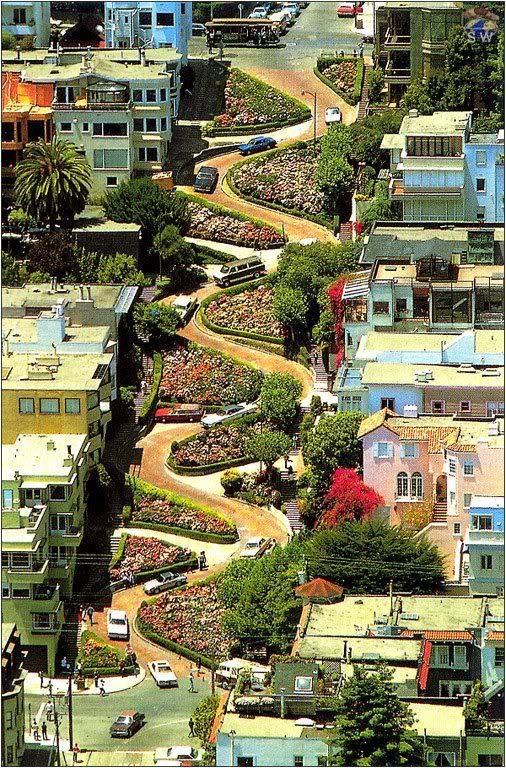
Second half of the movie was like driving DOWN the CROOKED street (in SF). The journey part of the movie is its biggest letdown. The timeline of the journey has been unnecessarily extended to include most recent political events in US, and hurricane episode just did not fit in.


In short, it is a movie of many missed opportunities. I feel for SRK who has delivered an exceptional performance only to be let down by other aspects of the movie.

Rating: 3 STARS (4.5 + 3 + 4 + 2 + 1.5 = 15/25) 

AFTER THE EVENT

As Rizwan Khan starts to shake his hands with the POTUS and the end credit starts to roll, my mind starts going into over drive. Usually, the walk from the theatre to the car is the toughest 5 min walk of life, if the movie is NOT to the Spouse's liking. More so if i am the ONE who chose the movie.

Then as we are about to walk out of the unreal world, light bulb goes again (trust me, it does not happen too often) in my head. I immediately act upon it. Placed a call to the Baby sitter who was taking care of the Lil one...and was hoping that she will stay on the line till we reach home... Luck was on my side I guess, as i was talking, the better half took over the phone to talk.. and i got home before the end of conversation. For the rest of the day, it was all about Lil one at home, and thus i thought i had dodged the 'bullet'.

Now i had to do something to avoid any reference to MNIK... Worked out a plan, and told the better half.. "I have a surprise" Response - "Oh yeah". Me – “Yes i will take you to a place and show you something which you never seen before, just like Rizwan did :)”.. "Ok. Will wait" is the response.

One fine afternoon took the family to workplace and then took the better half to the open patio on the 25th floor.. and asked her "Had you seen this before ?" showing the overview of the bay :-)


It worked, and here i am narrating my life story.

DISCLAIMER: All the characters and incidents in BEFORE and AFTER THE EVENT are fictitious and any resemblance to any real people and real incidents are intentional.


Life before and after MNIK


BEFORE THE EVENT

Year 2006 - I convinced my wife that we had to watch KANK, and cannot MISS it. So she obliged, and i have regretted ever since the mistake i made :) Bottomline - I was told in future no more KJo movie watching. PERIOD. I was not worried at that time, since i never knew what Karan had in store...

Year 2009 - Kadz my idol was in my town for MNIK shoot. Since i had my priorities right, managed to go and watch the shoot, at just the cost of a work day. Now i made a vow that i will watch MNIK no matter what.

Late 2009 - MNIK's release date is out.. “Feb 12th 2010”. I mark it up on the calendar and start plotting to watch it, after 18 months of drought of movie watching in theatres. Then the light goes off in my head. Why not take the spouse for MNIK on Feb 14th, as a Valentine's day surprise...

Feb 12th 2010 - D-Day.. Movie gets released, and it gets a mixed review, and even good friends who are SRK fans give it a lukewarm review. So now I am in a state of PANIC.. I don’t want to screw up my Valentine surprise, and be in the dog house for the rest of the year.. So changed the plans, and moved out MNIK watching for a later date..

THE MOVIE - MNIK - Nomadic Journey from San Francisco to Sacramento


Here are my scattered thoughts about the movie:

One rarely hears SRK talking about doing research for his character, and going to town with that. For MNIK he did both, and i think the disciplined approach to the role shows in the movie. He has delivered a very good performance as Rizwan with lot of consistency through out the movie. I would rate this is as his best performance to date.
(Individual Score = 4.5)

Kajol as Mandira has ably supported SRK, but that’s just about it. For a Kadz fan in me, it was a disappointment. She has acted as though she walked off from K3G sets. Her mannerisms and interaction with her son in the movie is so K3Gish. Her Screams were very jarring. OFC she has excelled in emotional scenes.
(Individual Score = 3.0)

Technically the movie is of a high calibre. Especially, Ravi Chandran has done a marvelous job of capturing the city by the Bay, in all its magnificent splendor. Editing is good within the context of lack of screenplay (more about it later). Background score is passable.
(Individual Score = 4.0)

Post K3G, Karan has been trying to move towards serious contemporary cinema and his sincerity shows in MNIK. He clearly lacks touch and vision and it shows in the second half. Second half is very poorly executed.
(Individual Score = 2.0)

Rizwan who could “repair anything” probably could not repair the script. Shibani has continued her downward spiral as a script writer with MNIK.
(Individual Score = 1.5)

Overall the movie did not live up to my lowered expectations. First half of the movie was like driving through the Mojave desert. Flat and emotionless, even though there were few good moments and chemistry between SRK & Kajol was exceptional, as usual.

Second half of the movie was like driving DOWN the CROOKED street (in SF). The journey part of the movie is its biggest letdown. The timeline of the journey has been unnecessarily extended to include most recent political events in US, and hurricane episode just did not fit in.


In short, it is a movie of many missed opportunities. I feel for SRK who has delivered an exceptional performance only to be let down by other aspects of the movie.

Rating: 3 STARS (4.5 + 3 + 4 + 2 + 1.5 = 15/25) 

AFTER THE EVENT

As Rizwan Khan starts to shake his hands with the POTUS and the end credit starts to roll, my mind starts going into over drive. Usually, the walk from the theatre to the car is the toughest 5 min walk of life, if the movie is NOT to the Spouse's liking. More so if i am the ONE who chose the movie.

Then as we are about to walk out of the unreal world, light bulb goes again (trust me, it does not happen too often) in my head. I immediately act upon it. Placed a call to the Baby sitter who was taking care of the Lil one...and was hoping that she will stay on the line till we reach home... Luck was on my side I guess, as i was talking, the better half took over the phone to talk.. and i got home before the end of conversation. For the rest of the day, it was all about Lil one at home, and thus i thought i had dodged the 'bullet'.

Now i had to do something to avoid any reference to MNIK... Worked out a plan, and told the better half.. "I have a surprise" Response - "Oh yeah". Me – “Yes i will take you to a place and show you something which you never seen before, just like Rizwan did :)”.. "Ok. Will wait" is the response.

One fine afternoon took the family to workplace and then took the better half to the open patio on the 25th floor.. and asked her "Had you seen this before ?" showing the overview of the bay :-)


It worked, and here i am narrating my life story.

DISCLAIMER: All the characters and incidents in BEFORE and AFTER THE EVENT are fictitious and any resemblance to any real people and real incidents are intentional.


Wednesday, February 24, 2010

'My Name is Khan' makes Bollywood history


World's first ever Bollywood film to be released in cinemas with audio description (AD)


February 23, 2010 /India PRwire/ -- 'My Name is Khan' has made cinema history by becoming the first ever Bollywood film to be released in cinemas with audio description (AD). Royal National Institute of Blind People (RNIB) worked with 20th Century Fox to achieve this milestone after its research among blind or partially sighted people of Asian origin found that over 55 per cent of respondents were more likely to watch Bollywood films if AD was provided.

AD is as important to blind and partially sighted people as subtitles are to those with hearing problems. It is an additional narration that fits between passages of dialogue to describe action sequences, body language, costume and scenery, allowing the viewer to understand exactly what is happening on screen. 'My Name is Khan' is also the first film to feature AD in Hindi, the language of the film.

Martin Bromfield, Executive Director at Twentieth Century Fox says: "20th Century Fox is proud to offer, for the first time ever, a Hindi AD track on 'My Name is Khan'. English speaking AD has been available on all our films for some time now, so we felt it was natural to progress and offer Hindi AD on our first collaboration with Bollywood. With help from RNIB and Deluxe Digital Studios we worked hard to create an English audio descriptive track which was then translated before being recorded by a Hindi speaking audio describer, in time for the second week of release."

Fazilet Hadi, Director Inclusive Society, RNIB says: "Around 700 films are produced by Bollywood every year, and our research tells us that blind and partially sighted fans want AD on these films. So we're delighted that Fox have worked with us to allow blind and partially sighted people to enjoy this much-anticipated release along with their sighted family and friends. We hope other studios will follow Fox's lead making 'My Name is Khan' the first of many audio described Bollywood films."

Read more from HERE

'My Name is Khan' makes Bollywood history


World's first ever Bollywood film to be released in cinemas with audio description (AD)


February 23, 2010 /India PRwire/ -- 'My Name is Khan' has made cinema history by becoming the first ever Bollywood film to be released in cinemas with audio description (AD). Royal National Institute of Blind People (RNIB) worked with 20th Century Fox to achieve this milestone after its research among blind or partially sighted people of Asian origin found that over 55 per cent of respondents were more likely to watch Bollywood films if AD was provided.

AD is as important to blind and partially sighted people as subtitles are to those with hearing problems. It is an additional narration that fits between passages of dialogue to describe action sequences, body language, costume and scenery, allowing the viewer to understand exactly what is happening on screen. 'My Name is Khan' is also the first film to feature AD in Hindi, the language of the film.

Martin Bromfield, Executive Director at Twentieth Century Fox says: "20th Century Fox is proud to offer, for the first time ever, a Hindi AD track on 'My Name is Khan'. English speaking AD has been available on all our films for some time now, so we felt it was natural to progress and offer Hindi AD on our first collaboration with Bollywood. With help from RNIB and Deluxe Digital Studios we worked hard to create an English audio descriptive track which was then translated before being recorded by a Hindi speaking audio describer, in time for the second week of release."

Fazilet Hadi, Director Inclusive Society, RNIB says: "Around 700 films are produced by Bollywood every year, and our research tells us that blind and partially sighted fans want AD on these films. So we're delighted that Fox have worked with us to allow blind and partially sighted people to enjoy this much-anticipated release along with their sighted family and friends. We hope other studios will follow Fox's lead making 'My Name is Khan' the first of many audio described Bollywood films."

Read more from HERE